 MEDIVEERSETHE PRACTICAL HUB
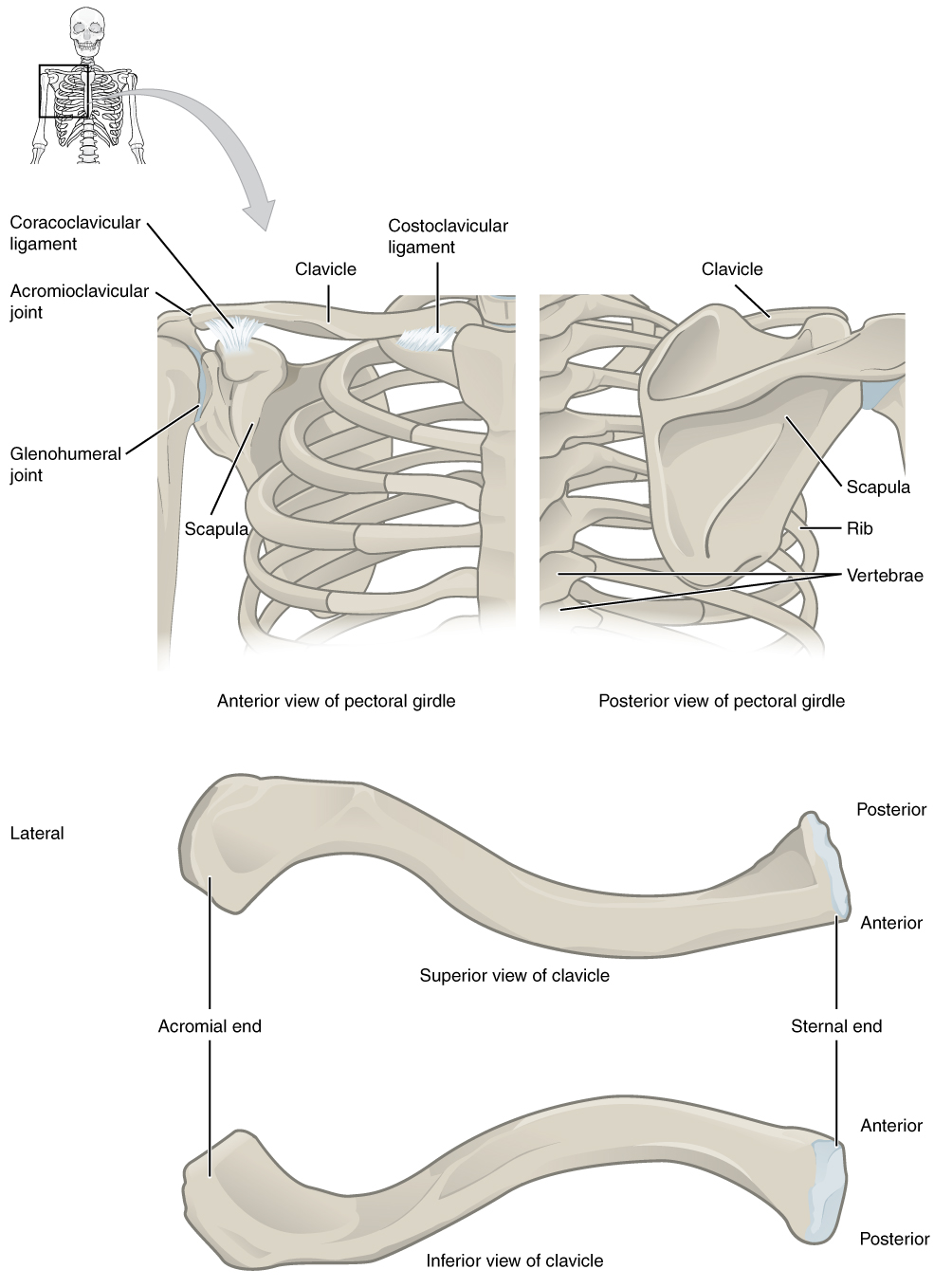
Locate clavicle on this anatomical reference. Read the original plate labels to confirm the view and adjacent structures.
Zoom in, then drag to inspect. Keyboard: + / − to zoom, arrows to pan, 0 to reset. Tap the numbered markers to explore parts.
Clavicle: labelled teaching diagram. Original labels and colours retained.
Image: OpenStax College / university open textbook · Source / original · CC BY 4.0Numbered markers and focused views are Mediveerse learning overlays; the original reference is linked above.
Clavicle
Understand what you see.
Acts as a strut holding the upper limb away from the trunk.
Zoom into the original labels. Practise pointing out each structure, then explain it aloud. Diagrams are teaching references; specimen appearance and slide staining vary.
How to recognise it.
- An S-shaped horizontal long bone
- Bulky medial end meets the sternum; flattened lateral end meets the acromion
- Conoid tubercle lies on the inferior lateral surface
Point them out.
Tap a number to open its reference, zoom in and locate the structure. Numbers stay the same across views. This key follows landmarks visible in the reference images.
Think first. Then reveal.
Say your answer aloud before opening the suggested response.
01How would you identify clavicle?+
An S-shaped horizontal long bone. Bulky medial end meets the sternum; flattened lateral end meets the acromion. Conoid tubercle lies on the inferior lateral surface.
02How do you orient a clavicle?+
Place the smooth surface superiorly, the flattened end laterally and the rough conoid tubercle inferiorly near the lateral end.
Read the references.
Credited anatomical plates, microscopy and university teaching references. Individual image credits appear below the viewer. Historical plates can use older terminology; use the lesson text for current names.