 MEDIVEERSETHE PRACTICAL HUB
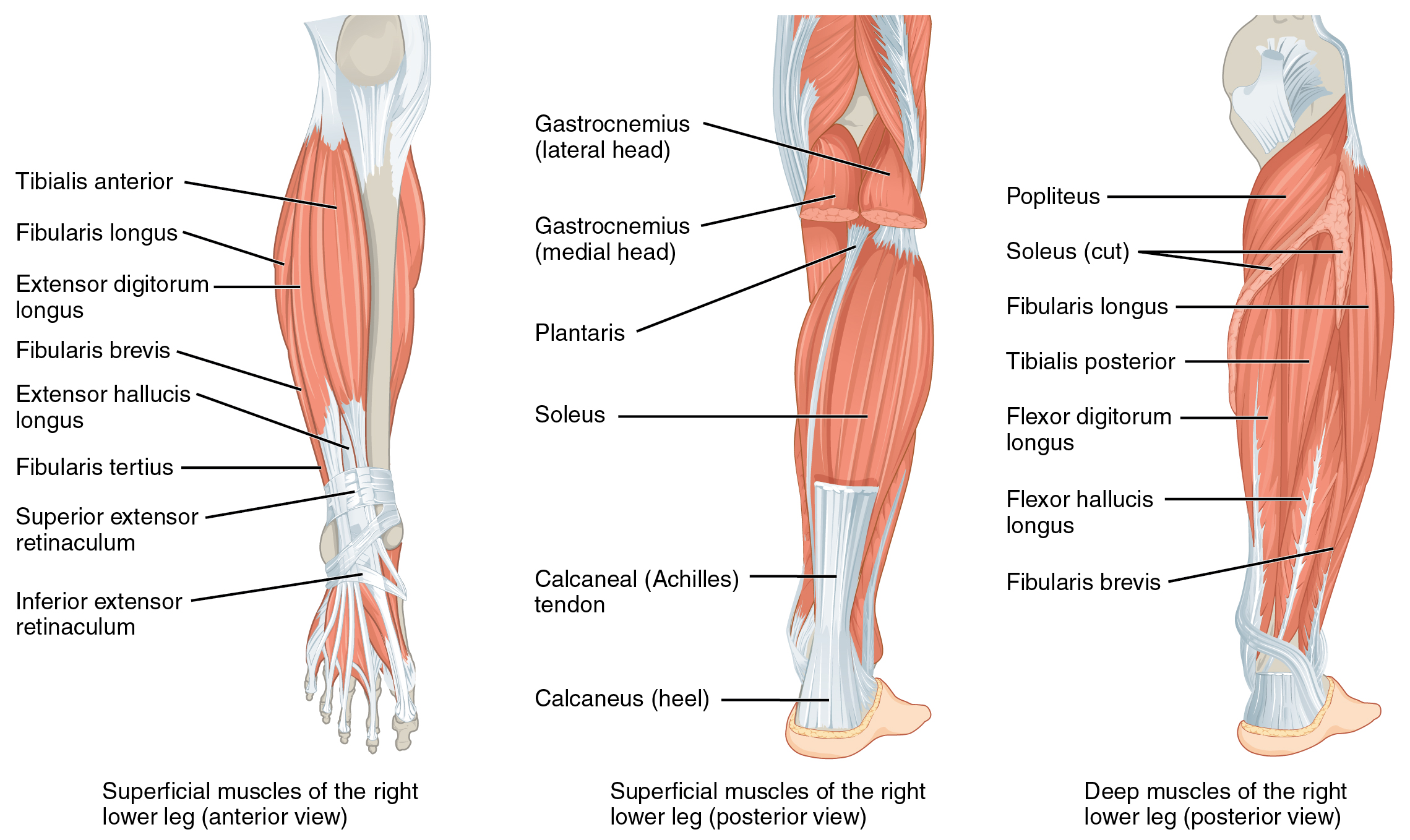
Locate fibularis longus on this anatomical reference. Read the original plate labels to confirm the view and adjacent structures.
Zoom in, then drag to inspect. Keyboard: + / − to zoom, arrows to pan, 0 to reset. Tap the numbered markers to explore parts.
The left panel shows the superficial muscles that move the feet and the center panel shows the posterior view of the same muscles. The right panel shows the deep muscles of the right lower leg.
Image: OpenStax / University of Hawaiʻi adapted teaching figures; original contributors credited at source · Source / original · CC BY 4.0 — figure credits at sourceNumbered markers and focused views are Mediveerse learning overlays; the original reference is linked above.
Fibularis longus and brevis
Understand what you see.
Evert the foot and assist plantarflexion; longus supports arches.
Zoom into the original labels. Practise pointing out each structure, then explain it aloud. Diagrams are teaching references; specimen appearance and slide staining vary.
How to recognise it.
- Lateral leg compartment
- Tendons pass behind lateral malleolus
- Longus crosses plantar foot
Point them out.
Tap a number to open its reference, zoom in and locate the structure. Numbers stay the same across views. This key follows landmarks visible in the reference images.
Think first. Then reveal.
Say your answer aloud before opening the suggested response.
01How do you identify fibularis longus and brevis?+
Lateral leg compartment. Tendons pass behind lateral malleolus. Longus crosses plantar foot.
02Where does brevis insert?+
Tuberosity at base of fifth metatarsal.
03Which nerve supplies both?+
Superficial fibular nerve; deep fibular supplies the anterior compartment.
04What is its main functional or developmental significance?+
Evert the foot and assist plantarflexion; longus supports arches. Key structures to recognise: Fibularis longus; Fibularis brevis; Superficial fibular nerve.
Read the references.
Credited anatomical plates, microscopy and university teaching references. Individual image credits appear below the viewer. Historical plates can use older terminology; use the lesson text for current names.