 MEDIVEERSETHE PRACTICAL HUB
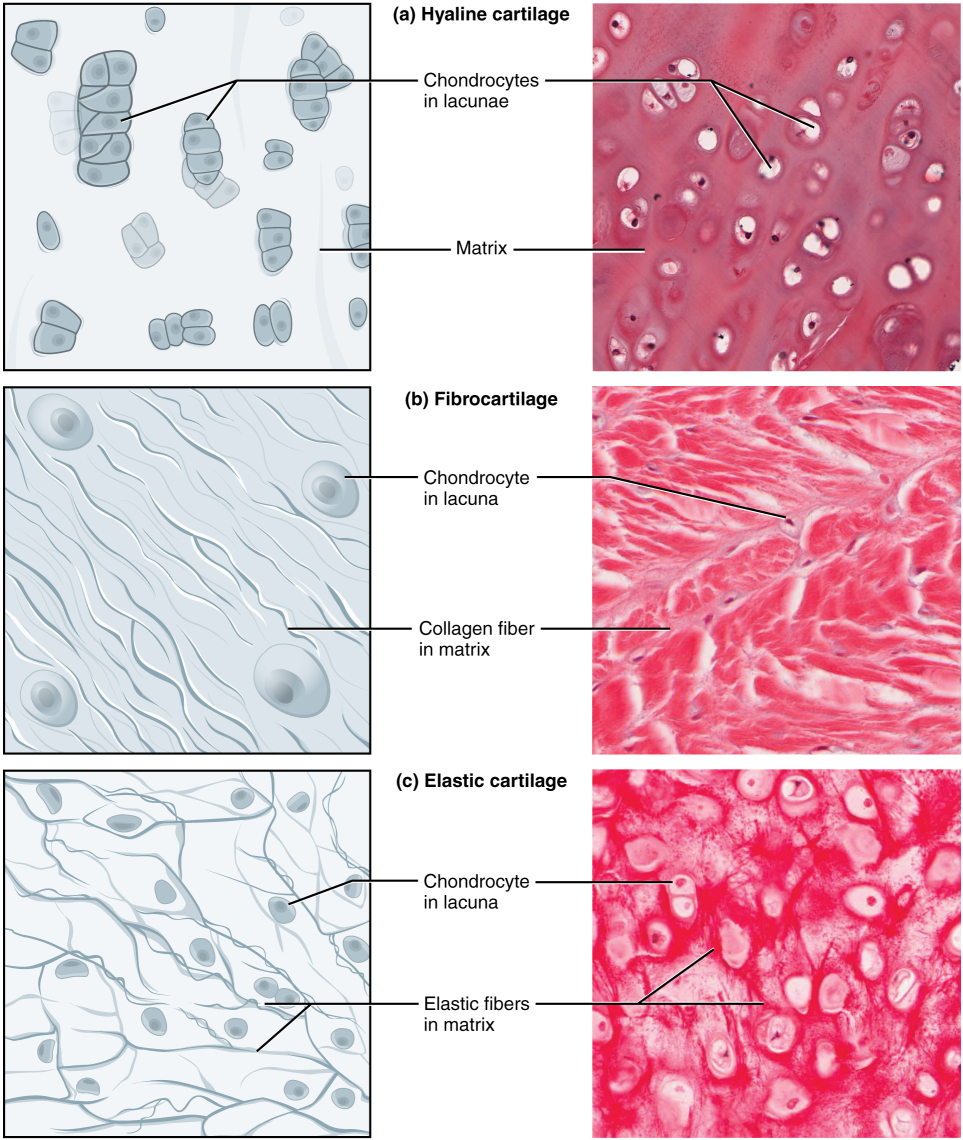
Locate lacunae on this anatomical reference. Read the original plate labels to confirm the view and adjacent structures.
Zoom in, then drag to inspect. Keyboard: + / − to zoom, arrows to pan, 0 to reset. Tap the numbered markers to explore parts.
cartilage: labelled anatomical figure. Original source colours and labels retained.
Image: OpenStax / University of Hawaiʻi adapted teaching figures; original contributors credited at source · Source / original · CC BY 4.0 — figure credits at sourceNumbered markers and focused views are Mediveerse learning overlays; the original reference is linked above.
Hyaline cartilage
Understand what you see.
Provides resilient support and smooth articular surfaces; its collagen is mostly type II.
Zoom into the original labels. Practise pointing out each structure, then explain it aloud. Diagrams are teaching references; specimen appearance and slide staining vary.
How to recognise it.
- Chondrocytes in lacunae
- Glassy matrix
- Isogenous groups may be visible
Point them out.
Tap a number to open its reference, zoom in and locate the structure. Numbers stay the same across views. This key follows landmarks visible in the reference images.
Think first. Then reveal.
Say your answer aloud before opening the suggested response.
01How do you identify hyaline cartilage?+
Chondrocytes in lacunae. Glassy matrix. Isogenous groups may be visible.
02Does articular hyaline cartilage have perichondrium?+
No. Articular cartilage is a key exception to the usual perichondrial covering.
03How is it nourished?+
By diffusion through matrix; cartilage is avascular, with supply derived from perichondrium or synovial fluid depending on site.
04Which structures should you point out on this reference?+
Lacunae; Chondrocyte groups; Perichondrium where present. Provides resilient support and smooth articular surfaces; its collagen is mostly type II.
Read the references.
Credited anatomical plates, microscopy and university teaching references. Individual image credits appear below the viewer. Historical plates can use older terminology; use the lesson text for current names.