 MEDIVEERSETHE PRACTICAL HUB
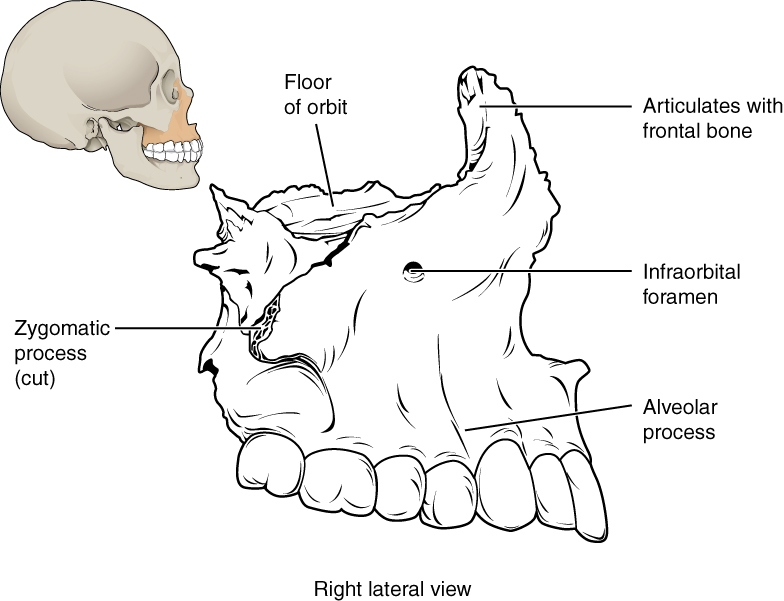
Locate body on this anatomical reference. Read the original plate labels to confirm the view and adjacent structures.
Zoom in, then drag to inspect. Keyboard: + / − to zoom, arrows to pan, 0 to reset. Tap the numbered markers to explore parts.
Maxilla: labelled teaching diagram. Original labels and colours retained.
Image: OpenStax College / university open textbook · Source / original · CC BY 4.0Numbered markers and focused views are Mediveerse learning overlays; the original reference is linked above.
Maxilla
Understand what you see.
Supports upper teeth and contributes to the orbit, nasal cavity and hard palate.
Zoom into the original labels. Practise pointing out each structure, then explain it aloud. Diagrams are teaching references; specimen appearance and slide staining vary.
How to recognise it.
- A paired bone forming the upper jaw
- Alveolar process carries upper teeth
- Palatine processes form the anterior major portion of the hard palate
Point them out.
Tap a number to open its reference, zoom in and locate the structure. Numbers stay the same across views. This key follows landmarks visible in the reference images.
Think first. Then reveal.
Say your answer aloud before opening the suggested response.
Examiner-style prompts: identify the structure, explain its relations, then answer the applied follow-up. These are revision questions, not authenticated past papers.
01How would you identify maxilla?+
A paired bone forming the upper jaw. Alveolar process carries upper teeth. Palatine processes form the anterior major portion of the hard palate.
02Which nerve emerges through the infraorbital foramen?+
The infraorbital nerve, a continuation of the maxillary division of the trigeminal nerve (V2).
03Which parts form the hard palate?+
Palatine processes of maxillae anteriorly and horizontal plates of palatine bones posteriorly.
04Why can upper posterior teeth be relevant to maxillary sinus anatomy?+
Their roots may lie close to the sinus floor; the relationship varies between individuals.
05Which maxillary process supports the teeth?+
The alveolar process.
Read the references.
Credited anatomical plates, microscopy and university teaching references. Individual image credits appear below the viewer. Historical plates can use older terminology; use the lesson text for current names.