 MEDIVEERSETHE PRACTICAL HUB
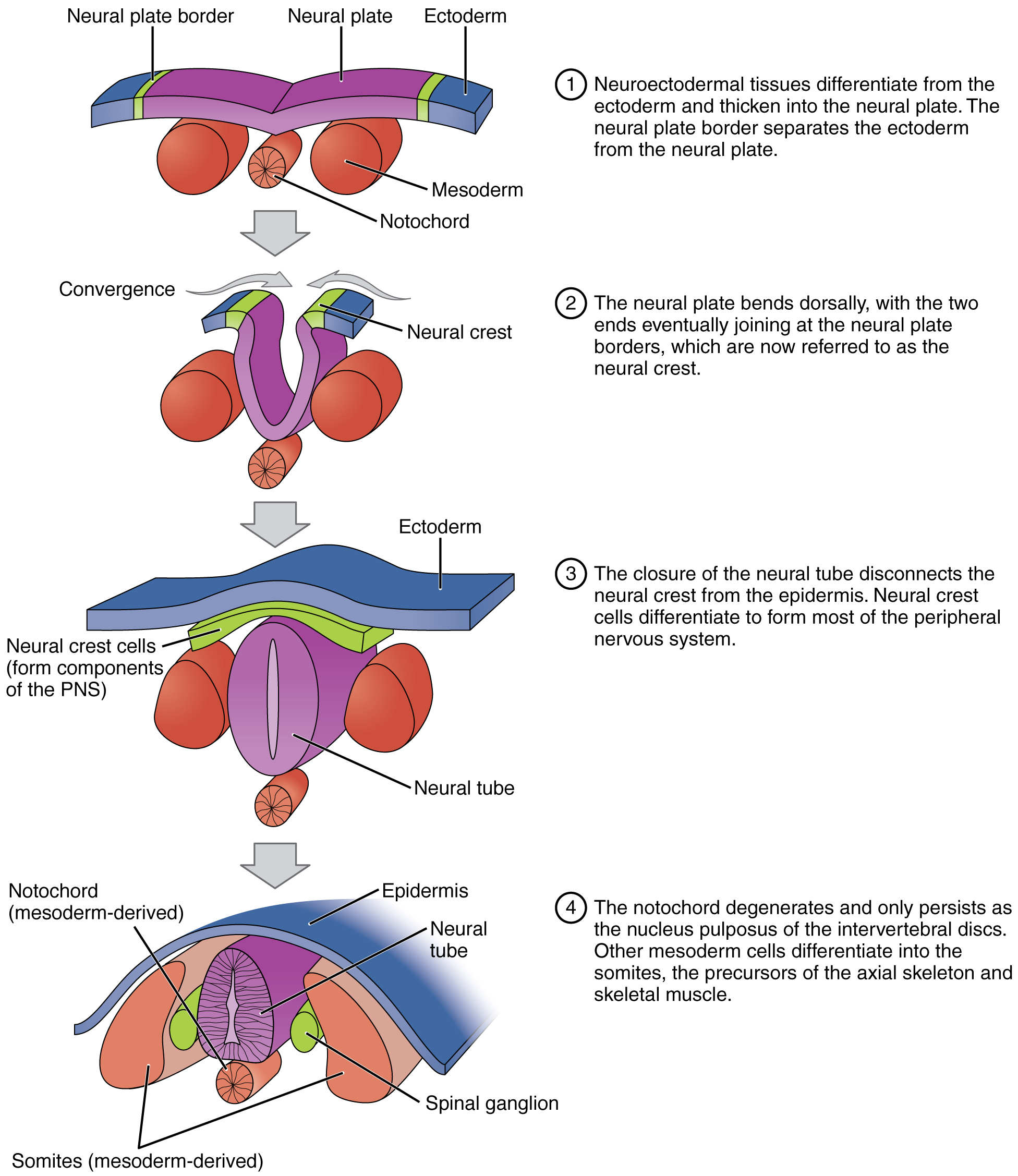
Locate neural plate on this anatomical reference. Read the original plate labels to confirm the view and adjacent structures.
Zoom in, then drag to inspect. Keyboard: + / − to zoom, arrows to pan, 0 to reset. Tap the numbered markers to explore parts.
neurulation: labelled anatomical figure. Original source colours and labels retained.
Image: OpenStax / University of Hawaiʻi adapted teaching figures; original contributors credited at source · Source / original · CC BY 4.0 — figure credits at sourceNumbered markers and focused views are Mediveerse learning overlays; the original reference is linked above.
Neural tube closure
Understand what you see.
Forms the central nervous system through neurulation and later differentiation.
Zoom into the original labels. Practise pointing out each structure, then explain it aloud. Diagrams are teaching references; specimen appearance and slide staining vary.
How to recognise it.
- Neural plate folds into a tube
- Neural folds meet dorsally
- Temporary cranial and caudal neuropores
Point them out.
Tap a number to open its reference, zoom in and locate the structure. Numbers stay the same across views. This key follows landmarks visible in the reference images.
Think first. Then reveal.
Say your answer aloud before opening the suggested response.
01How do you identify neural tube closure?+
Neural plate folds into a tube. Neural folds meet dorsally. Temporary cranial and caudal neuropores.
02What develops from neural tube versus neural crest?+
Tube forms brain, spinal cord and associated CNS elements; crest forms many peripheral neural and non-neural derivatives.
03Why is closure timing important?+
Failure of normal closure can produce neural-tube defects; folate status influences risk but does not explain every case.
04Which structures should you point out on this reference?+
Neural plate; Neural folds; Neural tube. Forms the central nervous system through neurulation and later differentiation.
Read the references.
Credited anatomical plates, microscopy and university teaching references. Individual image credits appear below the viewer. Historical plates can use older terminology; use the lesson text for current names.