 MEDIVEERSETHE PRACTICAL HUB
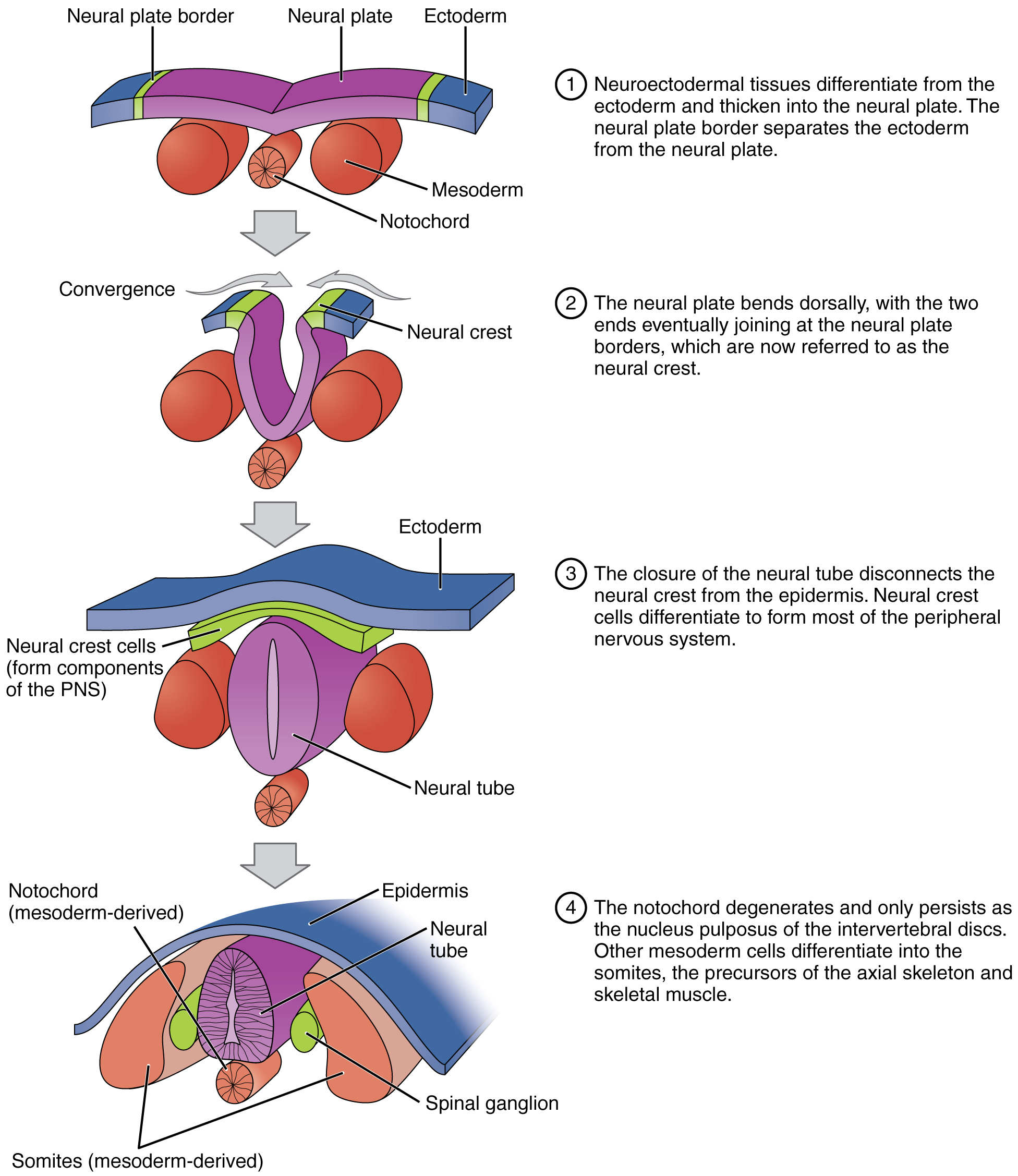
Locate notochord on this anatomical reference. Read the original plate labels to confirm the view and adjacent structures.
Zoom in, then drag to inspect. Keyboard: + / − to zoom, arrows to pan, 0 to reset. Tap the numbered markers to explore parts.
neurulation: labelled anatomical figure. Original source colours and labels retained.
Image: OpenStax / University of Hawaiʻi adapted teaching figures; original contributors credited at source · Source / original · CC BY 4.0 — figure credits at sourceNumbered markers and focused views are Mediveerse learning overlays; the original reference is linked above.
Notochord
Understand what you see.
Provides axial signalling and contributes to organisation of the developing neural and skeletal axes.
Zoom into the original labels. Practise pointing out each structure, then explain it aloud. Diagrams are teaching references; specimen appearance and slide staining vary.
How to recognise it.
- Midline axial mesodermal structure
- Ventral to developing neural tube
- Signals to surrounding tissues
Point them out.
Tap a number to open its reference, zoom in and locate the structure. Numbers stay the same across views. This key follows landmarks visible in the reference images.
Think first. Then reveal.
Say your answer aloud before opening the suggested response.
01How do you identify notochord?+
Midline axial mesodermal structure. Ventral to developing neural tube. Signals to surrounding tissues.
02What is its main adult remnant?+
Nucleus pulposus of intervertebral discs is the classic notochordal remnant.
03Is it itself the future spinal cord?+
No. Spinal cord develops from neural tube; notochord influences neural induction and patterning.
04Which structures should you point out on this reference?+
Axial mesoderm; Neural plate relation; Developing vertebral bodies. Provides axial signalling and contributes to organisation of the developing neural and skeletal axes.
Read the references.
Credited anatomical plates, microscopy and university teaching references. Individual image credits appear below the viewer. Historical plates can use older terminology; use the lesson text for current names.