 MEDIVEERSETHE PRACTICAL HUB
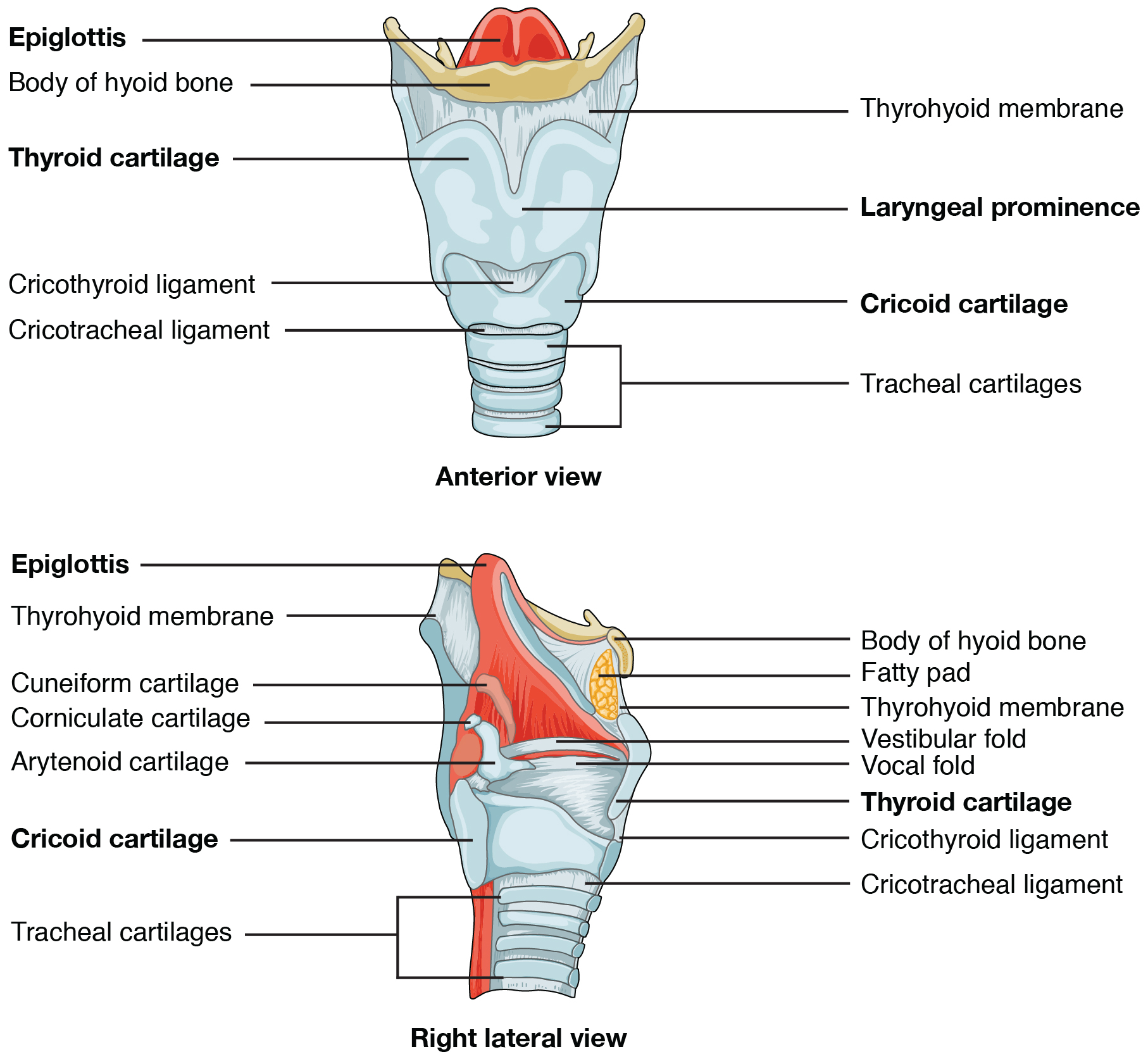
Locate epiglottis on this anatomical reference. Read the original plate labels to confirm the view and adjacent structures.
Zoom in, then drag to inspect. Keyboard: + / − to zoom, arrows to pan, 0 to reset. Tap the numbered markers to explore parts.
larynx: labelled anatomical figure. Original source colours and labels retained.
Image: OpenStax / University of Hawaiʻi adapted teaching figures; original contributors credited at source · Source / original · CC BY 4.0 — figure credits at sourceNumbered markers and focused views are Mediveerse learning overlays; the original reference is linked above.
Posterior cricoarytenoid
Understand what you see.
Opens the rima glottidis by abducting the vocal folds.
Zoom into the original labels. Practise pointing out each structure, then explain it aloud. Diagrams are teaching references; specimen appearance and slide staining vary.
How to recognise it.
- Muscle on posterior cricoid lamina
- Inserts on arytenoid muscular process
- Only principal abductor of vocal folds
Point them out.
Tap a number to open its reference, zoom in and locate the structure. Numbers stay the same across views. This key follows landmarks visible in the reference images.
Think first. Then reveal.
Say your answer aloud before opening the suggested response.
Examiner-style prompts: identify the structure, explain its relations, then answer the applied follow-up. These are revision questions, not authenticated past papers.
01Identify posterior cricoarytenoid and give its main role.+
Muscle on posterior cricoid lamina. Inserts on arytenoid muscular process. Only principal abductor of vocal folds. Opens the rima glottidis by abducting the vocal folds.
02Why is bilateral loss of this muscle clinically serious?+
Failure to abduct both vocal folds can severely compromise the airway; the exact position and effect depend on the pattern of nerve injury.
03Which other intrinsic laryngeal muscle has a different motor nerve?+
Cricothyroid is supplied by the external branch of superior laryngeal nerve.
04Point out three important relations and explain their significance.+
Origin: cricoid lamina; Insertion: muscular process; Motor: recurrent laryngeal nerve. Opens the rima glottidis by abducting the vocal folds. Use the reference plate to locate the region; the relationship map organises the associations and is not drawn to scale.
Read the references.
Credited anatomical plates, microscopy and university teaching references. Individual image credits appear below the viewer. Historical plates can use older terminology; use the lesson text for current names.