 MEDIVEERSETHE PRACTICAL HUB
Locate columnar cells on this anatomical reference. Read the original plate labels to confirm the view and adjacent structures.
Zoom in, then drag to inspect. Keyboard: + / − to zoom, arrows to pan, 0 to reset. Tap the numbered markers to explore parts.
columnar: labelled anatomical figure. Original source colours and labels retained.
Image: OpenStax / University of Hawaiʻi adapted teaching figures; original contributors credited at source · Source / original · CC BY 4.0 — figure credits at sourceNumbered markers and focused views are Mediveerse learning overlays; the original reference is linked above.
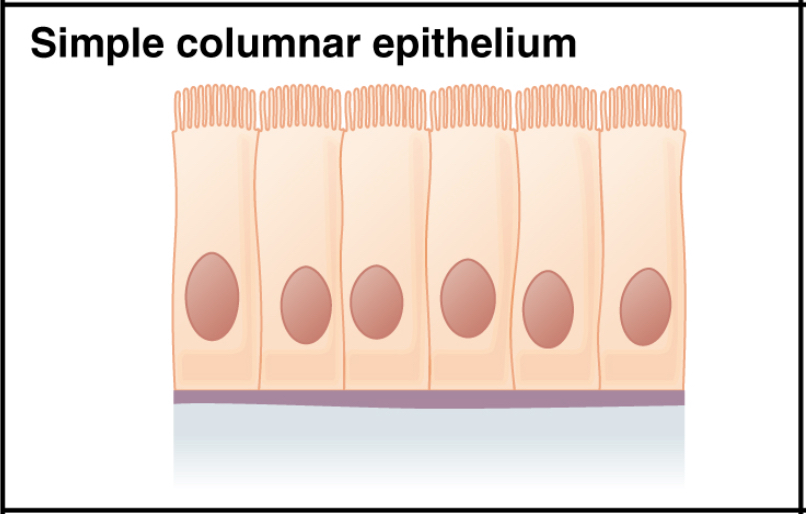
Simple columnar epithelium
Understand what you see.
Supports absorption and secretion, particularly in digestive lining.
Zoom into the original labels. Practise pointing out each structure, then explain it aloud. Diagrams are teaching references; specimen appearance and slide staining vary.
How to recognise it.
- Single layer of tall cells
- Oval nuclei often basally placed
- May include goblet cells and microvilli
Point them out.
Tap a number to open its reference, zoom in and locate the structure. Numbers stay the same across views. This key follows landmarks visible in the reference images.
Think first. Then reveal.
Say your answer aloud before opening the suggested response.
01How do you identify simple columnar epithelium?+
Single layer of tall cells. Oval nuclei often basally placed. May include goblet cells and microvilli.
02What forms the intestinal brush border?+
Closely packed microvilli on absorptive enterocytes, increasing surface area.
03Are all columnar epithelia ciliated?+
No. Intestinal absorptive epithelium is non-ciliated; ciliated columnar types occur at selected other sites.
04Which structures should you point out on this reference?+
Columnar cells; Goblet cells; Apical border. Supports absorption and secretion, particularly in digestive lining.
Read the references.
Credited anatomical plates, microscopy and university teaching references. Individual image credits appear below the viewer. Historical plates can use older terminology; use the lesson text for current names.