Identify
Locate beaks, hinge and handles on the reference.
 MEDIVEERSETHE PRACTICAL HUB
LOOK CLOSELY / UNDERSTAND CLEARLY
Recognise extraction forceps and relate their form to intended use.
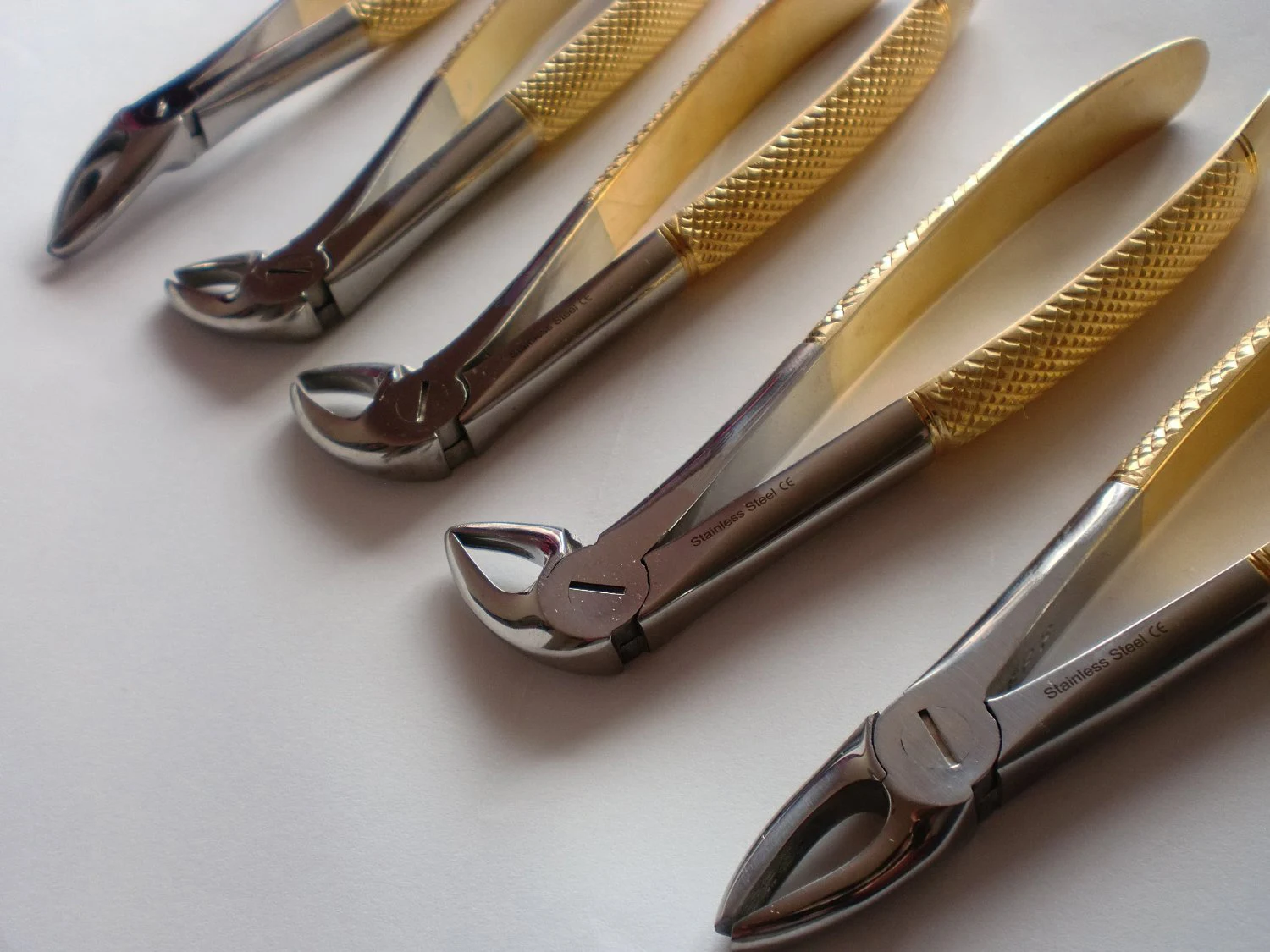
The engaging end of one forceps in the reference set.
Zoom in, then drag to inspect. Keyboard: + / − to zoom, arrows to pan, 0 to reset. Tap the numbered markers to explore parts.
extraction forceps — reference view
Image: Hillcrestpvtltd · Source / original · CC BY-SA 3.0Resized and converted to WebP; original colours retained.
Forceps transmit controlled forces through beaks adapted to the intended tooth and access; selection requires supervised assessment.
Locate beaks, hinge and handles on the reference.
Compare jaw shape and angulation without assuming one forceps fits every tooth.
Relate selection to anatomy and the clinical plan.
Try answering aloud, then open the suggested answer. Examiner questions vary.
The beaks.
No. Designs differ by site and intended use.
No. Clinical and appropriate radiographic assessment are required.
Damage or poor function can compromise control.