Identify
Compare working tips, graduations and shanks in the reference.
 MEDIVEERSETHE PRACTICAL HUB
LOOK CLOSELY / UNDERSTAND CLEARLY
Recognise graduated periodontal probes and explain what charted measurements represent.
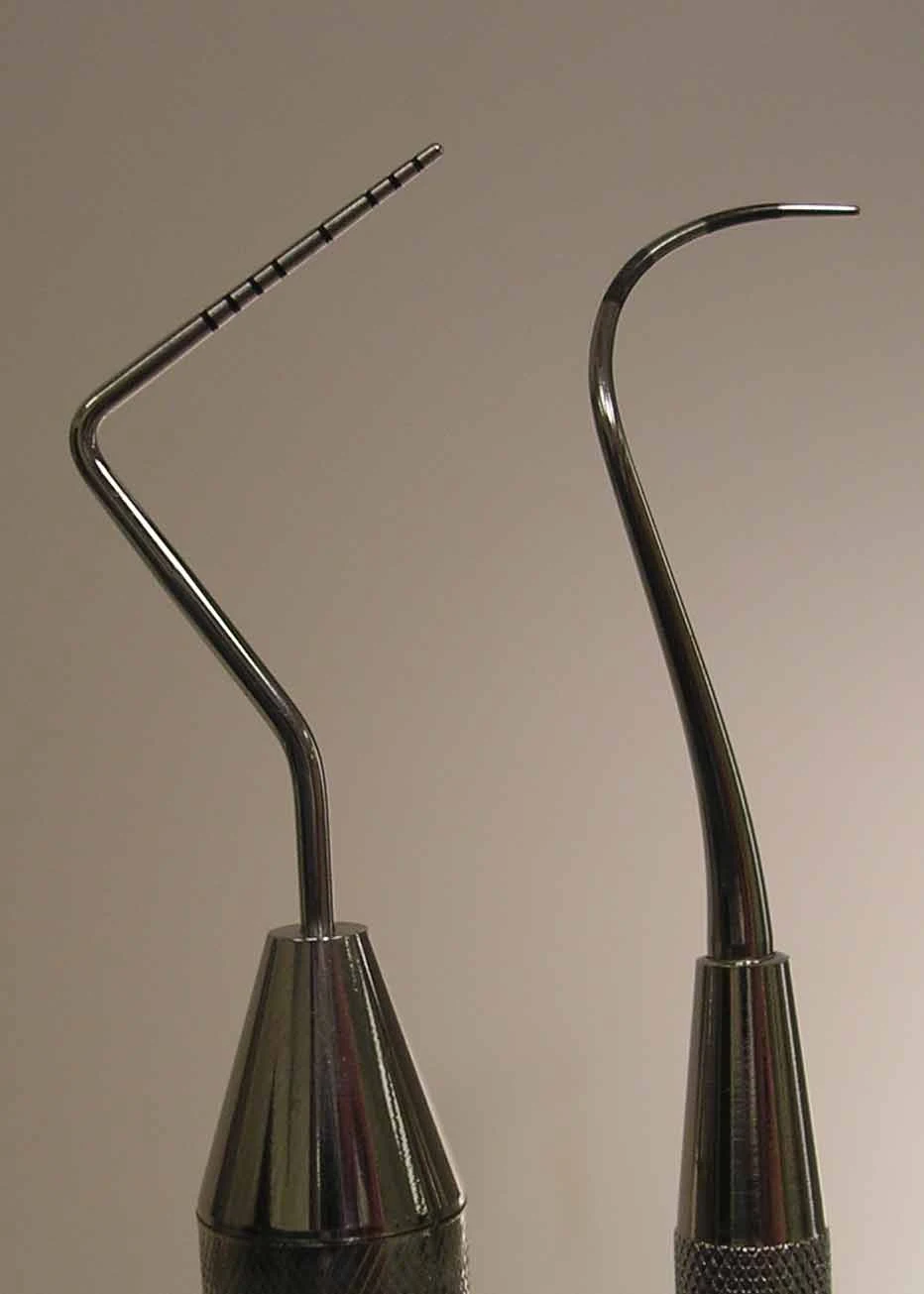
The marked terminal portion on the left-hand reference.
Zoom in, then drag to inspect. Keyboard: + / − to zoom, arrows to pan, 0 to reset. Tap the numbered markers to explore parts.
Periodontal instrument comparison — graduated probe at left
Image: No machine-readable author provided. Dozenist assumed (based on copyright claims). · Source / original · CC BY-SA 3.0Resized and converted to WebP; original colours retained.
A probe records distances against a reference landmark; probing depth and clinical attachment level are different measurements.
Compare working tips, graduations and shanks in the reference.
Distinguish gingival-margin to pocket-base depth from attachment level relative to a stable landmark.
Integrate bleeding, recession, other findings and measurement limitations.
Try answering aloud, then open the suggested answer. Examiner questions vary.
No. They use different reference points.
Graduation patterns differ between designs.
No. A full assessment and context are needed.
Yes. Angulation, force, inflammation and access can influence them.