 MEDIVEERSETHE PRACTICAL HUB
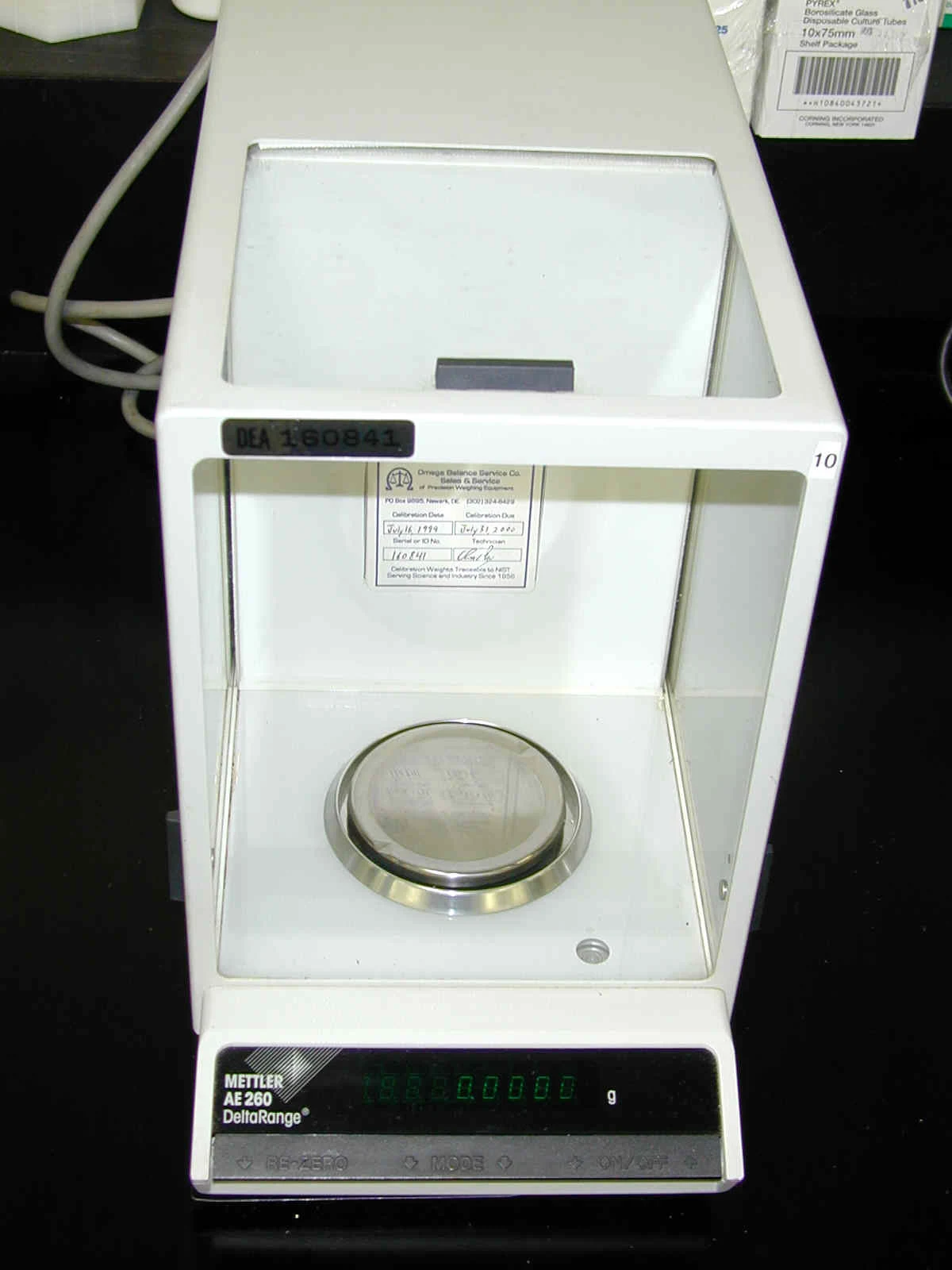
Supports the weighing container and sample; keep it clean and within the rated load.
Zoom in, then drag to inspect. Keyboard: + / − to zoom, arrows to pan, 0 to reset. Tap the numbered markers to explore parts.
Analytical balance — reference view
Image: US DEA · Source / original · Public domainResized and converted to WebP; original colours retained.
Analytical balance
Electronic laboratory balance
What is its use?
Measures mass accurately for reagent and standard preparation.
Tap a number to locate its part. Zoom, drag or use full screen to inspect the reference. Models and graduations can differ; check the actual apparatus used in your laboratory.
How to recognise it.
- Protected weighing pan
- Draft shield on analytical designs
- Digital mass display
An analytical balance offers finer resolution than a typical bench balance, but resolution alone does not prove accuracy.
Point them out.
Choose a part to bring its numbered marker into view.
The science behind the reading.
An electronic sensing system relates load to a calibrated mass reading; performance depends on environment and calibration.
Think first. Then reveal.
Explain your answer aloud before opening it.
01Why close the draft shield?+
Air currents can alter the apparent load and destabilise the reading.
02What does tare do?+
It sets the reading to zero with a container so added material can be weighed by difference.
03Why avoid weighing hot vessels?+
Convection and temperature effects can cause unstable, biased readings.
04Is calibration the same as taring?+
No. Taring offsets the container reading; calibration establishes or verifies the measurement relationship.
Read the references.
Teaching and clinical references are listed here. Image attribution and licence appear below the viewer.