 MEDIVEERSETHE PRACTICAL HUB
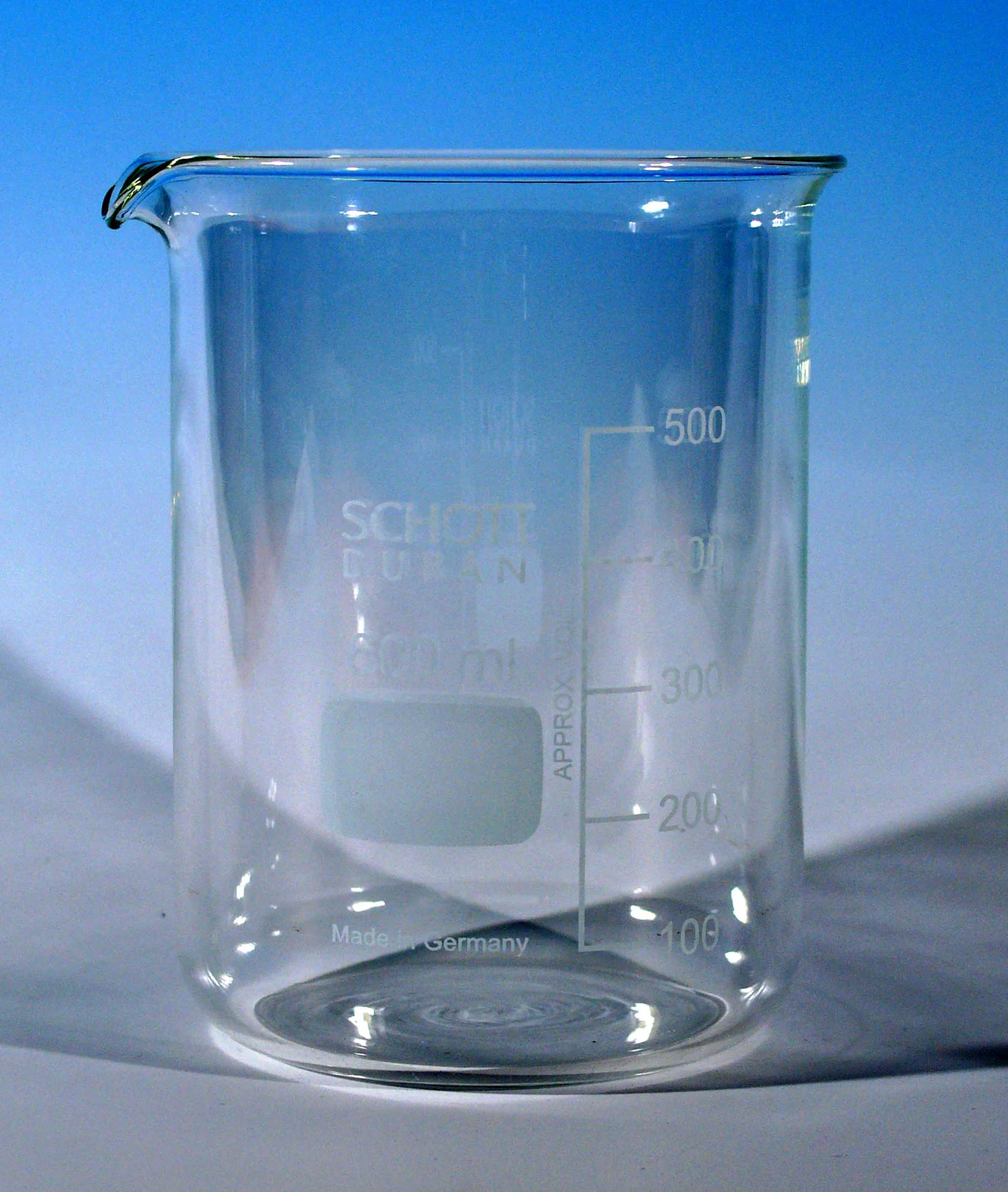
Guides liquid during pouring.
Zoom in, then drag to inspect. Keyboard: + / − to zoom, arrows to pan, 0 to reset. Tap the numbered markers to explore parts.
Laboratory beaker — reference view
Image: Hannes Grobe 19:03, 3 September 2006 (UTC) · Source / original · CC BY-SA 2.5Resized and converted to WebP; original colours retained.
Laboratory beaker
Griffin beaker · mixing beaker
What is its use?
Holds, mixes and transfers liquids during sample and reagent preparation.
Tap a number to locate its part. Zoom, drag or use full screen to inspect the reference. Models and graduations can differ; check the actual apparatus used in your laboratory.
How to recognise it.
- Wide cylindrical body
- Pouring spout
- Flat base with approximate scale
Use calibrated volumetric apparatus when the final concentration requires accurate volume measurement.
Point them out.
Choose a part to bring its numbered marker into view.
The science behind the reading.
A wide opening supports stirring and pouring; graduations give only approximate volumes.
Think first. Then reveal.
Explain your answer aloud before opening it.
01Can a beaker prepare an exact standard volume?+
It is not intended for that precision; use a suitable volumetric flask.
02Why is there a spout?+
It helps direct pouring.
03What does borosilicate glass offer?+
Greater resistance to thermal stress than ordinary soda-lime glass, within its rated limits.
04Why inspect glassware before use?+
Cracks or chips can cause breakage, contamination or injury.
Read the references.
Teaching and clinical references are listed here. Image attribution and licence appear below the viewer.