 MEDIVEERSETHE PRACTICAL HUB
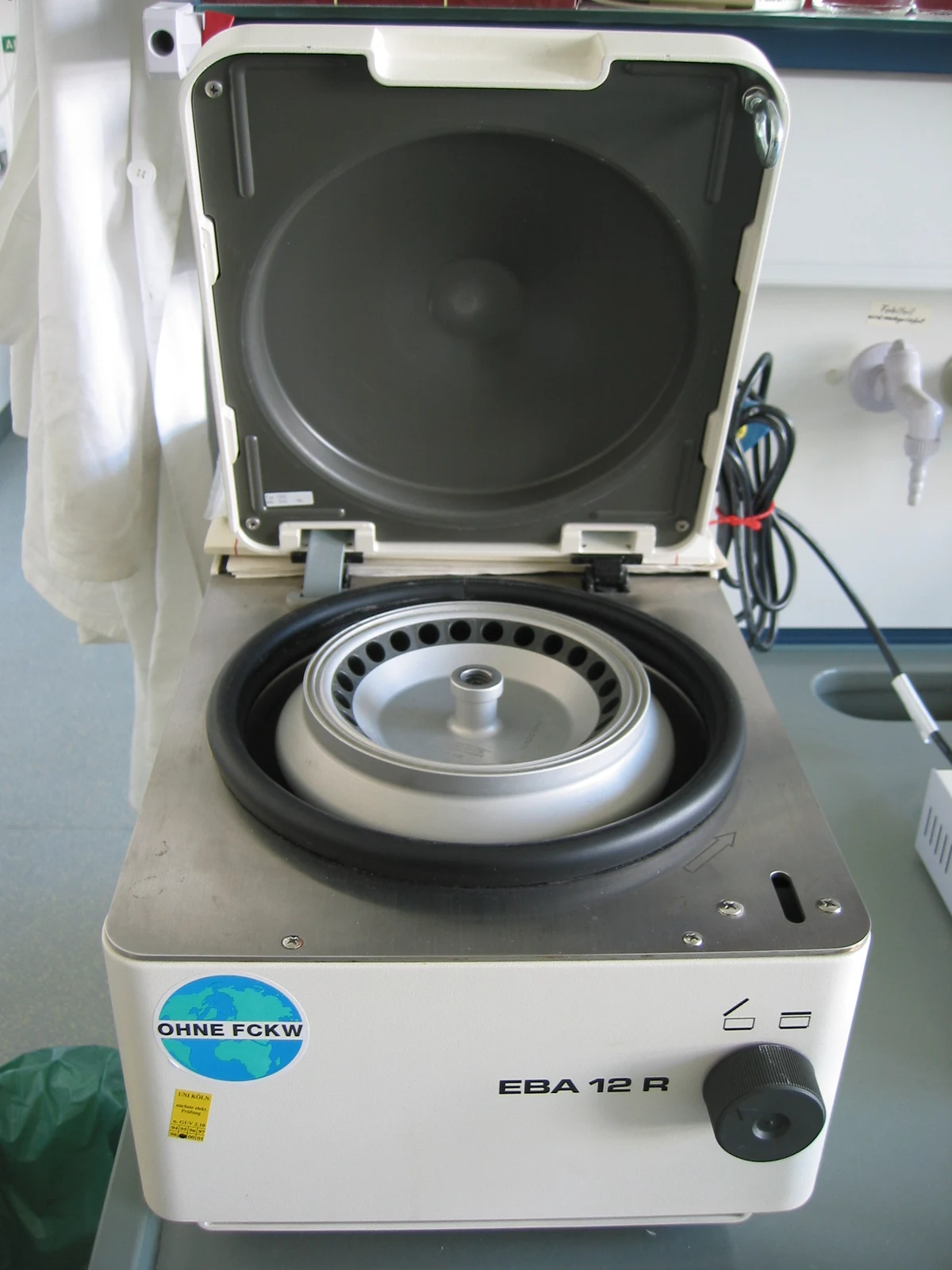
Carries the sample tubes. Correct adapters, balanced loads and the rated speed are essential.
Zoom in, then drag to inspect. Keyboard: + / − to zoom, arrows to pan, 0 to reset. Tap the numbered markers to explore parts.
Bench centrifuge — reference view
Image: Magnus Manske · Source / original · CC BY 1.0Resized and converted to WebP; original colours retained.
Bench centrifuge
Laboratory centrifuge · serum separation
What is its use?
Separates components such as cells and liquid according to their sedimentation behaviour.
Tap a number to locate its part. Zoom, drag or use full screen to inspect the reference. Models and graduations can differ; check the actual apparatus used in your laboratory.
How to recognise it.
- Enclosed rotating chamber
- Rotor with sample positions
- Lid and operating controls
A centrifuge separates by sedimentation; a vortex mixer mainly agitates a sample.
Point them out.
Choose a part to bring its numbered marker into view.
The science behind the reading.
Rotation produces centrifugal acceleration; separation depends on density, particle properties, rotor radius and time.
Think first. Then reveal.
Explain your answer aloud before opening it.
01Why balance the rotor?+
Unequal loads cause vibration, equipment damage and unsafe operation.
02Are RPM and RCF identical?+
No. RCF also depends on rotor radius, so equal RPM can produce different relative forces.
03What is supernatant?+
The liquid above sediment or a pellet after separation.
04When may the lid be opened?+
Only after rotation has stopped and the instrument’s safety procedure permits opening.
Read the references.
Teaching and clinical references are listed here. Image attribution and licence appear below the viewer.