 MEDIVEERSETHE PRACTICAL HUB
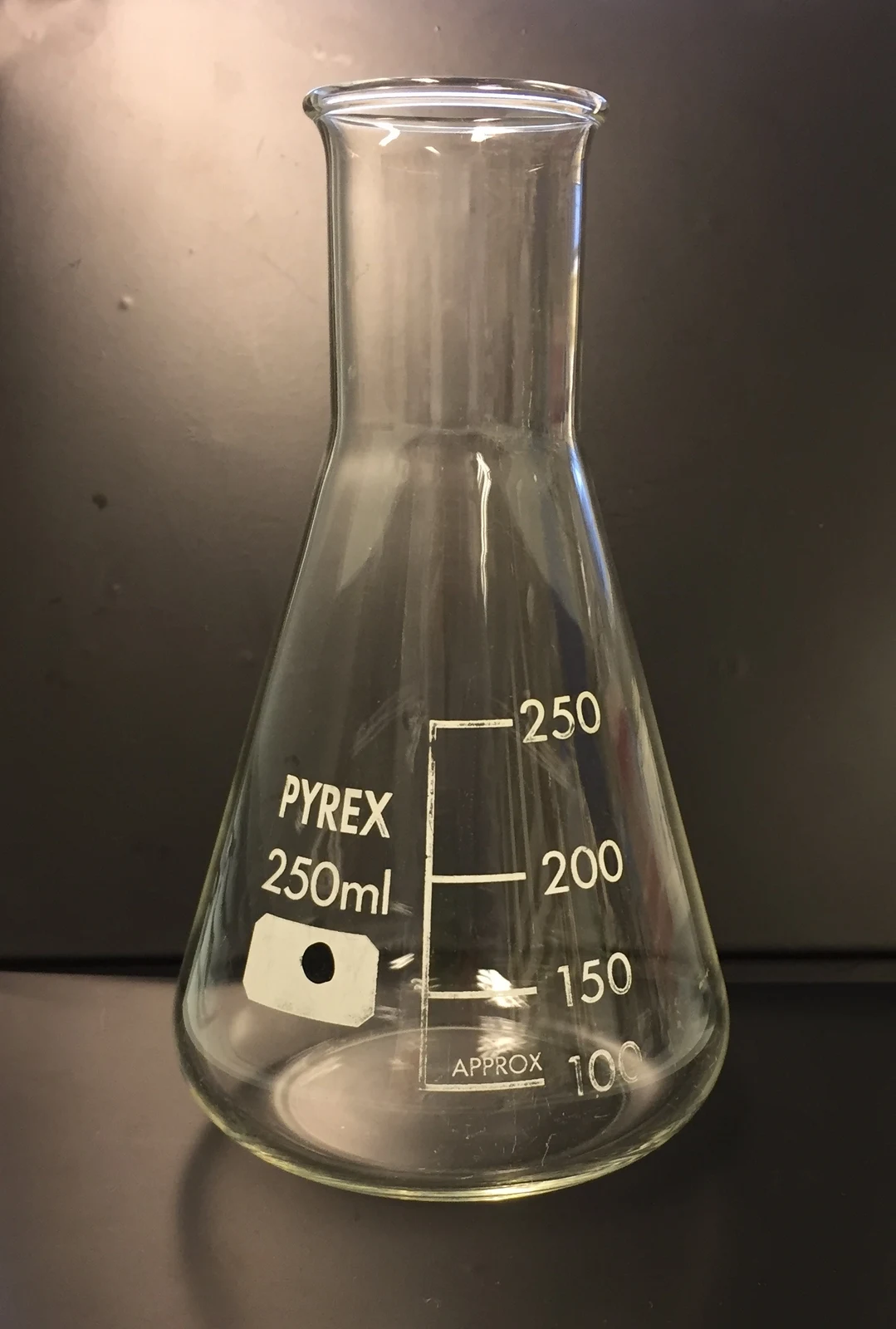
The narrow opening helps reduce splashing during swirling.
Zoom in, then drag to inspect. Keyboard: + / − to zoom, arrows to pan, 0 to reset. Tap the numbered markers to explore parts.
Conical flask — reference view
Image: Pilarbini · Source / original · CC BY-SA 4.0Resized and converted to WebP; original colours retained.
Conical flask
Erlenmeyer flask · titration flask
What is its use?
Mixes solutions by swirling and receives titrant during titration.
Tap a number to locate its part. Zoom, drag or use full screen to inspect the reference. Models and graduations can differ; check the actual apparatus used in your laboratory.
How to recognise it.
- Conical body
- Narrow neck
- Broad flat base
A conical flask is primarily for holding and mixing; a volumetric flask prepares an accurately defined final volume.
Point them out.
Choose a part to bring its numbered marker into view.
The science behind the reading.
The shape allows swirling with reduced splashing and supports observation of an endpoint.
Think first. Then reveal.
Explain your answer aloud before opening it.
01Why is it used in titration?+
The contents can be swirled to mix each addition while reducing splashing.
02Are the volume markings exact?+
They are generally approximate, unless a specific calibrated design states otherwise.
03Why rinse flask walls during a titration when the method permits?+
To bring splashed reactants into the reaction mixture without changing the amount of analyte.
04What is an endpoint?+
The observable change chosen to indicate completion, such as an indicator colour change.
Read the references.
Teaching and clinical references are listed here. Image attribution and licence appear below the viewer.