 MEDIVEERSETHE PRACTICAL HUB
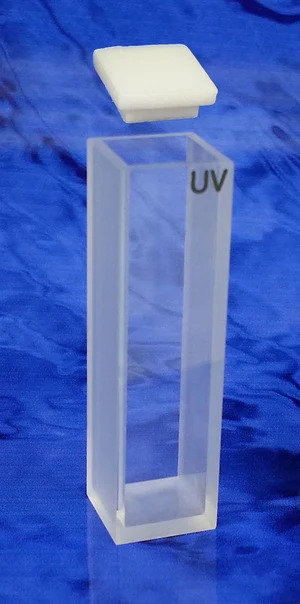
A clear face lies in the optical path. Keep optical surfaces free of fingerprints and scratches.
Zoom in, then drag to inspect. Keyboard: + / − to zoom, arrows to pan, 0 to reset. Tap the numbered markers to explore parts.
Cuvette — reference view
Image: Hyram58 · Source / original · CC BY-SA 4.0Resized and converted to WebP; original colours retained.
Cuvette
Optical cell · sample cell
What is its use?
Holds a sample in the optical path of a colorimeter or spectrophotometer.
Tap a number to locate its part. Zoom, drag or use full screen to inspect the reference. Models and graduations can differ; check the actual apparatus used in your laboratory.
How to recognise it.
- Small optical sample container
- Opposing optical faces
- Open top or cap depending on design
A test tube is general glassware; a cuvette has optical surfaces and a specified path suitable for photometry.
Point them out.
Choose a part to bring its numbered marker into view.
The science behind the reading.
A defined light path passes through the solution; cell material and path length affect the measurement.
Think first. Then reveal.
Explain your answer aloud before opening it.
01Why avoid touching optical faces?+
Fingerprints scatter or absorb light and can change the reading.
02Why remove bubbles?+
Bubbles disturb the optical path and may scatter light.
03Is every cuvette suitable for UV?+
No. Choose a material rated for the required wavelength, such as suitable quartz for UV work.
04Why keep orientation consistent?+
Differences between cell faces and optical imperfections can affect repeatability.
Read the references.
Teaching and clinical references are listed here. Image attribution and licence appear below the viewer.