 MEDIVEERSETHE PRACTICAL HUB
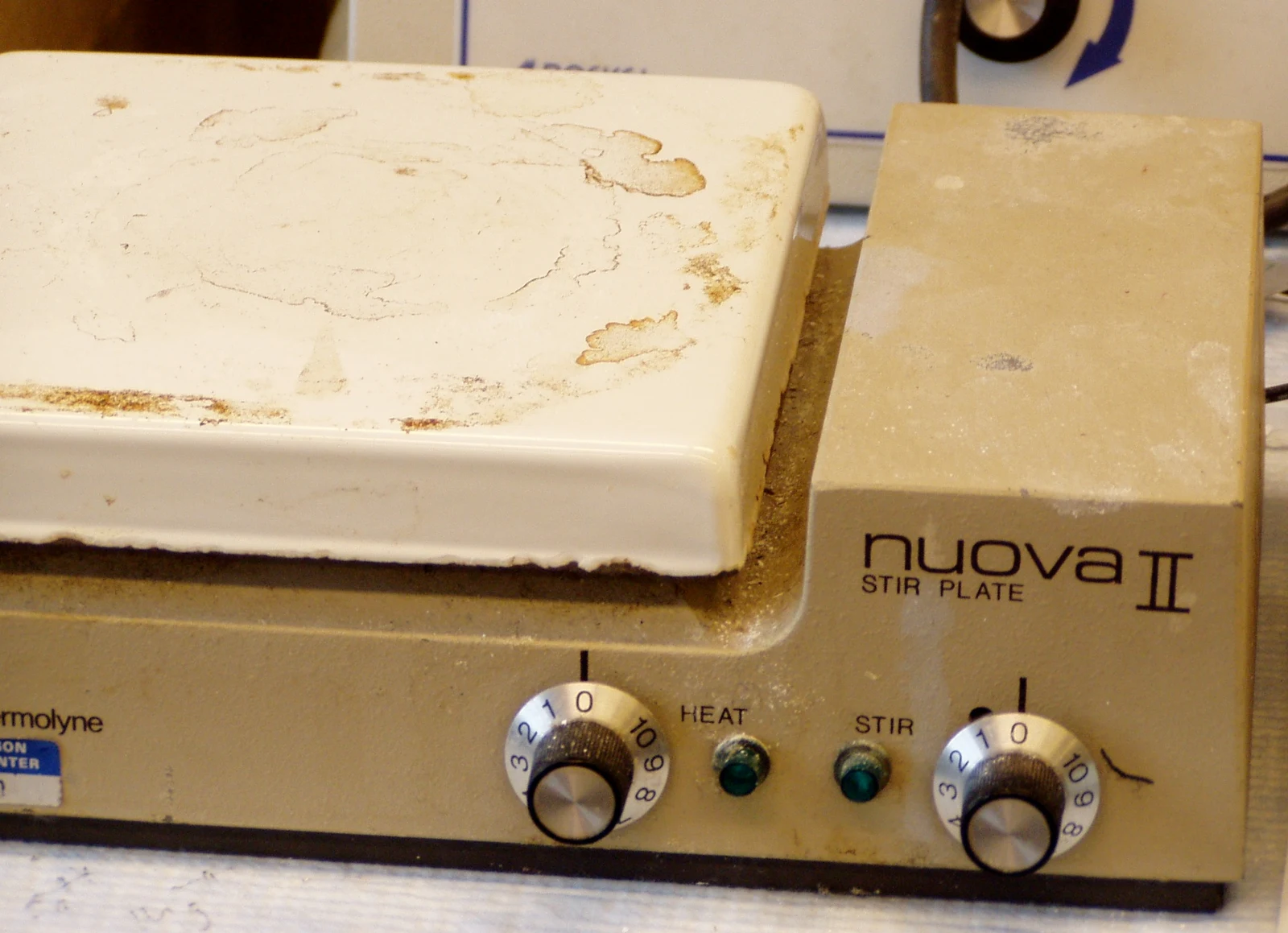
Transfers heat to a compatible vessel. The surface can remain hot after power is removed.
Zoom in, then drag to inspect. Keyboard: + / − to zoom, arrows to pan, 0 to reset. Tap the numbered markers to explore parts.
Laboratory hot plate — reference view
Image: Jeffrey M. Vinocur · Source / original · CC BY 2.5Resized and converted to WebP; original colours retained.
Laboratory hot plate
Heating plate · hotplate stirrer
What is its use?
Heats compatible vessels; some models also provide magnetic stirring.
Tap a number to locate its part. Zoom, drag or use full screen to inspect the reference. Models and graduations can differ; check the actual apparatus used in your laboratory.
How to recognise it.
- Flat heating surface
- Temperature or power controls
- Stable electrical housing
A hotplate stirrer has a separate mixing function; heating alone does not ensure a uniform sample temperature.
Point them out.
Choose a part to bring its numbered marker into view.
The science behind the reading.
Electrical energy heats a surface that transfers heat to the vessel and sample.
Think first. Then reveal.
Explain your answer aloud before opening it.
01Is the dial always the sample temperature?+
No. The control may set power or plate temperature; the sample may differ.
02Why choose compatible vessels?+
Thermal stress, material limits and contact stability affect safe heating.
03Does an unlit plate mean it is cool?+
No. Residual heat can remain after the heater is switched off.
04What does a magnetic stir bar do?+
It couples to the rotating magnetic field in suitable stirrer models and mixes the liquid.
Read the references.
Teaching and clinical references are listed here. Image attribution and licence appear below the viewer.