 MEDIVEERSETHE PRACTICAL HUB
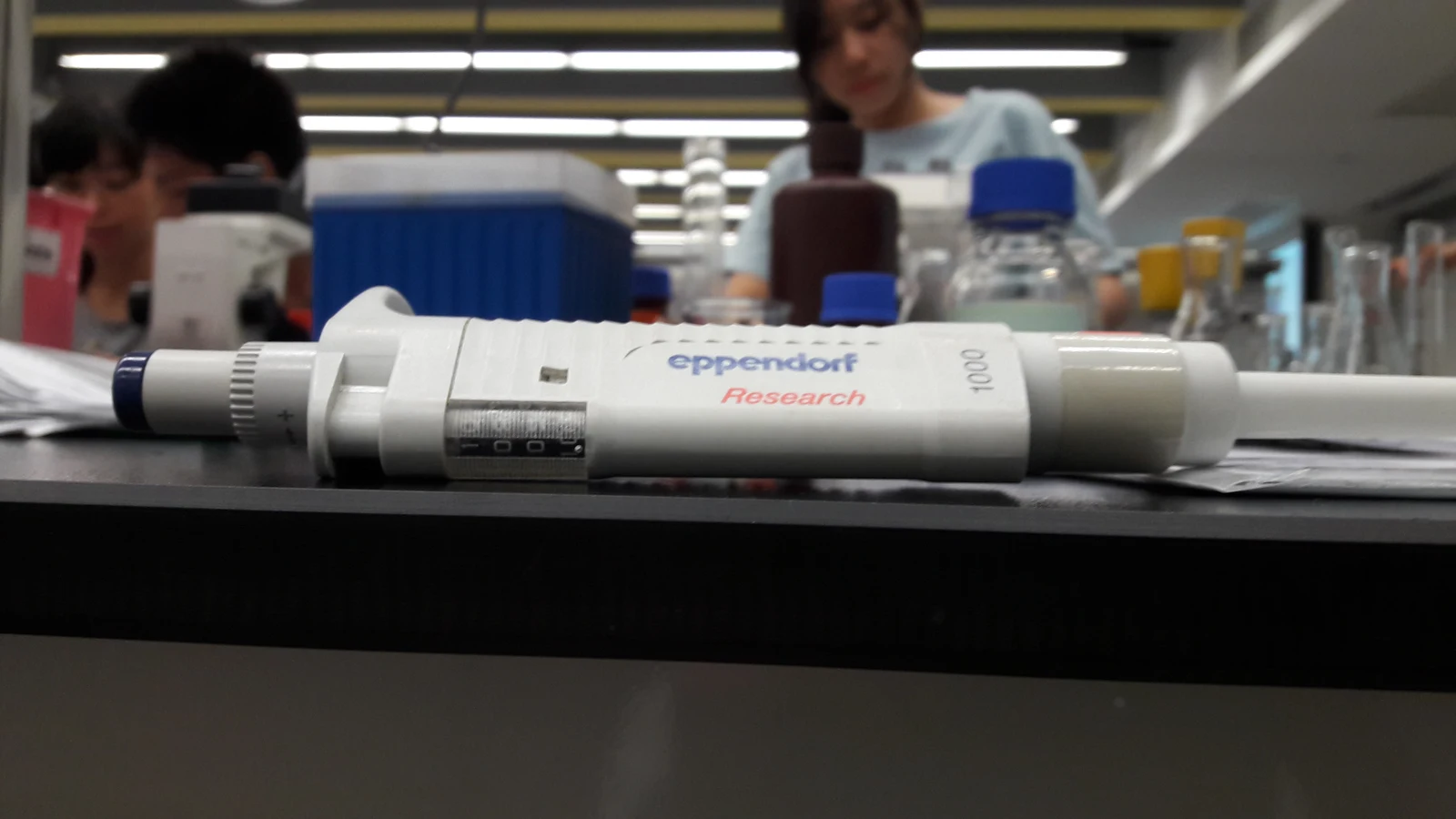
The piston is operated through this button; stop positions depend on the pipette model and technique.
Zoom in, then drag to inspect. Keyboard: + / − to zoom, arrows to pan, 0 to reset. Tap the numbered markers to explore parts.
Adjustable micropipette — reference view
Image: Wetitpig0 · Source / original · CC0Resized and converted to WebP; original colours retained.
Adjustable micropipette
Automatic pipette · piston pipette
What is its use?
Transfers small liquid volumes within the instrument’s stated range.
Tap a number to locate its part. Zoom, drag or use full screen to inspect the reference. Models and graduations can differ; check the actual apparatus used in your laboratory.
How to recognise it.
- Plunger at the top
- Volume setting and readout
- Narrow shaft for a disposable tip
A micropipette measures microlitre-scale volumes; a disposable dropper does not provide equivalent calibrated volume accuracy.
Point them out.
Choose a part to bring its numbered marker into view.
The science behind the reading.
A calibrated piston displacement aspirates and dispenses liquid; an air-displacement model includes an air cushion.
Think first. Then reveal.
Explain your answer aloud before opening it.
01What do the first and second stops mean on a typical air-displacement pipette?+
The first controls the set displacement; the second provides blow-out during dispensing. Exact operation follows the model’s instructions.
02Why choose the correct volume range?+
A setting outside the rated range is unreliable and may damage the mechanism.
03Why replace tips between samples?+
To reduce carry-over and cross-contamination.
04How is accuracy checked?+
By calibration, commonly using gravimetric measurement under controlled conditions.
Read the references.
Teaching and clinical references are listed here. Image attribution and licence appear below the viewer.