 MEDIVEERSETHE PRACTICAL HUB
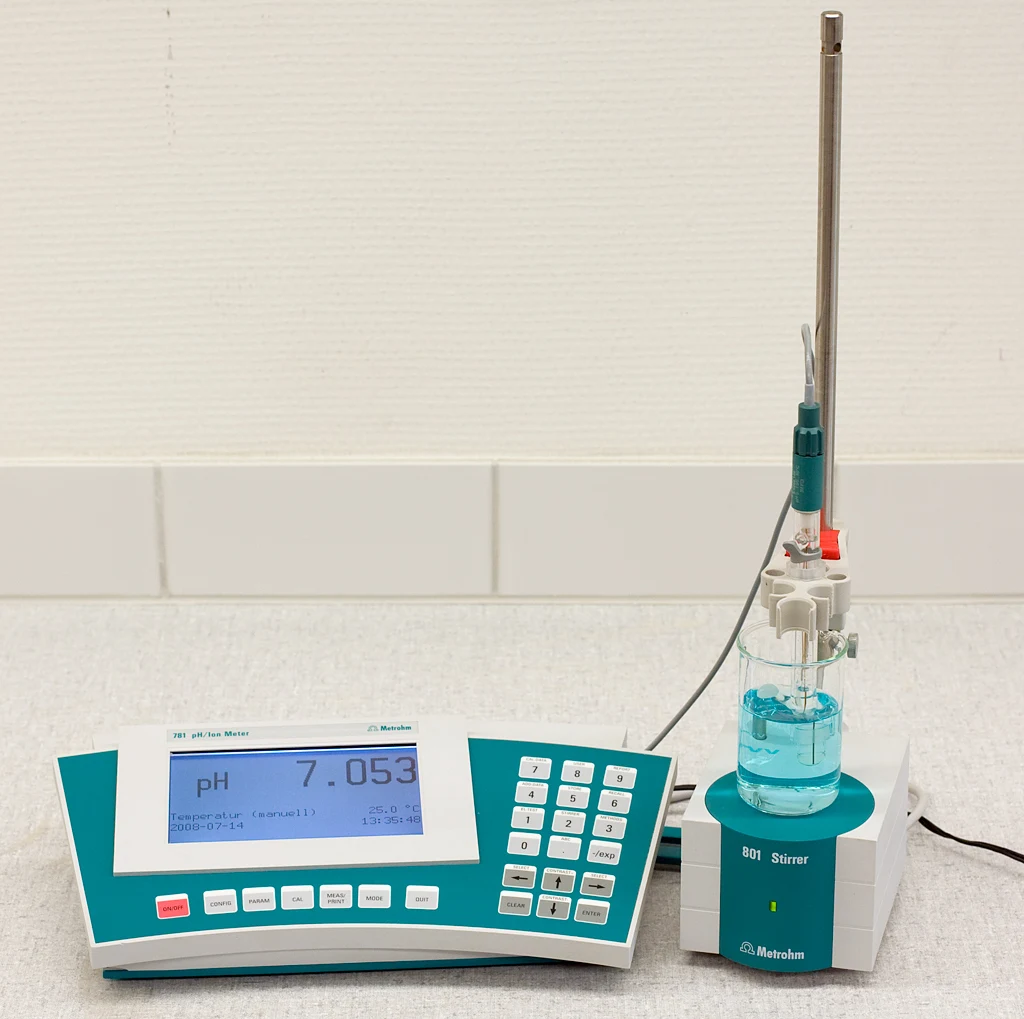
Displays pH and may also show temperature or calibration information.
Zoom in, then drag to inspect. Keyboard: + / − to zoom, arrows to pan, 0 to reset. Tap the numbered markers to explore parts.
pH meter — reference view
Image: Datamax · Source / original · Public domainResized and converted to WebP; original colours retained.
pH meter
Potentiometer · glass electrode pH meter
What is its use?
Measures the acidity or alkalinity of compatible aqueous samples.
Tap a number to locate its part. Zoom, drag or use full screen to inspect the reference. Models and graduations can differ; check the actual apparatus used in your laboratory.
How to recognise it.
- Electronic meter
- Electrode or probe connection
- Digital pH readout
Indicator paper gives a colour-based estimate; a calibrated electrode meter gives an electrical measurement.
Point them out.
Choose a part to bring its numbered marker into view.
The science behind the reading.
A pH-sensitive electrode potential is measured relative to a reference and related to hydrogen-ion activity through calibration.
Think first. Then reveal.
Explain your answer aloud before opening it.
01What is pH?+
The negative base-10 logarithm of hydrogen-ion activity.
02Why calibrate with buffers?+
Known pH standards establish the electrode response and help reveal drift.
03Why consider temperature?+
Both electrode response and sample or buffer pH can vary with temperature.
04Should every electrode be stored in distilled water?+
No. Follow the electrode’s storage instructions; many glass electrodes require a specified storage solution.
Read the references.
Teaching and clinical references are listed here. Image attribution and licence appear below the viewer.