 MEDIVEERSETHE PRACTICAL HUB
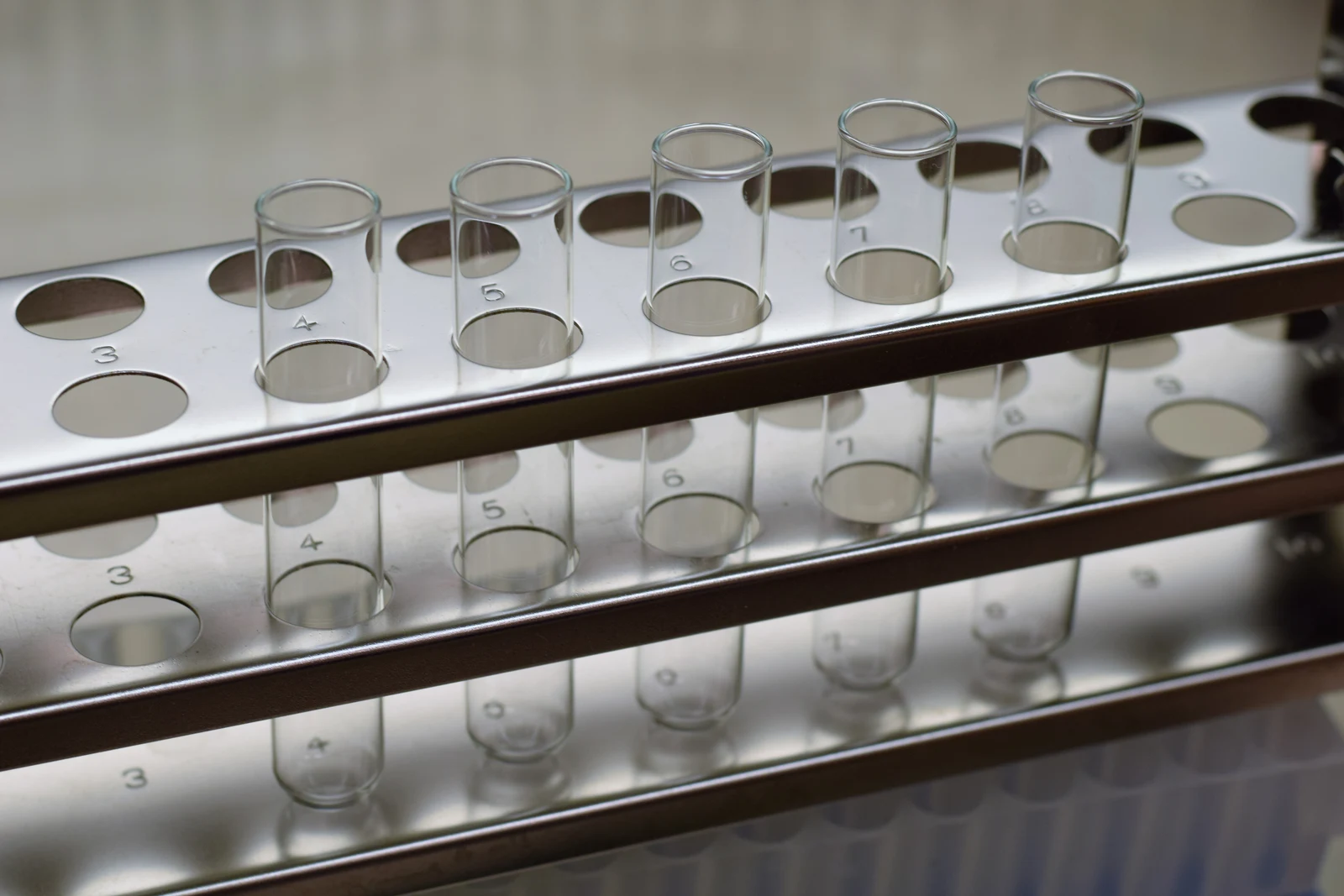
Allows addition of samples and reagents; use a compatible closure if the method requires one.
Zoom in, then drag to inspect. Keyboard: + / − to zoom, arrows to pan, 0 to reset. Tap the numbered markers to explore parts.
Test tubes — reference view
Image: J.N. Eskra · Source / original · CC BY-SA 4.0Resized and converted to WebP; original colours retained.
Test tubes
Reaction tubes · boiling tube
What is its use?
Holds small samples for reactions, observation or compatible heating in supervised practicals.
Tap a number to locate its part. Zoom, drag or use full screen to inspect the reference. Models and graduations can differ; check the actual apparatus used in your laboratory.
How to recognise it.
- Narrow open cylindrical vessels
- Rounded or conical closed ends depending on model
- Often supported upright in a rack
A test tube holds reactions; a calibrated pipette measures volume and an optical cuvette provides a defined light path.
Point them out.
Choose a part to bring its numbered marker into view.
The science behind the reading.
The vessel contains the reaction mixture; its material and dimensions must suit the assay.
Think first. Then reveal.
Explain your answer aloud before opening it.
01Why label tubes before adding samples?+
To preserve sample identity and avoid mix-ups.
02Is every test tube safe to heat?+
No. Suitability depends on material and manufacturer instructions.
03Why use a rack?+
It supports tubes upright and helps organise reactions.
04Why are control tubes useful?+
They help distinguish the expected assay response from background or contamination.
Read the references.
Teaching and clinical references are listed here. Image attribution and licence appear below the viewer.