 MEDIVEERSETHE PRACTICAL HUB
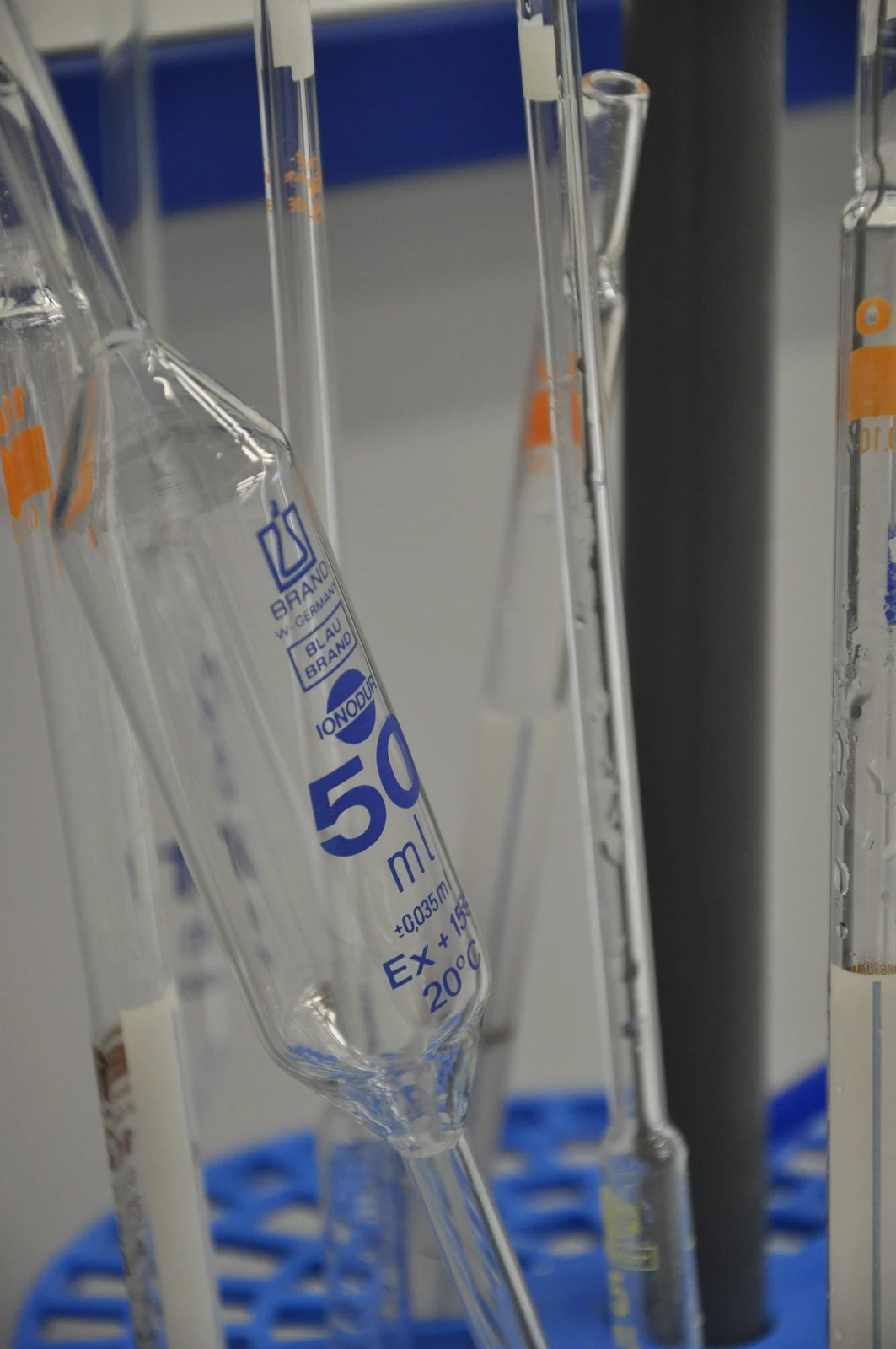
The meniscus is aligned with the calibration line for the specified transfer volume.
Zoom in, then drag to inspect. Keyboard: + / − to zoom, arrows to pan, 0 to reset. Tap the numbered markers to explore parts.
Volumetric pipette — reference view
Image: Zelda F. Scott · Source / original · CC BY-SA 3.0Resized and converted to WebP; original colours retained.
Volumetric pipette
Transfer pipette · bulb pipette
What is its use?
Transfers a fixed calibrated volume for accurate solution preparation.
Tap a number to locate its part. Zoom, drag or use full screen to inspect the reference. Models and graduations can differ; check the actual apparatus used in your laboratory.
How to recognise it.
- Central bulb
- Single calibration mark on the stem
- Tapered delivery tip
A volumetric pipette delivers one specified volume; a graduated pipette can deliver a range of volumes.
Point them out.
Choose a part to bring its numbered marker into view.
The science behind the reading.
The meniscus is aligned with a calibration mark; the pipette delivers its specified volume under stated conditions.
Think first. Then reveal.
Explain your answer aloud before opening it.
01Why use a pipette filler?+
It permits controlled aspiration without mouth pipetting.
02Should the final drop always be blown out?+
No. Delivery depends on the pipette’s calibration and marking; many transfer pipettes retain a final drop.
03Where is the meniscus read?+
At eye level; for clear aqueous liquids, the bottom of the concave meniscus is normally aligned with the mark.
04Why rinse with the solution when appropriate?+
Residual water would dilute the solution being measured.
Read the references.
Teaching and clinical references are listed here. Image attribution and licence appear below the viewer.