 MEDIVEERSETHE PRACTICAL HUB
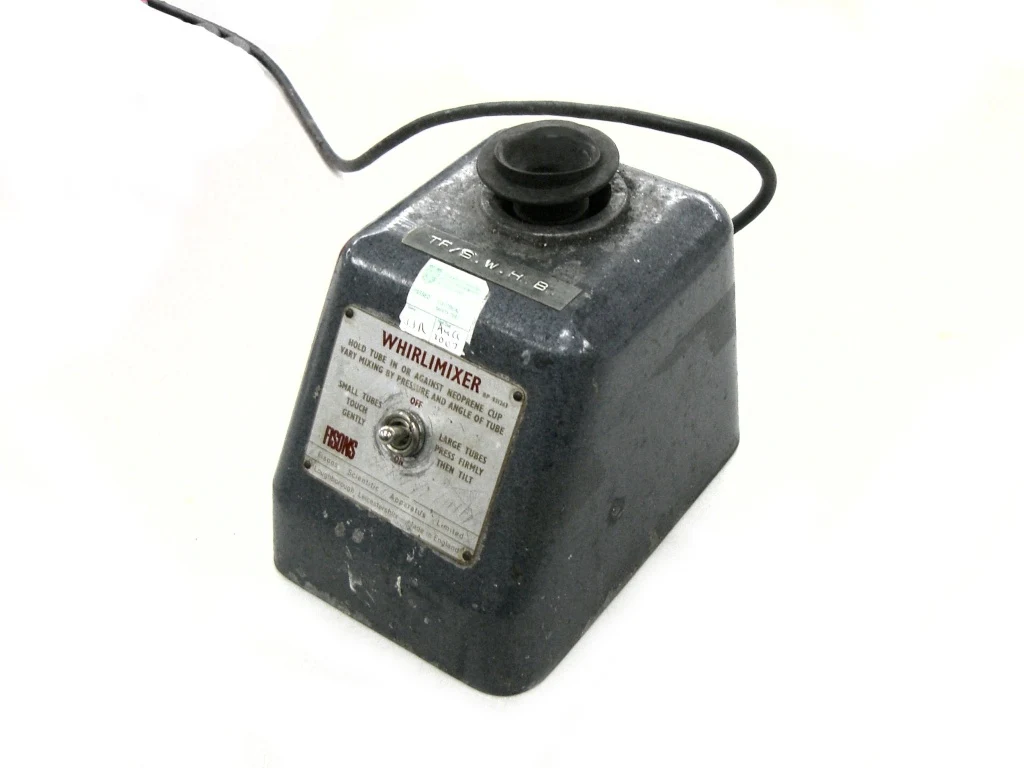
The eccentric rubber contact head transfers motion to a compatible tube.
Zoom in, then drag to inspect. Keyboard: + / − to zoom, arrows to pan, 0 to reset. Tap the numbered markers to explore parts.
Vortex mixer — reference view
Image: Zephyris at English Wikipedia · Source / original · CC BY-SA 3.0Resized and converted to WebP; original colours retained.
Vortex mixer
Test-tube mixer · vortex shaker
What is its use?
Rapidly mixes small samples in compatible closed tubes.
Tap a number to locate its part. Zoom, drag or use full screen to inspect the reference. Models and graduations can differ; check the actual apparatus used in your laboratory.
How to recognise it.
- Rubber cup or mixing head
- Compact motor base
- Speed or operating controls
A vortex mixer agitates the sample; a centrifuge separates components by sedimentation.
Point them out.
Choose a part to bring its numbered marker into view.
The science behind the reading.
Eccentric motion creates circular fluid movement and a vortex inside the vessel.
Think first. Then reveal.
Explain your answer aloud before opening it.
01What produces mixing?+
Rapid eccentric movement of the contact head causes fluid circulation.
02Why secure the cap?+
To reduce leakage, splashing and aerosol generation.
03Is vortexing suitable for every sample?+
No. Fragile cells, foaming solutions or method-sensitive samples may require gentler mixing.
04Does it measure concentration?+
No. It prepares a mixed sample; a separate analytical method performs the measurement.
Read the references.
Teaching and clinical references are listed here. Image attribution and licence appear below the viewer.