 MEDIVEERSETHE PRACTICAL HUB
Zoom in, then drag to inspect. Keyboard: + / − to zoom, arrows to pan, 0 to reset.
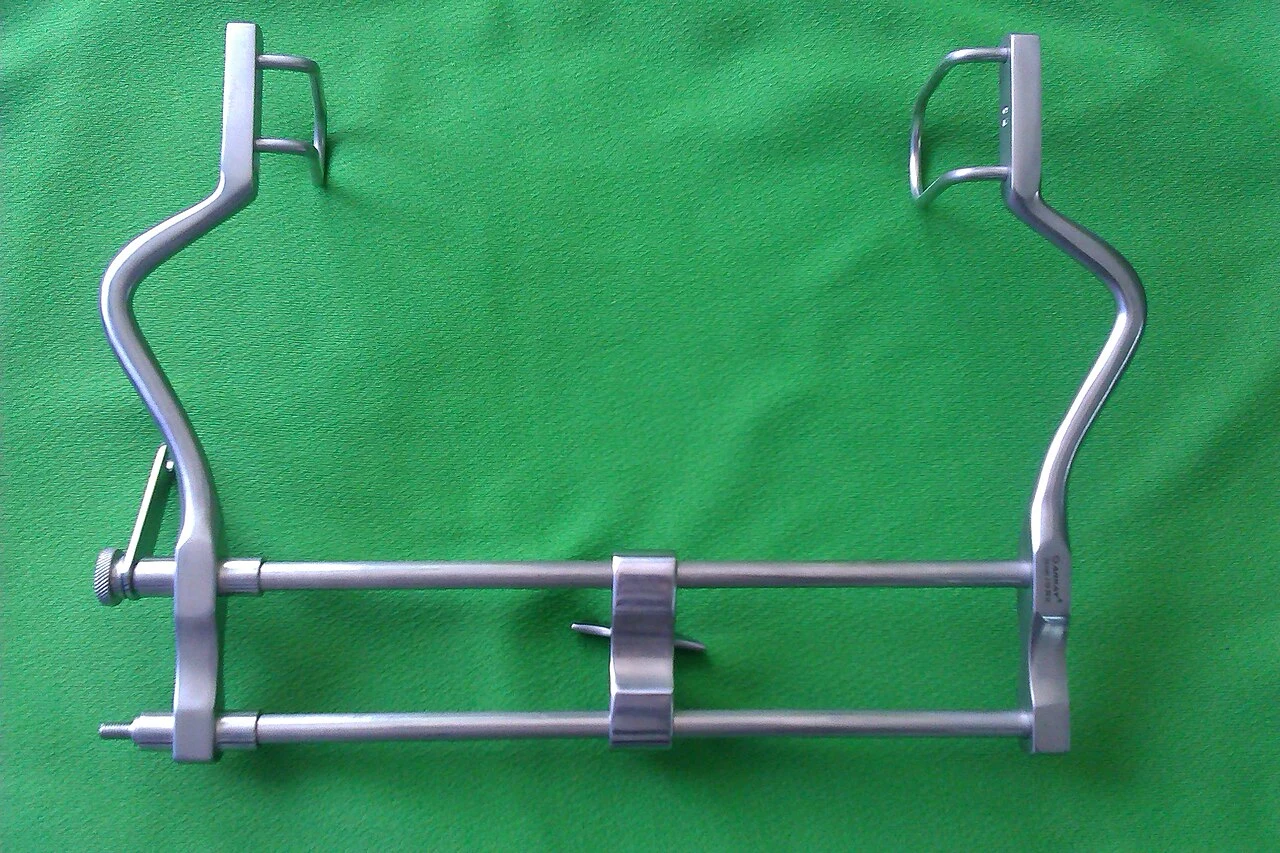
Balfour frame with lateral blades. Central blade is not attached; its fixing screw is reversed in this photograph.
Image: Saltanat ebli · Source / original · CC0Resized and converted to WebP; original colours retained.
Balfour retractor
Self-retaining abdominal retractor
What is its use?
Provides sustained exposure during open abdominal surgery.
Explore the photo before the answer. Zoom into the jaws, inspect the locking mechanism and compare the available reference views.
How to recognise it.
- A frame supporting two lateral blades.
- A central blade may be attached.
- A spreading and locking mechanism maintains exposure.
The broad blades and frame differ from the small rake-shaped prongs of a Weitlaner.
Name the parts.
Point to each part on your specimen as you say its name.
- Frame / crossbar
- Lateral blades
- Locking adjustment
- Central blade attachment
Think first. Then reveal.
Say your answer aloud before opening the suggested response.
01What category does it belong to?+
Self-retaining retractors.
02What is an advantage over a hand-held retractor?+
It maintains selected exposure without an assistant holding each blade continuously.
Read the references.
Use these clinical education and instrument references alongside your department’s practical manual. Photo attribution appears below the image.