 MEDIVEERSETHE PRACTICAL HUB
Zoom in, then drag to inspect. Keyboard: + / − to zoom, arrows to pan, 0 to reset.
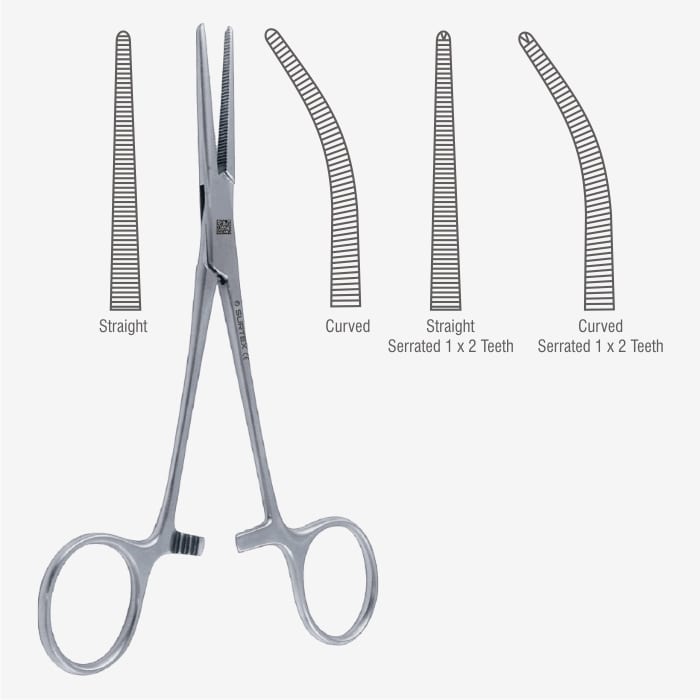
Crile artery forceps — manufacturer / publisher reference. Variants may differ.
Image: SURTEX Instruments · Source / originalCrile artery forceps
Crile artery forcep
What is its use?
Temporarily clamps vessels during haemostasis.
Explore the photo before the answer. Zoom into the jaws, inspect the locking mechanism and compare the available reference views.
How to recognise it.
- Ring handles and a ratchet.
- Conventional jaws are transversely serrated along their full working length.
- Straight and curved patterns exist.
Conventional Kelly serrations occupy the distal portion; Crile serrations extend along the working jaw.
Name the parts.
Point to each part on your specimen as you say its name.
- Rings
- Ratchet
- Box joint
- Fully serrated jaws
Think first. Then reveal.
Say your answer aloud before opening the suggested response.
01What distinguishes the conventional Crile jaw?+
Full-length transverse serrations.
02Does curvature establish the pattern?+
No. Inspect the serrations and instrument marking.
Read the references.
Use these clinical education and instrument references alongside your department’s practical manual. Photo attribution appears below the image.