 MEDIVEERSETHE PRACTICAL HUB
Zoom in, then drag to inspect. Keyboard: + / − to zoom, arrows to pan, 0 to reset.
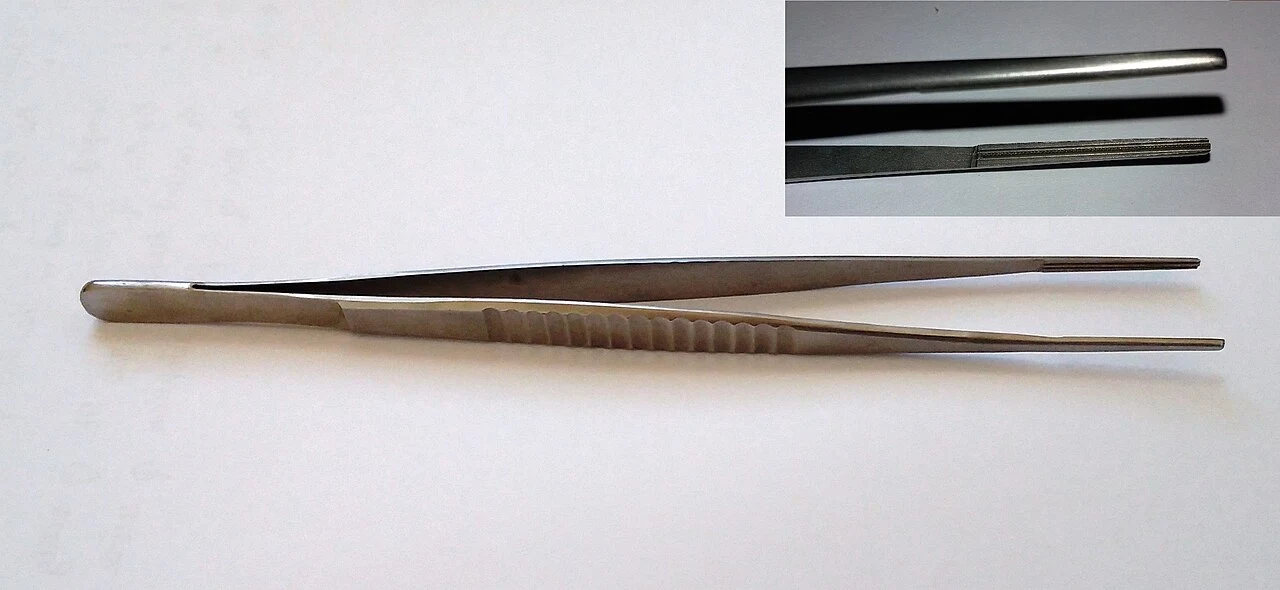
DeBakey tissue forceps: Reference view.
Image: Phyo WP · Source / original · CC BY-SA 4.0Resized and converted to WebP; original colours retained.
DeBakey tissue forceps
Atraumatic vascular thumb forceps
What is its use?
Manipulates delicate tissues and vessels with a grip designed to reduce crushing injury.
Explore the photo before the answer. Zoom into the jaws, inspect the locking mechanism and compare the available reference views.
How to recognise it.
- Long spring-action thumb forceps.
- Fine longitudinal intermeshing rows on the working tips.
- No prominent sharp terminal tooth or finger rings.
Its fine longitudinal jaw pattern differs from the prominent terminal teeth of standard toothed forceps.
Name the parts.
Point to each part on your specimen as you say its name.
- Spring base
- Arms
- Grip
- Fine atraumatic jaw rows
Think first. Then reveal.
Say your answer aloud before opening the suggested response.
01What is the advantage of the jaw design?+
A secure delicate-tissue grip with reduced local trauma.
02Can these forceps still cause damage?+
Yes. Force and duration must still be controlled.
Read the references.
Use these clinical education and instrument references alongside your department’s practical manual. Photo attribution appears below the image.