 MEDIVEERSETHE PRACTICAL HUB
Zoom in, then drag to inspect. Keyboard: + / − to zoom, arrows to pan, 0 to reset.
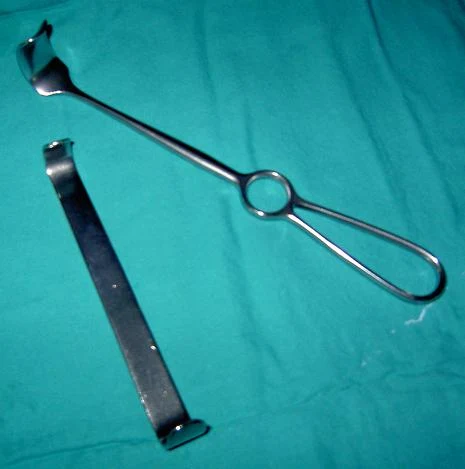
Langenbeck is the hand-held L-shaped retractor at the left of this reference photograph.
Image: Olek Remesz (wiki-pl: Orem, commons: Orem) · Source / original · CC BY-SA 2.5Resized and converted to WebP; original colours retained.
Langenbeck retractor
Hand-held right-angle retractor
What is its use?
Retracts a wound edge to improve exposure.
Explore the photo before the answer. Zoom into the jaws, inspect the locking mechanism and compare the available reference views.
How to recognise it.
- Hand-held instrument with a handle and shaft.
- Flat blade bends approximately at a right angle.
- Blade width and depth vary by model.
A Deaver has a much broader sweeping curve; a self-retaining retractor includes a locking spreading mechanism.
Name the parts.
Point to each part on your specimen as you say its name.
- Handle
- Shaft
- Right-angle bend
- Retracting blade
Think first. Then reveal.
Say your answer aloud before opening the suggested response.
01Is it self-retaining?+
No. A conventional Langenbeck is hand-held.
02Why are different blade depths available?+
To match the depth and exposure required.
Read the references.
Use these clinical education and instrument references alongside your department’s practical manual. Photo attribution appears below the image.