 MEDIVEERSETHE PRACTICAL HUB
Zoom in, then drag to inspect. Keyboard: + / − to zoom, arrows to pan, 0 to reset.
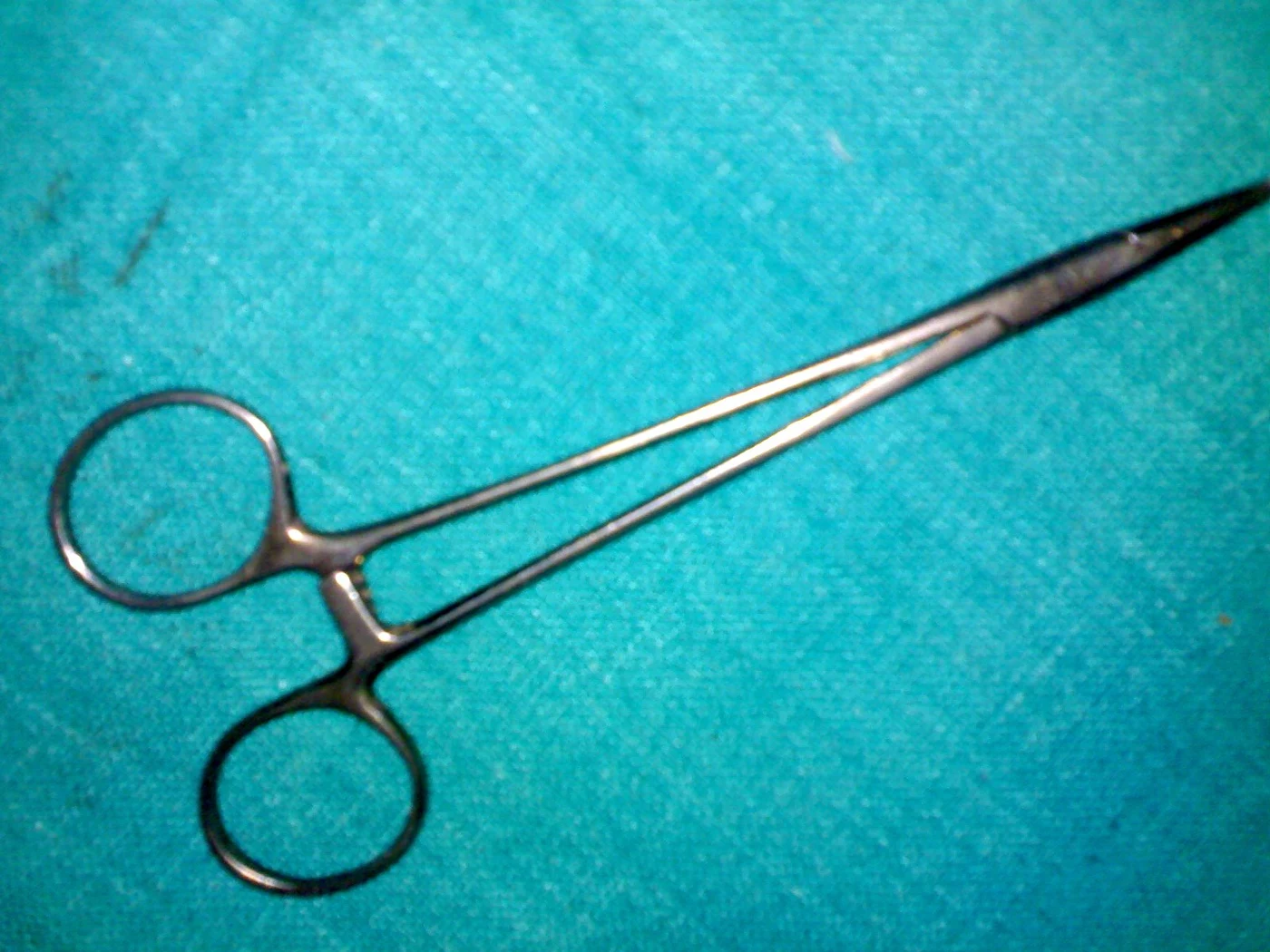
Halsted mosquito forceps: Reference view.
Image: Sarindam7 · Source / original · CC BY-SA 4.0Resized and converted to WebP; original colours retained.
Halsted mosquito forceps
Mosquito artery forceps
What is its use?
Grasps small vessels for haemostasis in a confined field.
Explore the photo before the answer. Zoom into the jaws, inspect the locking mechanism and compare the available reference views.
How to recognise it.
- Small ring-handled locking forceps.
- Fine narrow jaws, usually transversely serrated.
- Delicate profile compared with a standard artery clamp.
Smaller and more delicate than the usual Kelly or Crile; size alone does not establish the model.
Name the parts.
Point to each part on your specimen as you say its name.
- Rings
- Ratchet
- Shanks
- Joint
- Fine jaws
Think first. Then reveal.
Say your answer aloud before opening the suggested response.
01Why choose a mosquito rather than a large clamp?+
Its fine jaws suit small vessels and limited exposure.
02Are mosquito forceps always curved?+
No. Both straight and curved patterns exist.
Read the references.
Use these clinical education and instrument references alongside your department’s practical manual. Photo attribution appears below the image.