 MEDIVEERSETHE PRACTICAL HUB
Zoom in, then drag to inspect. Keyboard: + / − to zoom, arrows to pan, 0 to reset.
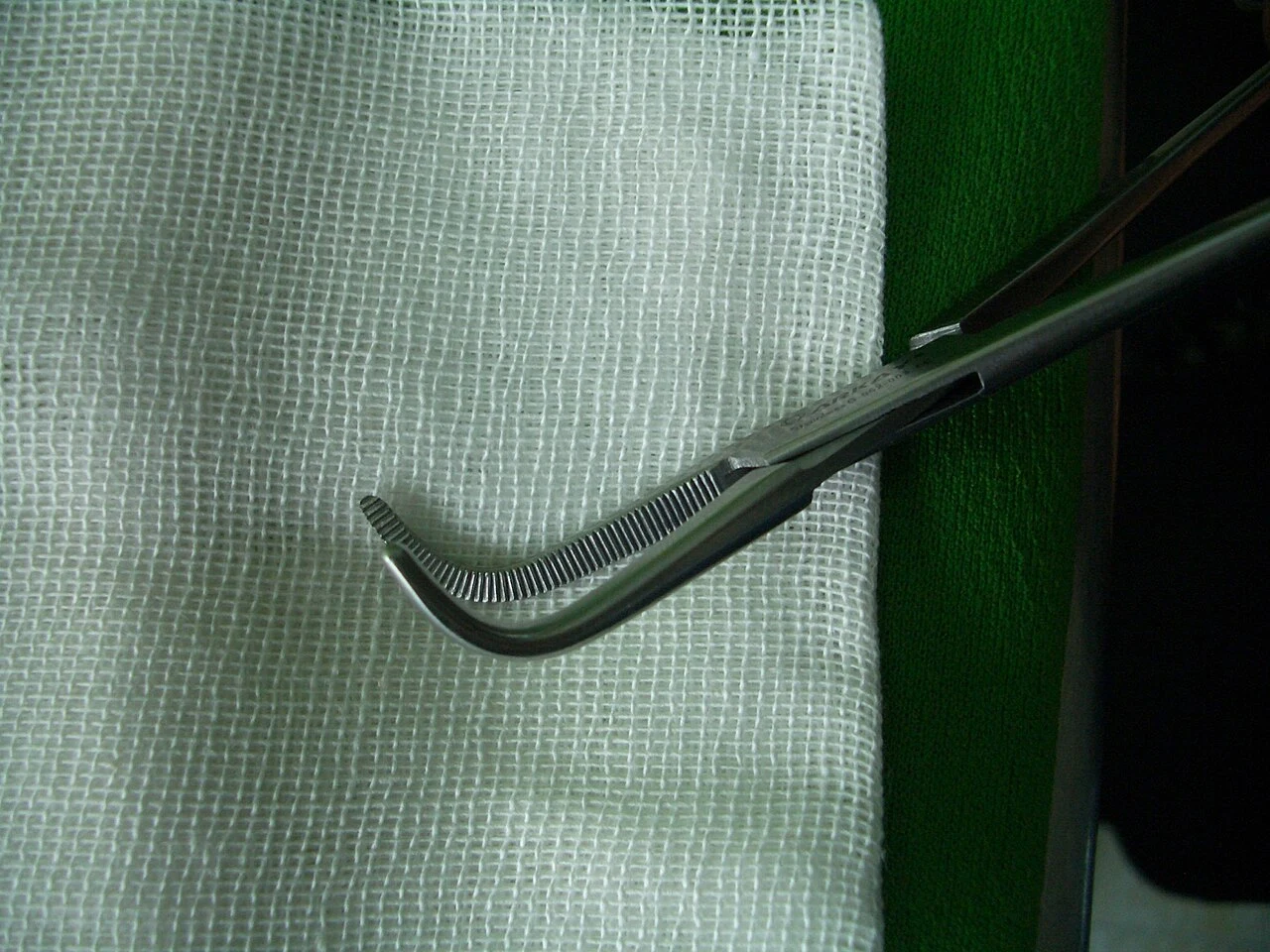
Close view of a right-angle clamp. Named subtypes vary; identify the exact specimen by markings and design.
Image: Saltanat ebli · Source / original · CC0Resized and converted to WebP; original colours retained.
Right-angle / Mixter-pattern forceps
Right-angle clamp · ligature passer
What is its use?
Assists dissection and passage of a ligature around an isolated structure.
Explore the photo before the answer. Zoom into the jaws, inspect the locking mechanism and compare the available reference views.
How to recognise it.
- Long shanks with ring handles and a ratchet.
- Distal jaws turn through a pronounced angle.
- Confirm the manufacturer's pattern before naming the exact subtype.
The distal angle is much sharper than the gentle curve of ordinary curved artery forceps.
Name the parts.
Point to each part on your specimen as you say its name.
- Rings
- Ratchet
- Box joint
- Long shanks
- Angled jaws
Think first. Then reveal.
Say your answer aloud before opening the suggested response.
01Why is the jaw angled?+
To reach around a structure in a confined operative field.
02Can the photograph establish every named subtype?+
No. Several right-angle patterns look similar; inspect markings and jaw design.
Read the references.
Use these clinical education and instrument references alongside your department’s practical manual. Photo attribution appears below the image.