 MEDIVEERSETHE PRACTICAL HUB
Zoom in, then drag to inspect. Keyboard: + / − to zoom, arrows to pan, 0 to reset.
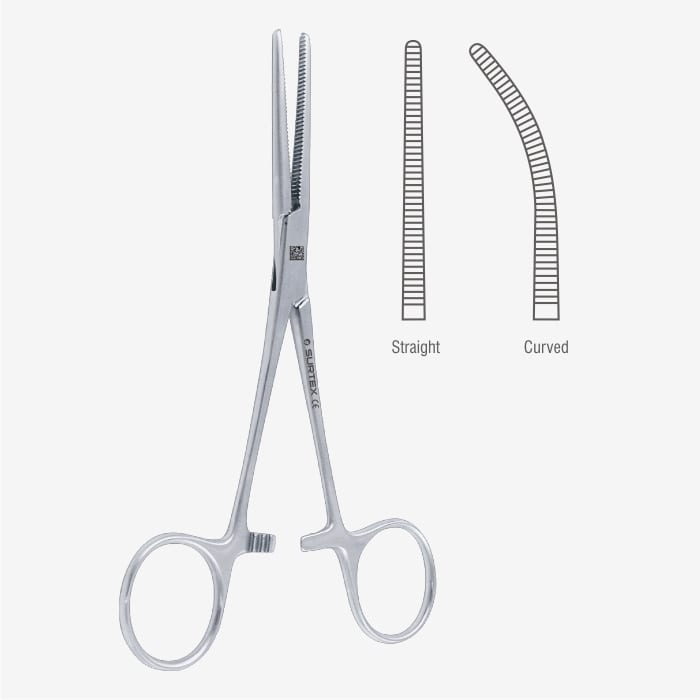
Rochester-Pean forceps — manufacturer / publisher reference. Variants may differ.
Image: SURTEX Instruments · Source / originalRochester-Pean forceps
Rochester-Pean forcep
What is its use?
Clamps larger vessels or tissue pedicles where a robust haemostatic grip is appropriate.
Explore the photo before the answer. Zoom into the jaws, inspect the locking mechanism and compare the available reference views.
How to recognise it.
- Robust ring-handled locking clamp.
- Broad jaws with transverse serrations.
- No sharp terminal Kocher-type tooth in the conventional pattern.
Rochester-Carmalt has predominantly longitudinal jaw serrations rather than the Pean transverse pattern.
Name the parts.
Point to each part on your specimen as you say its name.
- Rings
- Ratchet
- Joint
- Heavy shanks
- Serrated jaws
Think first. Then reveal.
Say your answer aloud before opening the suggested response.
01Why is it more robust than a mosquito?+
It is designed for a heavier clamping task.
02What is the conventional jaw pattern?+
Transverse serrations without a prominent terminal tooth.
Read the references.
Use these clinical education and instrument references alongside your department’s practical manual. Photo attribution appears below the image.