 MEDIVEERSETHE PRACTICAL HUB
Zoom in, then drag to inspect. Keyboard: + / − to zoom, arrows to pan, 0 to reset.
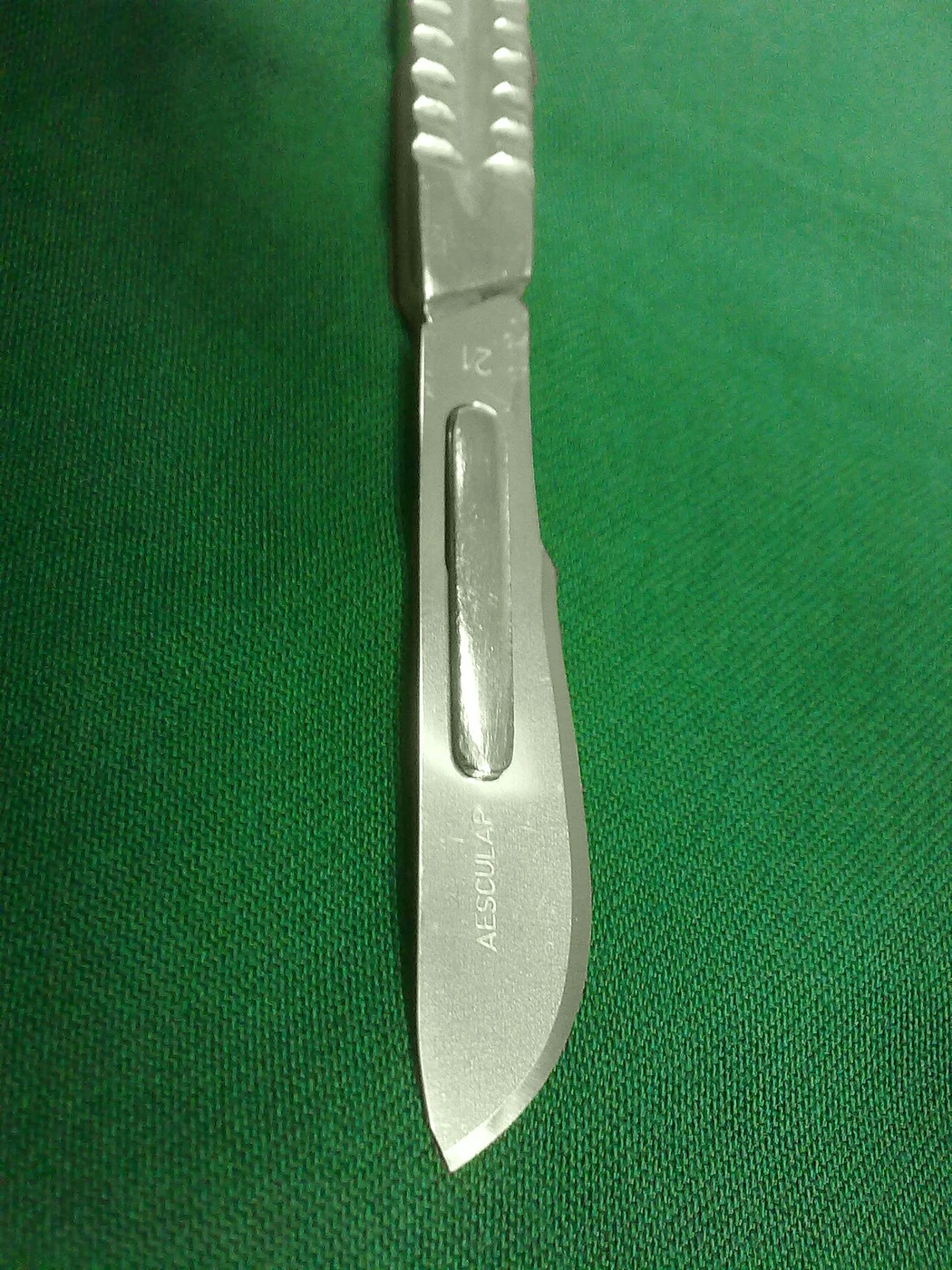
Bard-Parker scalpel & handles: Reference view.
Image: SnowBink · Source / original · CC BY-SA 3.0Resized and converted to WebP; original colours retained.
Bard-Parker scalpel & handles
BP handle · surgical blade
What is its use?
Makes a controlled incision through tissue with a sharp blade.
Explore the photo before the answer. Zoom into the jaws, inspect the locking mechanism and compare the available reference views.
How to recognise it.
- Reusable handle with a fitting for a detachable blade.
- Identify the blade number and handle number separately.
- Blade shapes and handle fittings vary.
No. 3 handles commonly accept 10, 11, 12 and 15 blades; No. 4 accepts larger-pattern blades such as 20–25. Check compatibility.
Name the parts.
Point to each part on your specimen as you say its name.
- Handle
- Blade mounting slot / fitting
- Blade spine
- Cutting edge
- Tip
Think first. Then reveal.
Say your answer aloud before opening the suggested response.
01Which blade has a pointed triangular profile?+
A No. 11 blade has a pointed triangular profile.
02Which blade is commonly chosen for a short precise incision?+
A No. 15 has a small curved cutting edge.
03How should used blades be disposed of?+
Use the institution's approved sharps-disposal process; avoid direct finger contact with the blade.
Read the references.
Use these clinical education and instrument references alongside your department’s practical manual. Photo attribution appears below the image.