 MEDIVEERSETHE PRACTICAL HUB
Zoom in, then drag to inspect. Keyboard: + / − to zoom, arrows to pan, 0 to reset.
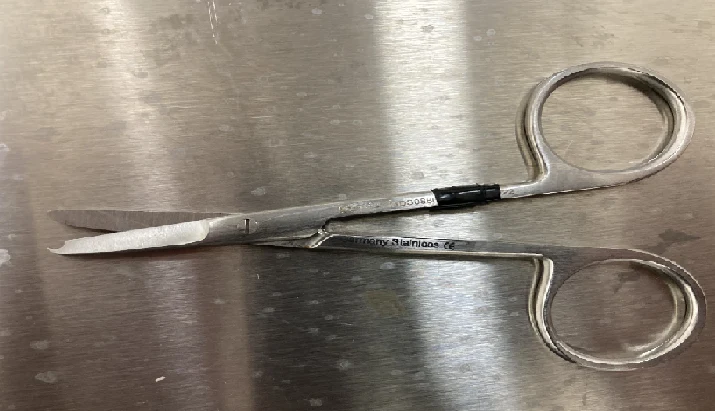
Stitch-removal scissors: Reference view.
Image: Pete unseth · Source / original · CC0Resized and converted to WebP; original colours retained.
Stitch-removal scissors
Suture scissors · hook-tip stitch scissors
What is its use?
Cuts sutures during stitch removal with the appropriate technique.
Explore the photo before the answer. Zoom into the jaws, inspect the locking mechanism and compare the available reference views.
How to recognise it.
- Small scissors with a hook or notch on one blade.
- Finger-ring handles and a pivot.
- The notch can lift a suture for cutting.
Do not identify every small scissors as stitch scissors; look for the dedicated hook or notch.
Name the parts.
Point to each part on your specimen as you say its name.
- Rings
- Shanks
- Pivot
- Cutting blade
- Hooked / notched blade
Think first. Then reveal.
Say your answer aloud before opening the suggested response.
01What is the purpose of the hook?+
It helps engage and lift the suture before cutting.
02Are these the same as tissue-dissection scissors?+
No. Their specific tip design is intended for suture removal.
Read the references.
Use these clinical education and instrument references alongside your department’s practical manual. Photo attribution appears below the image.