 MEDIVEERSETHE PRACTICAL HUB
Zoom in, then drag to inspect. Keyboard: + / − to zoom, arrows to pan, 0 to reset.
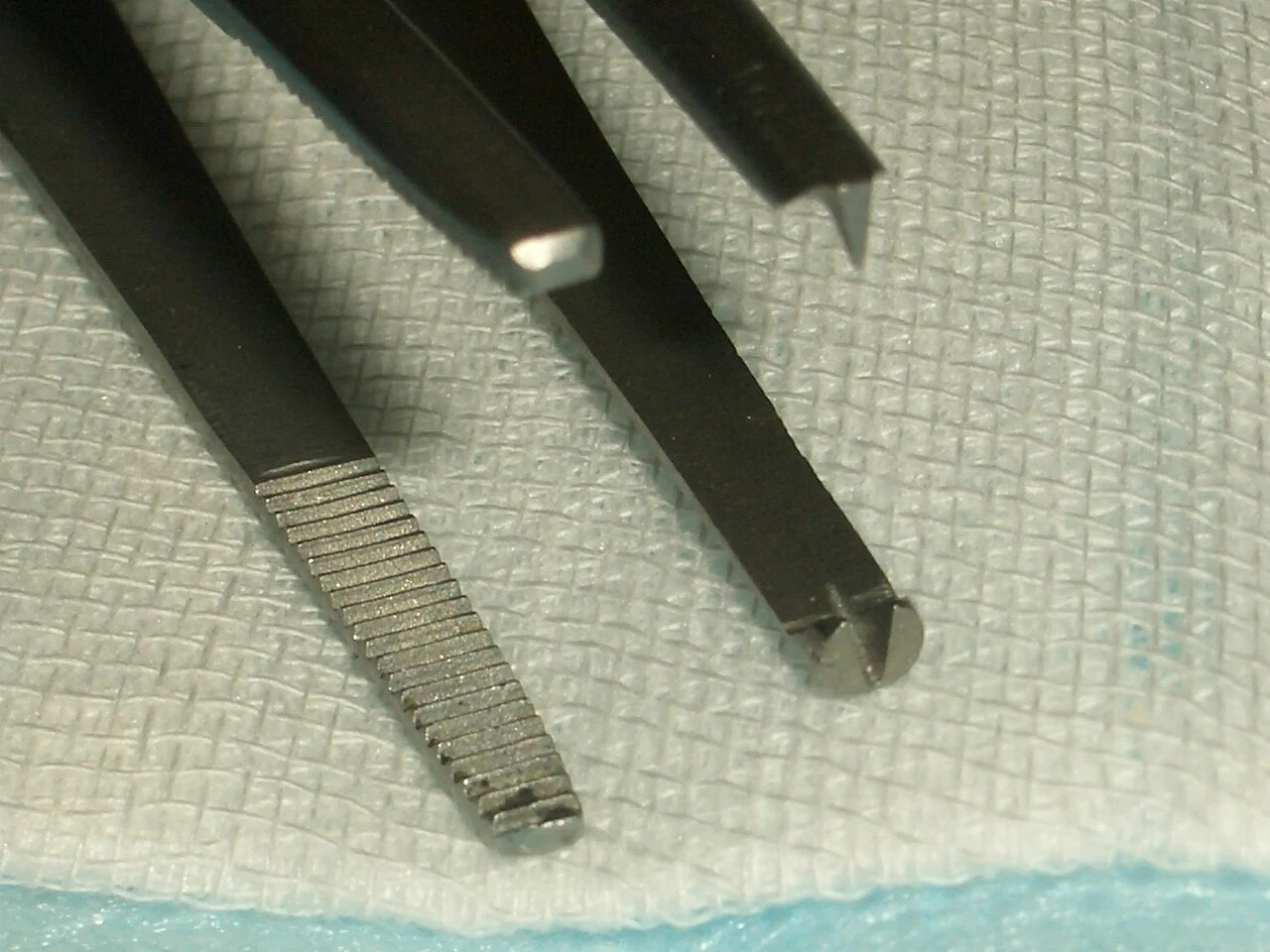
Thumb-forceps tip comparison: prominent interlocking teeth are visible on the right.
Image: آرمین · Source / original · CC0Resized and converted to WebP; original colours retained.
Toothed dissecting forceps
Toothed thumb forceps
What is its use?
Holds skin or firm tissue during dissection and wound closure.
Explore the photo before the answer. Zoom into the jaws, inspect the locking mechanism and compare the available reference views.
How to recognise it.
- Spring-action thumb instrument without finger rings.
- Interlocking teeth at the tip.
- No ratchet or box joint.
Plain dressing forceps have serrations without prominent terminal teeth.
Name the parts.
Point to each part on your specimen as you say its name.
- Spring base
- Arms
- Grip area
- Toothed tips
Think first. Then reveal.
Say your answer aloud before opening the suggested response.
01Why are these called thumb forceps?+
Their spring arms are controlled between the thumb and fingers.
02Would terminal teeth suit delicate vessels?+
An appropriate atraumatic vascular forceps is preferred.
Read the references.
Use these clinical education and instrument references alongside your department’s practical manual. Photo attribution appears below the image.