 MEDIVEERSETHE PRACTICAL HUB
Zoom in, then drag to inspect. Keyboard: + / − to zoom, arrows to pan, 0 to reset.
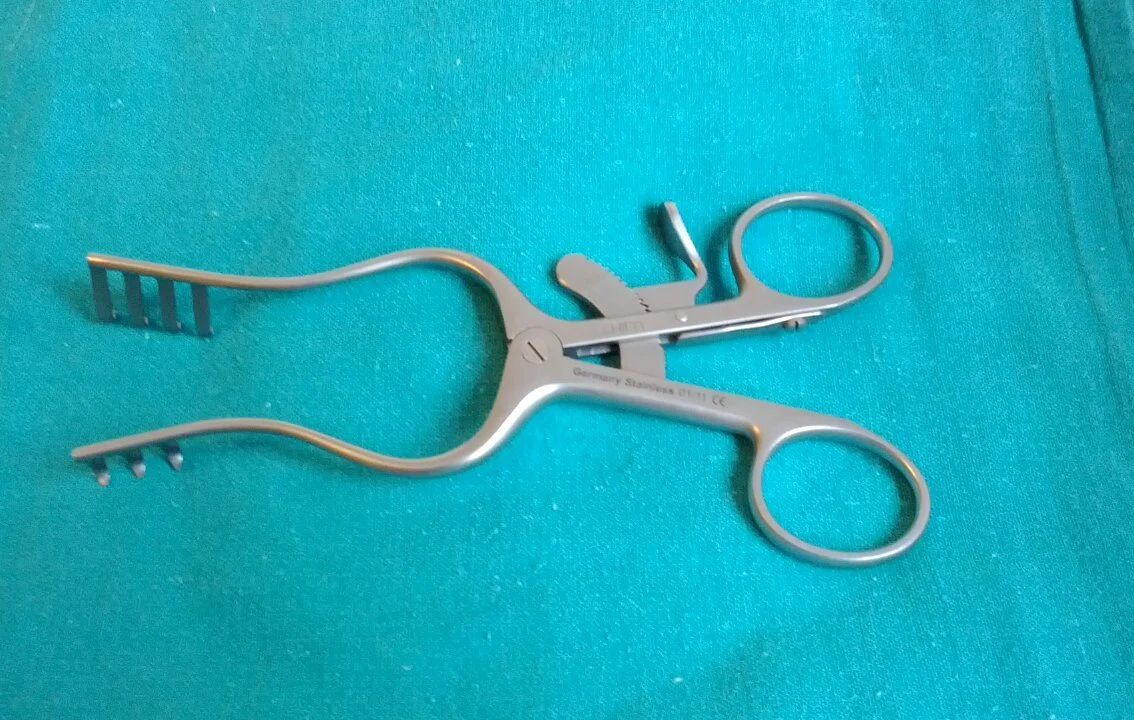
Weitlaner retractor: Reference view.
Image: MacPiek · Source / original · CC BY 3.0Resized and converted to WebP; original colours retained.
Weitlaner retractor
Self-retaining pronged retractor
What is its use?
Maintains separation of wound edges without continuous hand-held traction.
Explore the photo before the answer. Zoom into the jaws, inspect the locking mechanism and compare the available reference views.
How to recognise it.
- Ring handles with a ratchet mechanism.
- Opposing rake-like prongs.
- Locks the wound edges apart; sharp and blunt variants exist.
Balfour uses broad abdominal side blades rather than rake-like prongs.
Name the parts.
Point to each part on your specimen as you say its name.
- Finger rings
- Ratchet
- Joint
- Arms
- Prongs
Think first. Then reveal.
Say your answer aloud before opening the suggested response.
01Why is it called self-retaining?+
Its locking mechanism maintains the spread after adjustment.
02Are its prongs always sharp?+
No. Blunt-pronged patterns are also manufactured.
Read the references.
Use these clinical education and instrument references alongside your department’s practical manual. Photo attribution appears below the image.