Identify
Recognise connector, tube and any cuff/pilot assembly.
 MEDIVEERSETHE PRACTICAL HUB
LOOK CLOSELY / UNDERSTAND CLEARLY
Identify a tracheal tube and discuss device-specific checks and placement confirmation.
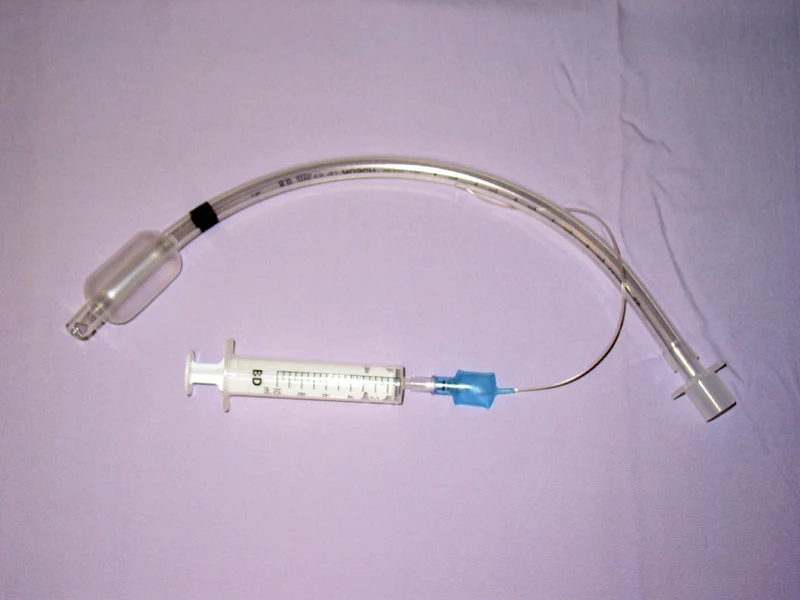
The inflatable sealing cuff near the distal end.
Zoom in, then drag to inspect. Keyboard: + / − to zoom, arrows to pan, 0 to reset. Tap the numbered markers to explore parts.
endotracheal tube — reference view
Image: bigomar2 · Source / original · CC BY-SA 3.0Resized and converted to WebP; original colours retained.
A correctly positioned tube provides a conduit to the trachea; cuffed designs use an inflatable seal when appropriate.
Recognise connector, tube and any cuff/pilot assembly.
Size and design depend on the patient and procedure.
Use the approved placement-confirmation and monitoring methods; appearance alone is insufficient.
Try answering aloud, then open the suggested answer. Examiner questions vary.
No. Designs differ by intended use.
No. Follow the approved pressure-assessment procedure.
Incorrect placement can prevent effective ventilation and cause serious harm.
No. It must be interpreted with clinical confirmation.