Identify the reference
Weighted head with a rubber contact surface. Handle allows a controlled swing. Different patterns include Taylor and Queen Square designs
 MEDIVEERSETHE PRACTICAL HUB
LOOK CLOSELY / UNDERSTAND CLEARLY
Identify a reflex hammer and explain its role in a limb neurological examination.
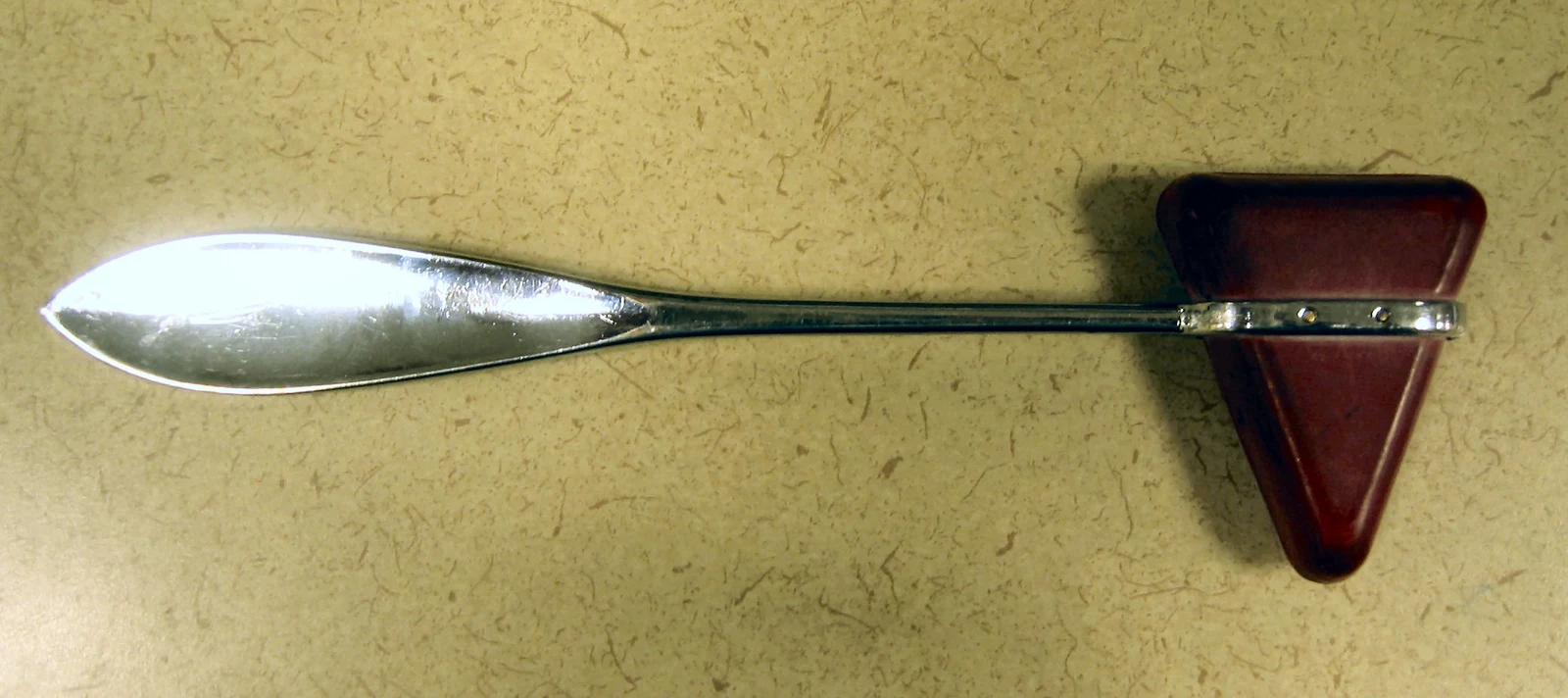
Rubber head: located on the reference instrument. Compare its shape and position with the apparatus used in your practical.
Zoom in, then drag to inspect. Keyboard: + / − to zoom, arrows to pan, 0 to reset. Tap the numbered markers to explore parts.
Reflex hammer — reference view
Image: Samir at English Wikipedia · Source / original · CC BY-SA 3.0Resized and converted to WebP; original colours retained.
A tendon tap briefly stretches muscle spindles and activates the stretch-reflex pathway.
Weighted head with a rubber contact surface. Handle allows a controlled swing. Different patterns include Taylor and Queen Square designs
A tendon tap briefly stretches muscle spindles and activates the stretch-reflex pathway.
Reflexes are assessed alongside sensation, power and other findings; they do not replace a full neurovascular assessment.
Try answering aloud, then open the suggested answer. Examiner questions vary.
Group Ia afferents from muscle spindles.
L2–L4, particularly L4, through the femoral nerve.
S1–S2, particularly S1, through the tibial nerve.
Symmetry and the broader clinical pattern help interpret the response.