 MEDIVEERSETHE PRACTICAL HUB
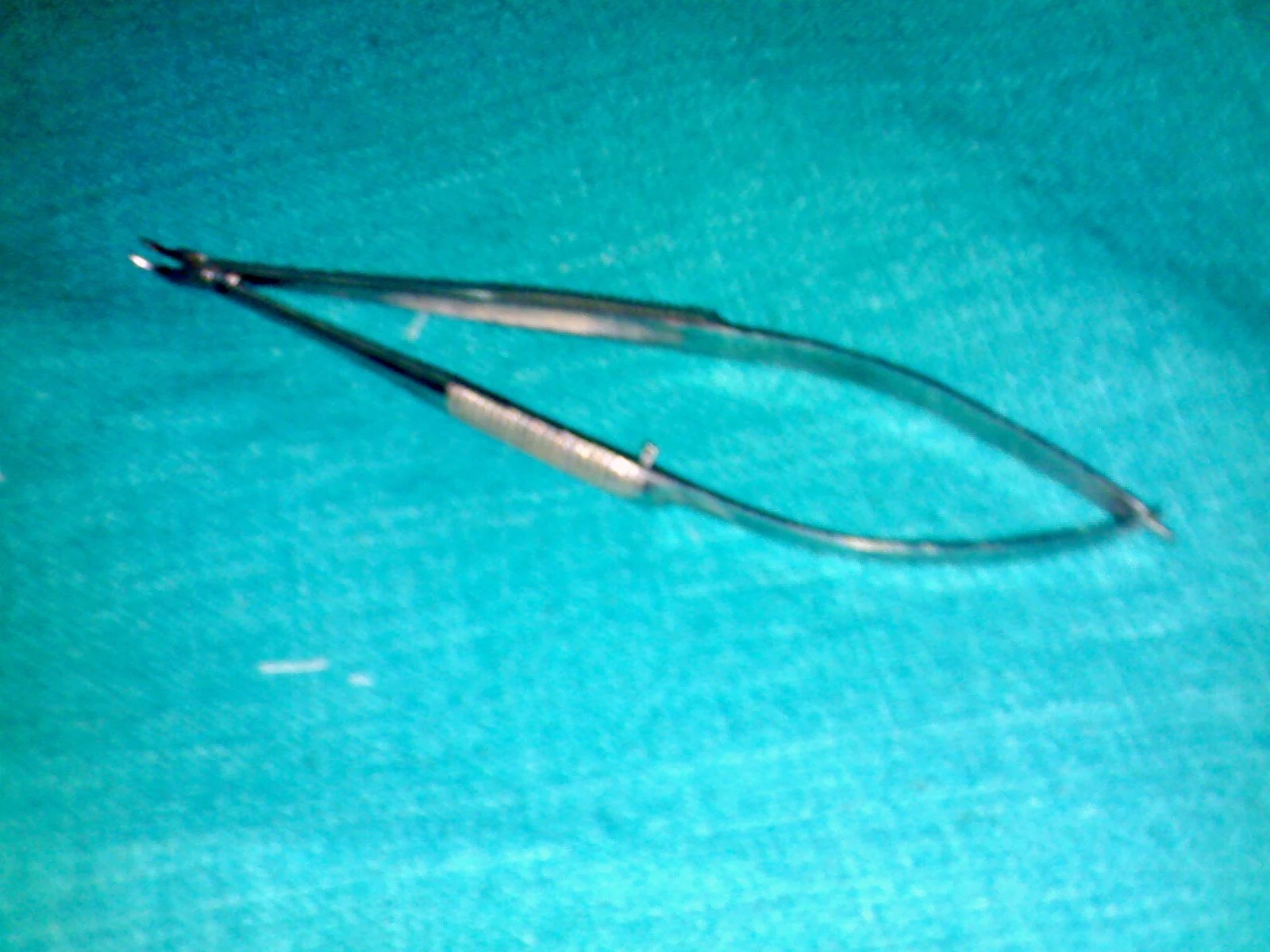
Fine opposed jaws stabilise a suitable ophthalmic needle.
Zoom in, then drag to inspect. Keyboard: + / − to zoom, arrows to pan, 0 to reset. Tap the numbered markers to explore parts.
Barraquer needle holder — reference view
Image: Sarindam7 · Source / original · CC BY-SA 4.0Resized and converted to WebP; original colours retained.
Barraquer needle holder
Spring ophthalmic needle holder
What is its use?
Holds an appropriate microsurgical needle during ophthalmic suturing.
Tap a number to locate its part. Zoom, drag or use full screen to inspect the reference. Models and graduations can differ; check the actual instrument used in your practical class or clinical posting.
How to recognise it.
- Fine opposed jaws
- Spring-style handles
- Delicate construction; locks vary by model
A needle holder stabilises the needle; tying forceps manipulate suture material. Not all spring holders have a locking catch.
Point them out.
Choose a part to bring its numbered marker into view.
How it works.
Controlled jaw grip stabilises the needle; spring handles permit fine opening and closing.
Think first. Then reveal.
Explain your answer aloud before opening it.
01Why are the jaws delicate?+
They are designed for small ophthalmic needles and controlled manipulation.
02Is every Barraquer holder locking?+
No. Locking and non-locking versions exist; inspect the actual instrument.
03Why match needle and holder?+
An unsuitable grip can deform the needle or damage the instrument.
04How is it distinguished from scissors?+
It has grasping jaws, rather than blades arranged to cut tissue or suture.
Read the references.
Teaching and clinical references are listed here. Image attribution and licence appear below the viewer.