 MEDIVEERSETHE PRACTICAL HUB
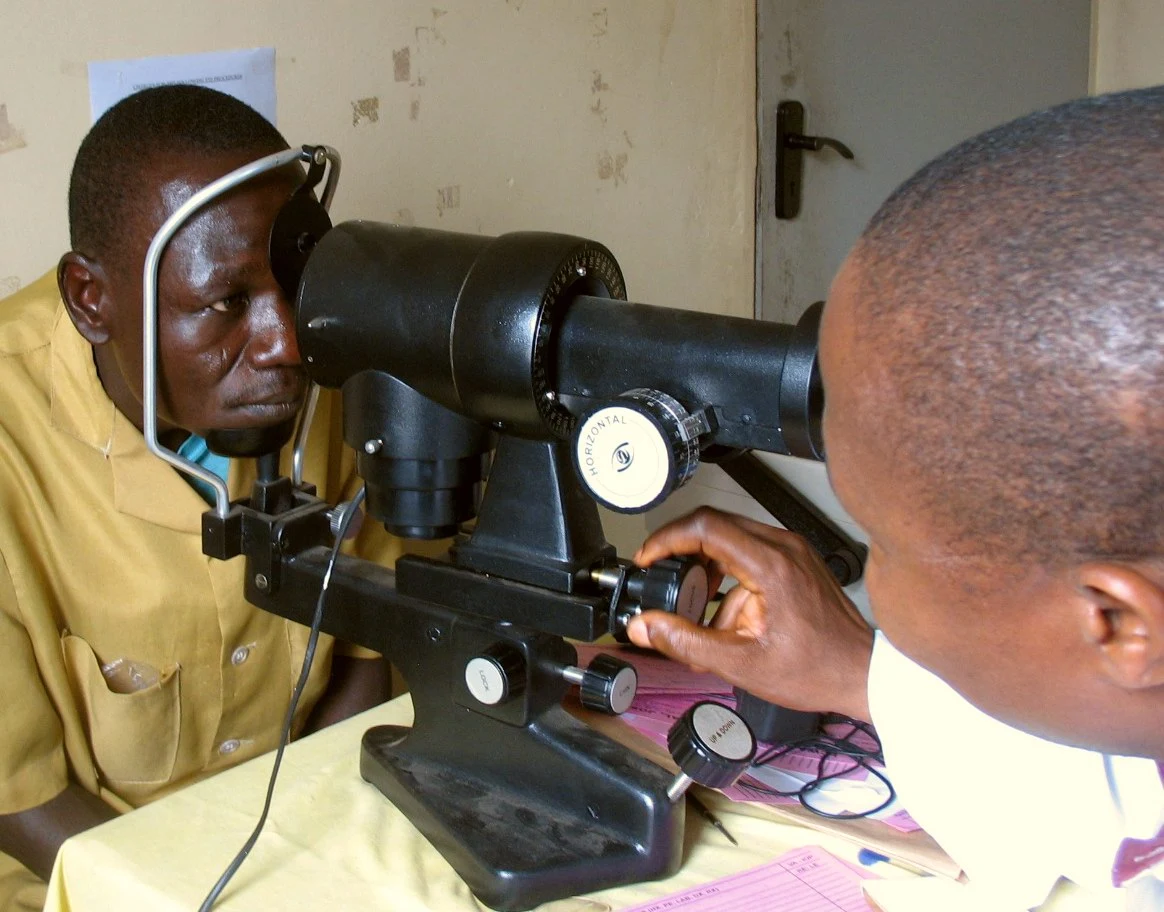
Contains the optical measuring system used to observe corneal reflections.
Zoom in, then drag to inspect. Keyboard: + / − to zoom, arrows to pan, 0 to reset. Tap the numbered markers to explore parts.
Keratometer — reference view
Image: Mike Blyth · Source / original · CC BY-SA 3.0Resized and converted to WebP; original colours retained.
Keratometer
Ophthalmometer · corneal curvature meter
What is its use?
Estimates anterior corneal curvature and corneal astigmatism.
Tap a number to locate its part. Zoom, drag or use full screen to inspect the reference. Models and graduations can differ; check the actual instrument used in your practical class or clinical posting.
How to recognise it.
- Optical viewing instrument
- Patient positioning supports
- Controls for measuring corneal reflections
A keratometer samples limited anterior corneal regions; corneal topography maps a wider surface.
Point them out.
Choose a part to bring its numbered marker into view.
How it works.
The anterior cornea acts as a convex mirror; reflected mires are used to calculate curvature using instrument assumptions.
Think first. Then reveal.
Explain your answer aloud before opening it.
01What is a mire?+
A target whose reflection from the cornea is observed and measured.
02Does it measure all refractive astigmatism?+
No. It mainly estimates anterior corneal contribution; internal optics also affect total ocular astigmatism.
03Why does the tear film matter?+
The reflection depends on the quality and regularity of the anterior optical surface.
04What is one clinical use?+
Assessing corneal curvature for refractive evaluation, contact-lens work or cataract biometry, as appropriate.
Read the references.
Teaching and clinical references are listed here. Image attribution and licence appear below the viewer.