 MEDIVEERSETHE PRACTICAL HUB
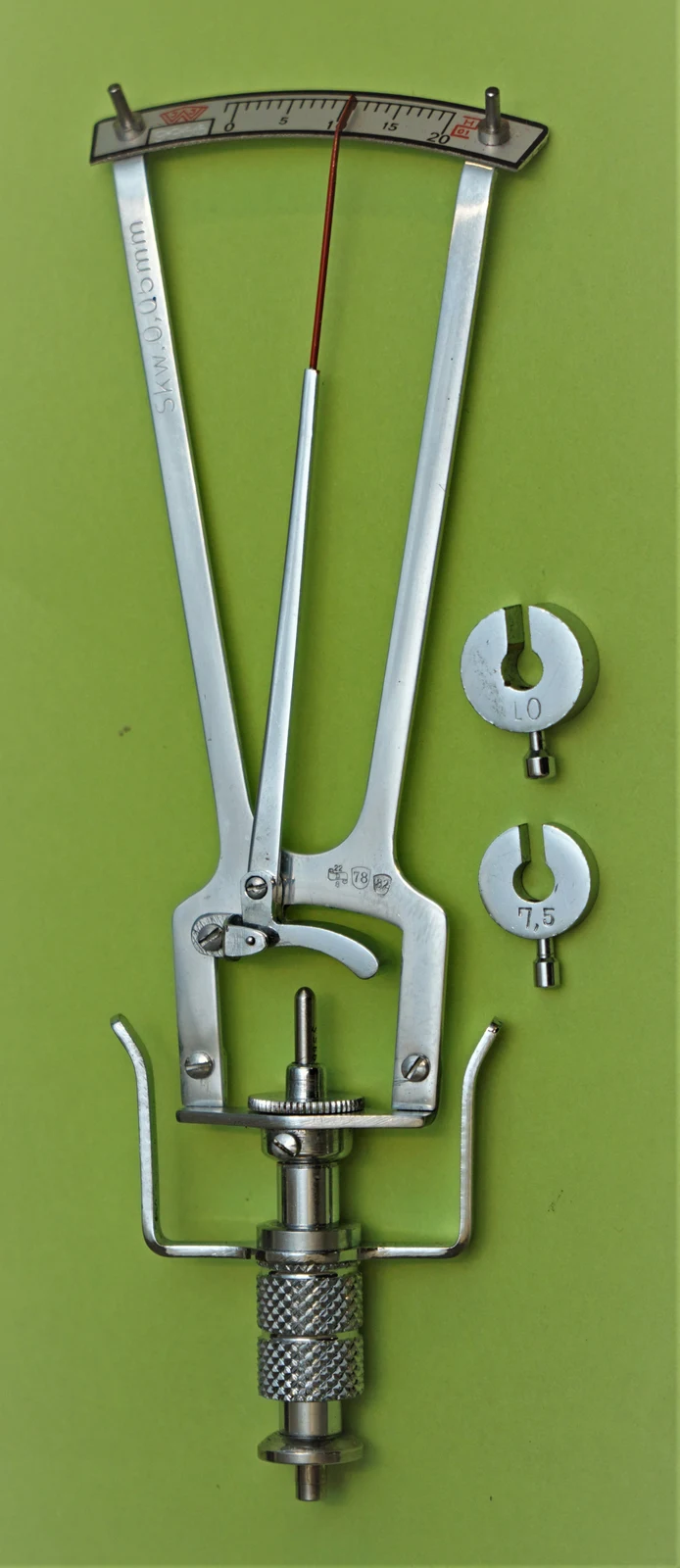
The scale indicates indentation. Convert using the calibration table for the applied weight.
Zoom in, then drag to inspect. Keyboard: + / − to zoom, arrows to pan, 0 to reset. Tap the numbered markers to explore parts.
Schiøtz indentation tonometer — reference view
Image: P. Stanka · Source / original · CC BY-SA 4.0Resized and converted to WebP; original colours retained.
Schiøtz indentation tonometer
Schiotz · indentation tonometer
What is its use?
Estimates intraocular pressure by indentation in a supervised examination.
Tap a number to locate its part. Zoom, drag or use full screen to inspect the reference. Models and graduations can differ; check the actual instrument used in your practical class or clinical posting.
How to recognise it.
- Mechanical scale and pointer
- Weighted central plunger
- Curved footplate
Applanation flattens a defined area; Schiøtz tonometry measures indentation and is more affected by ocular rigidity.
Point them out.
Choose a part to bring its numbered marker into view.
How it works.
A known load indents the cornea; a calibrated conversion relates the indentation reading to an estimated pressure.
Think first. Then reveal.
Explain your answer aloud before opening it.
01What is its measurement principle?+
Indentation tonometry under a known load.
02Is the scale reading directly in mmHg?+
The scale reading is converted using the appropriate calibration table for the applied weight.
03Why does ocular rigidity matter?+
The eye’s resistance to deformation affects how far the plunger indents it.
04Is this suitable for suspected open-globe injury?+
No. Pressure on an eye with suspected globe rupture is avoided; urgent ophthalmic assessment is required.
Read the references.
Teaching and clinical references are listed here. Image attribution and licence appear below the viewer.