 MEDIVEERSETHE PRACTICAL HUB
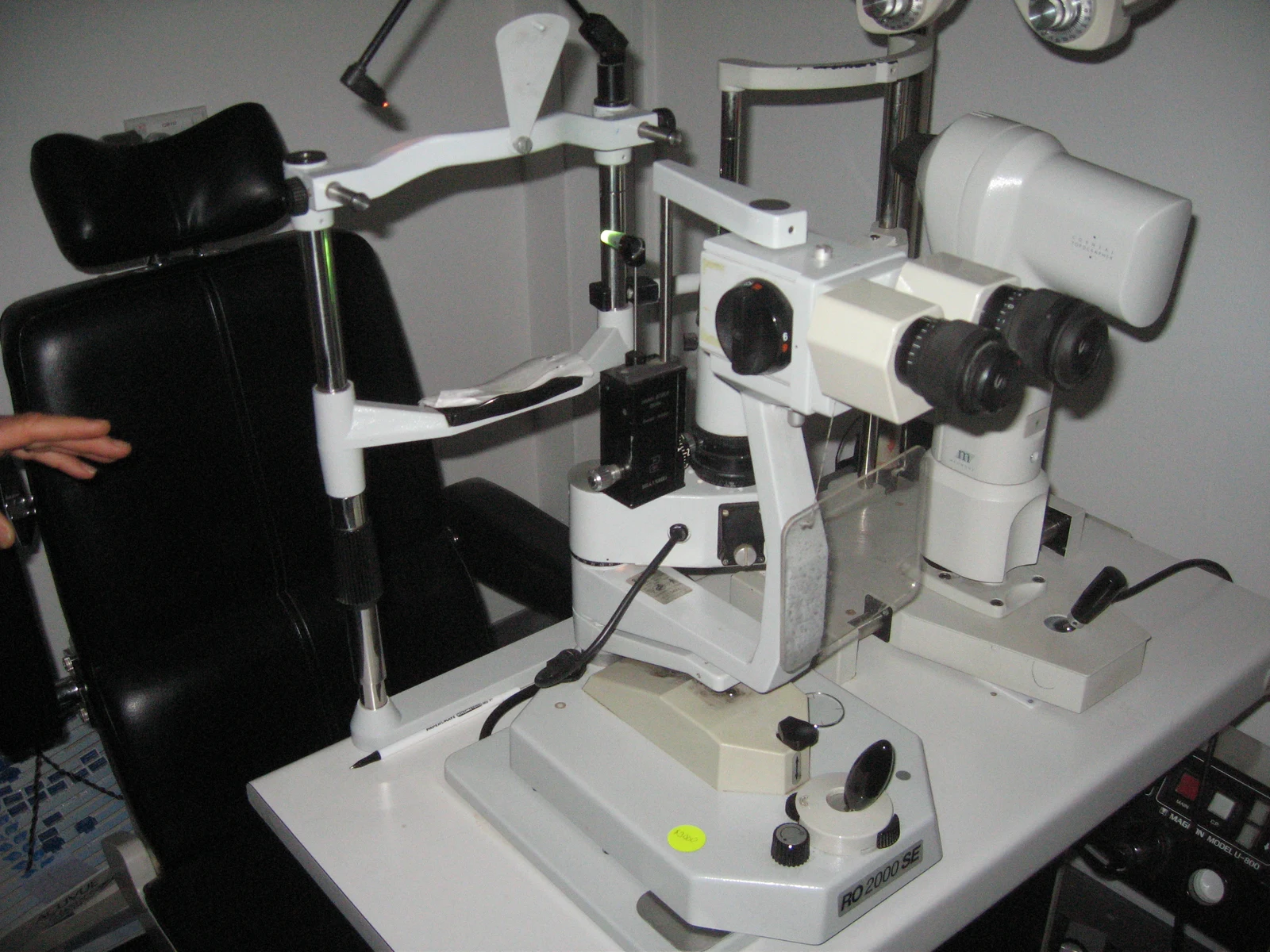
The contact prism on this slit-lamp-mounted tonometer is used in applanation measurement.
Zoom in, then drag to inspect. Keyboard: + / − to zoom, arrows to pan, 0 to reset. Tap the numbered markers to explore parts.
Applanation tonometer — reference view
Image: Jason7825 at English Wikipedia · Source / original · CC BY-SA 3.0Resized and converted to WebP; original colours retained.
Applanation tonometer
Goldmann tonometry · GAT
What is its use?
Estimates intraocular pressure by flattening a defined corneal area.
Tap a number to locate its part. Zoom, drag or use full screen to inspect the reference. Models and graduations can differ; check the actual instrument used in your practical class or clinical posting.
How to recognise it.
- Tonometer assembly associated with a slit lamp
- Measuring prism or contact head
- Force or reading control
An indentation tonometer deforms the cornea with a plunger. Identify the actual model before assigning a tonometry method.
Point them out.
Choose a part to bring its numbered marker into view.
How it works.
A calibrated applied force is related to the area flattened; real corneal properties and the tear film affect the measurement.
Think first. Then reveal.
Explain your answer aloud before opening it.
01What does applanation mean?+
Flattening a portion of the corneal surface.
02Does raised IOP alone establish glaucoma?+
No. Diagnosis considers optic nerve damage, visual-field findings and the full clinical context.
03Why can corneal properties influence the reading?+
Thickness, biomechanics and surface conditions affect the relationship between applied force and measured pressure.
04Why clean or replace contact tips appropriately?+
Contact devices can transmit infection unless the approved disinfection or single-use protocol is followed.
Read the references.
Teaching and clinical references are listed here. Image attribution and licence appear below the viewer.