 MEDIVEERSETHE PRACTICAL HUB
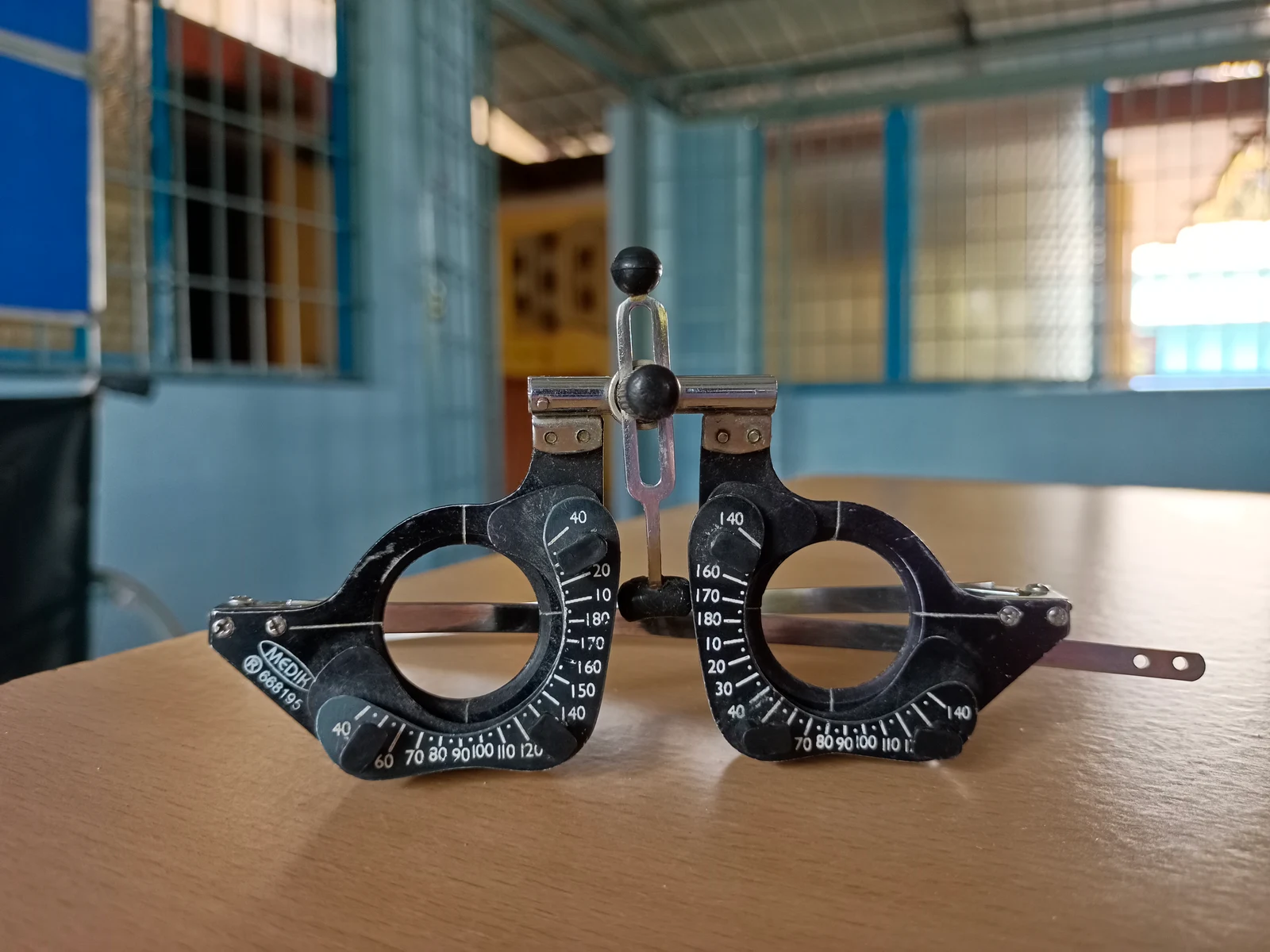
Hold interchangeable lenses and testing accessories in front of the eyes.
Zoom in, then drag to inspect. Keyboard: + / − to zoom, arrows to pan, 0 to reset. Tap the numbered markers to explore parts.
Ophthalmic trial frame — reference view
Image: Ajeeshkumar4u · Source / original · CC BY-SA 4.0Resized and converted to WebP; original colours retained.
Ophthalmic trial frame
Trial spectacles · refraction frame
What is its use?
Holds trial lenses in front of the eyes during refraction and selected binocular-vision tests.
Tap a number to locate its part. Zoom, drag or use full screen to inspect the reference. Models and graduations can differ; check the actual instrument used in your practical class or clinical posting.
How to recognise it.
- Spectacle-like adjustable frame
- Cells for interchangeable trial lenses
- Adjustments for lens position and alignment
A trial frame holds separate lenses; a phoropter contains many selectable optical elements in one instrument.
Point them out.
Choose a part to bring its numbered marker into view.
How it works.
Known spherical, cylindrical or prism elements alter the optical power before the eye while visual performance is assessed.
Think first. Then reveal.
Explain your answer aloud before opening it.
01Why adjust interpupillary distance?+
To align the lens centres appropriately with the eyes and limit unwanted prism effects.
02Why note the cylinder axis?+
Cylindrical correction has orientation-dependent power; the axis determines its effect.
03What is vertex distance?+
The distance from the back surface of a spectacle lens to the corneal reference point; it matters especially with stronger lenses.
04Is a trial frame a prescription by itself?+
No. It is an instrument for assessing optical correction.
Read the references.
Teaching and clinical references are listed here. Image attribution and licence appear below the viewer.