 MEDIVEERSETHE PRACTICAL HUB
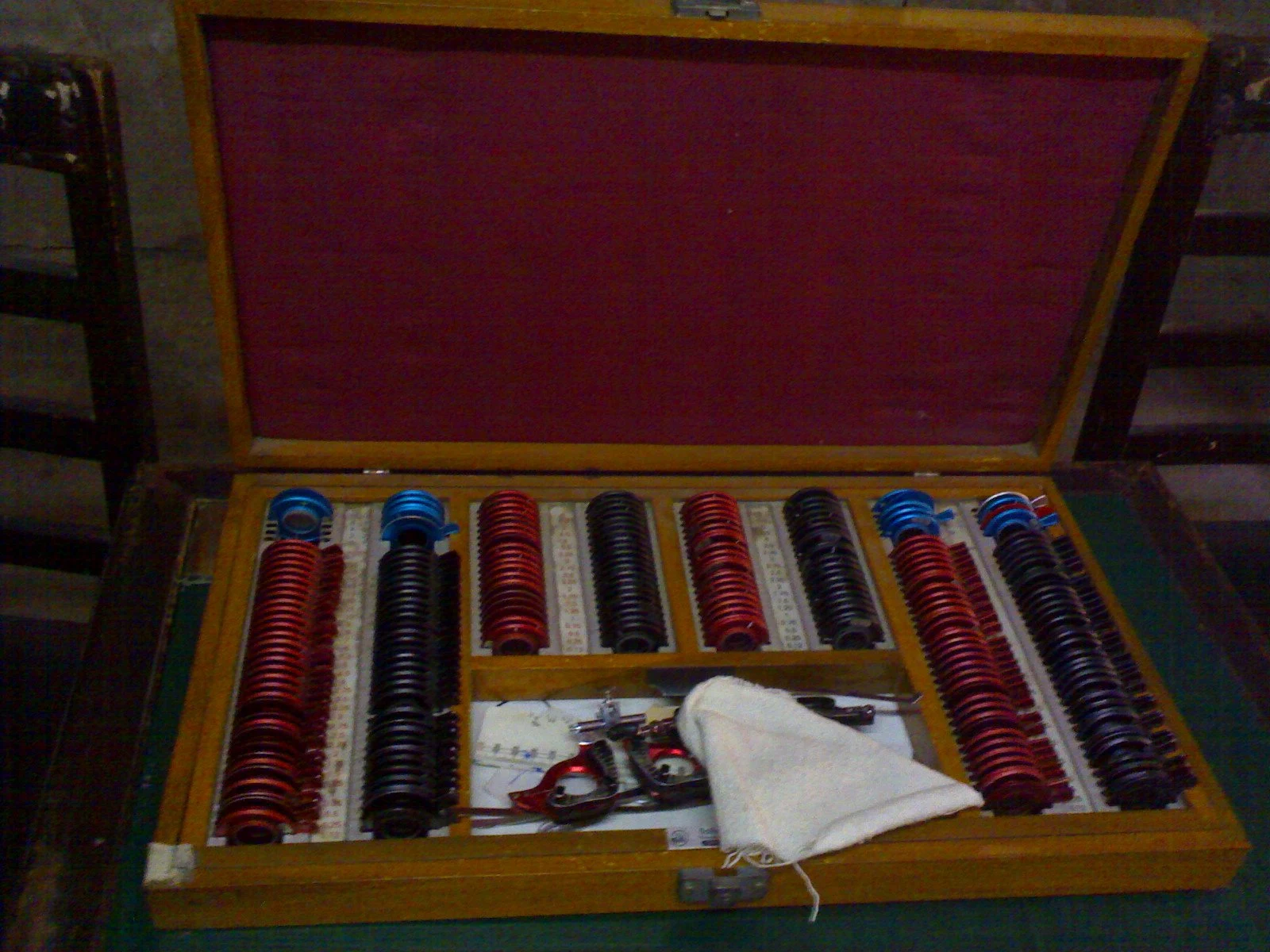
Different lens powers are organised in the case for selection during refraction.
Zoom in, then drag to inspect. Keyboard: + / − to zoom, arrows to pan, 0 to reset. Tap the numbered markers to explore parts.
Trial lens set — reference view
Image: Sarindam7 · Source / original · CC BY-SA 3.0Resized and converted to WebP; original colours retained.
Trial lens set
Refraction lens box · spherical cylindrical lenses
What is its use?
Provides known optical elements for refraction and visual testing with a trial frame.
Tap a number to locate its part. Zoom, drag or use full screen to inspect the reference. Models and graduations can differ; check the actual instrument used in your practical class or clinical posting.
How to recognise it.
- Lenses arranged in a compartmented case
- Mounted lenses with power markings
- Spherical, cylindrical and accessory elements
A lens set is used to test correction; a lensmeter measures the optical properties of an existing spectacle lens.
Point them out.
Choose a part to bring its numbered marker into view.
How it works.
Combining known lenses changes vergence and can neutralise or refine the eye’s refractive error.
Think first. Then reveal.
Explain your answer aloud before opening it.
01What is the unit of lens power?+
The dioptre: the reciprocal of focal length in metres for a thin lens in air.
02What is a spherical lens?+
An optical element with nominally the same power in every meridian.
03What is a cylindrical lens?+
An element whose power differs by meridian and is specified with an axis.
04Why inspect lens markings and cleanliness?+
Incorrect power selection, dirt and damaged surfaces can confound refraction.
Read the references.
Teaching and clinical references are listed here. Image attribution and licence appear below the viewer.