 MEDIVEERSETHE PRACTICAL HUB
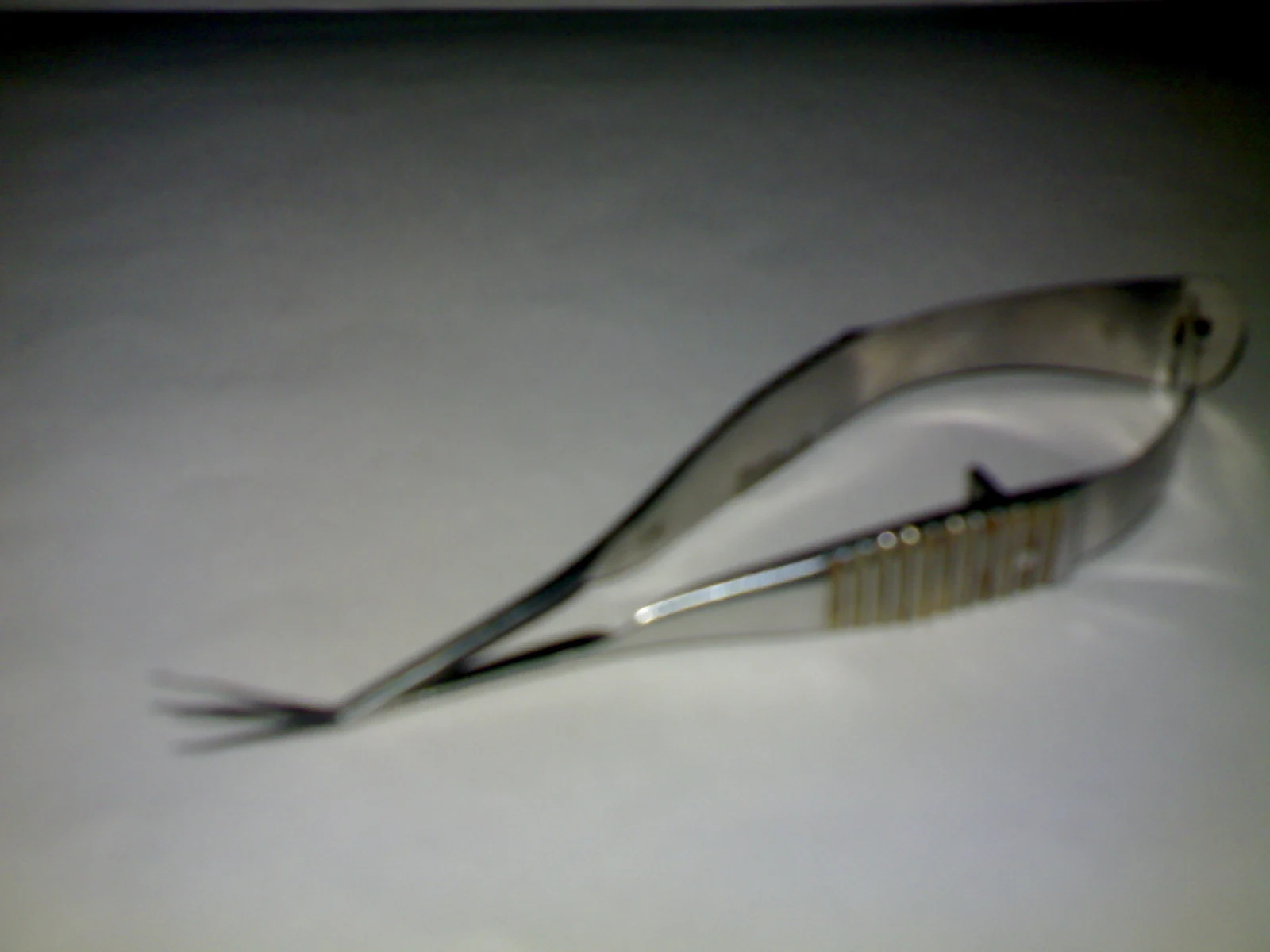
The small cutting ends perform delicate shearing; exact blade form depends on the variant.
Zoom in, then drag to inspect. Keyboard: + / − to zoom, arrows to pan, 0 to reset. Tap the numbered markers to explore parts.
Vannas scissors — reference view
Image: Sarindam7 · Source / original · CC BY-SA 3.0Resized and converted to WebP; original colours retained.
Vannas scissors
Ophthalmic micro-scissors
What is its use?
Makes delicate cuts in selected ophthalmic tissues under magnification.
Tap a number to locate its part. Zoom, drag or use full screen to inspect the reference. Models and graduations can differ; check the actual instrument used in your practical class or clinical posting.
How to recognise it.
- Very small cutting blades
- Spring handles
- Fine, often angled tips
Their fine spring construction differs from larger ring-handled scissors; named variants differ in blade angle and dimensions.
Point them out.
Choose a part to bring its numbered marker into view.
How it works.
Fine blades shear tissue as controlled pressure closes the spring handles.
Think first. Then reveal.
Explain your answer aloud before opening it.
01What is the identifying working end?+
The paired fine cutting blades.
02Why are fine tips useful?+
They allow controlled cutting in a small operative field.
03Can they substitute for a needle holder?+
No. Cutting blades do not provide an appropriate needle-holding surface.
04Why inspect the blade tips?+
Misalignment or damage can tear tissue and impair precision.
Read the references.
Teaching and clinical references are listed here. Image attribution and licence appear below the viewer.