 MEDIVEERSETHE PRACTICAL HUB
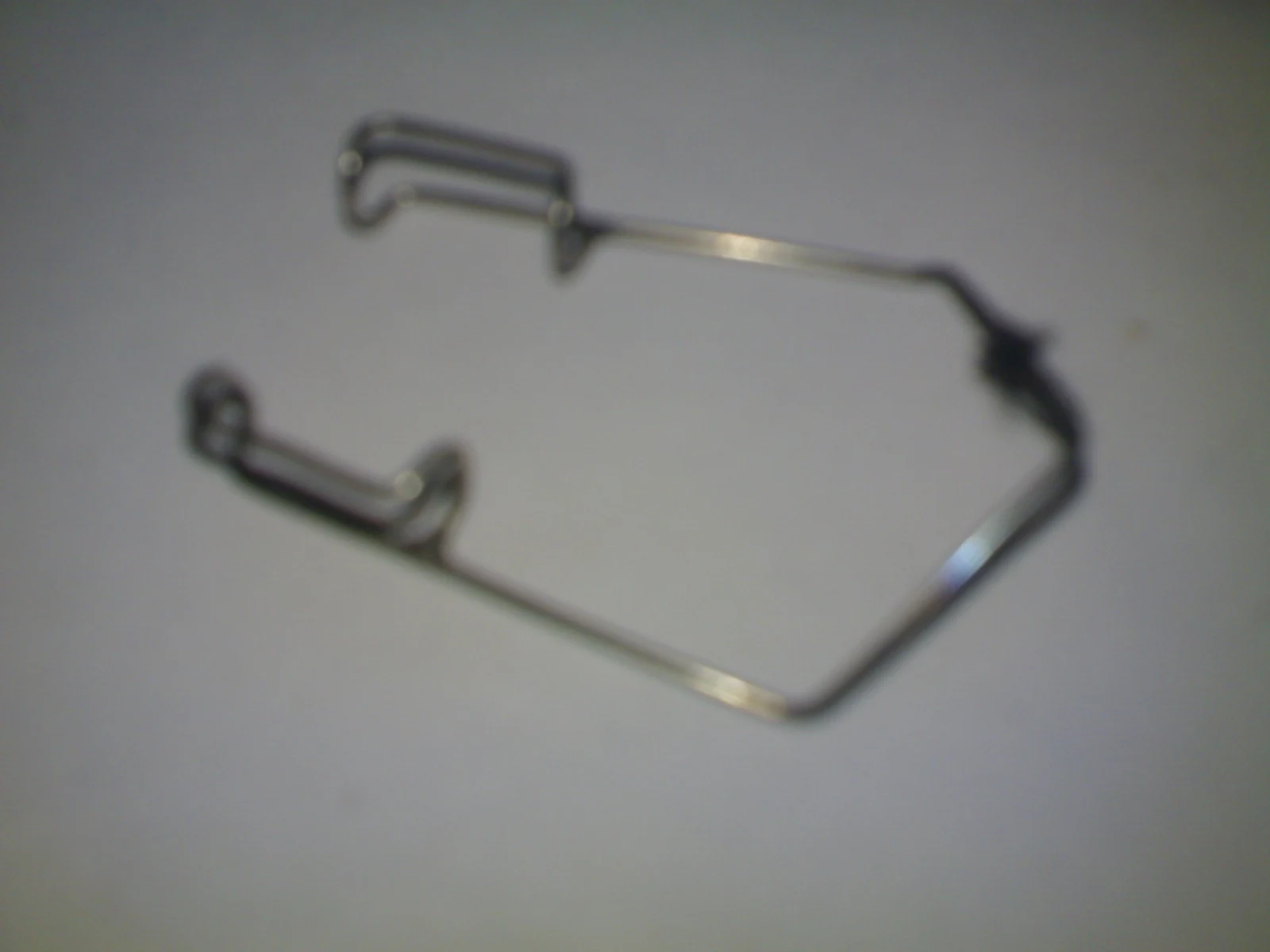
One lid-retaining end of the wire speculum.
Zoom in, then drag to inspect. Keyboard: + / − to zoom, arrows to pan, 0 to reset. Tap the numbered markers to explore parts.
Wire lid speculum — reference view
Image: Sarindam7 · Source / original · CC BY-SA 3.0Resized and converted to WebP; original colours retained.
Wire lid speculum
Barraquer-type wire speculum
What is its use?
Keeps eyelids apart to provide exposure during an ophthalmic procedure.
Tap a number to locate its part. Zoom, drag or use full screen to inspect the reference. Models and graduations can differ; check the actual instrument used in your practical class or clinical posting.
How to recognise it.
- Wire construction
- Paired lid-retaining ends
- Spring action without finger rings
A retractor usually provides directed exposure by manual or separate traction; a speculum maintains an opening.
Point them out.
Choose a part to bring its numbered marker into view.
How it works.
Spring tension holds the lid margins apart; the instrument supports exposure rather than grasping ocular tissue.
Think first. Then reveal.
Explain your answer aloud before opening it.
01What is its purpose?+
Lid separation and operative exposure.
02Is it used to clamp the cornea?+
No. The cornea must not be grasped or compressed by a lid speculum.
03How does it differ from a heavier adjustable speculum?+
Wire models are lighter and commonly spring-operated; adjustable models use another mechanism to set the opening.
04Why are size and tension important?+
Excess force or an unsuitable fit can injure tissues or cause unwanted pressure.
Read the references.
Teaching and clinical references are listed here. Image attribution and licence appear below the viewer.