 MEDIVEERSETHE PRACTICAL HUB
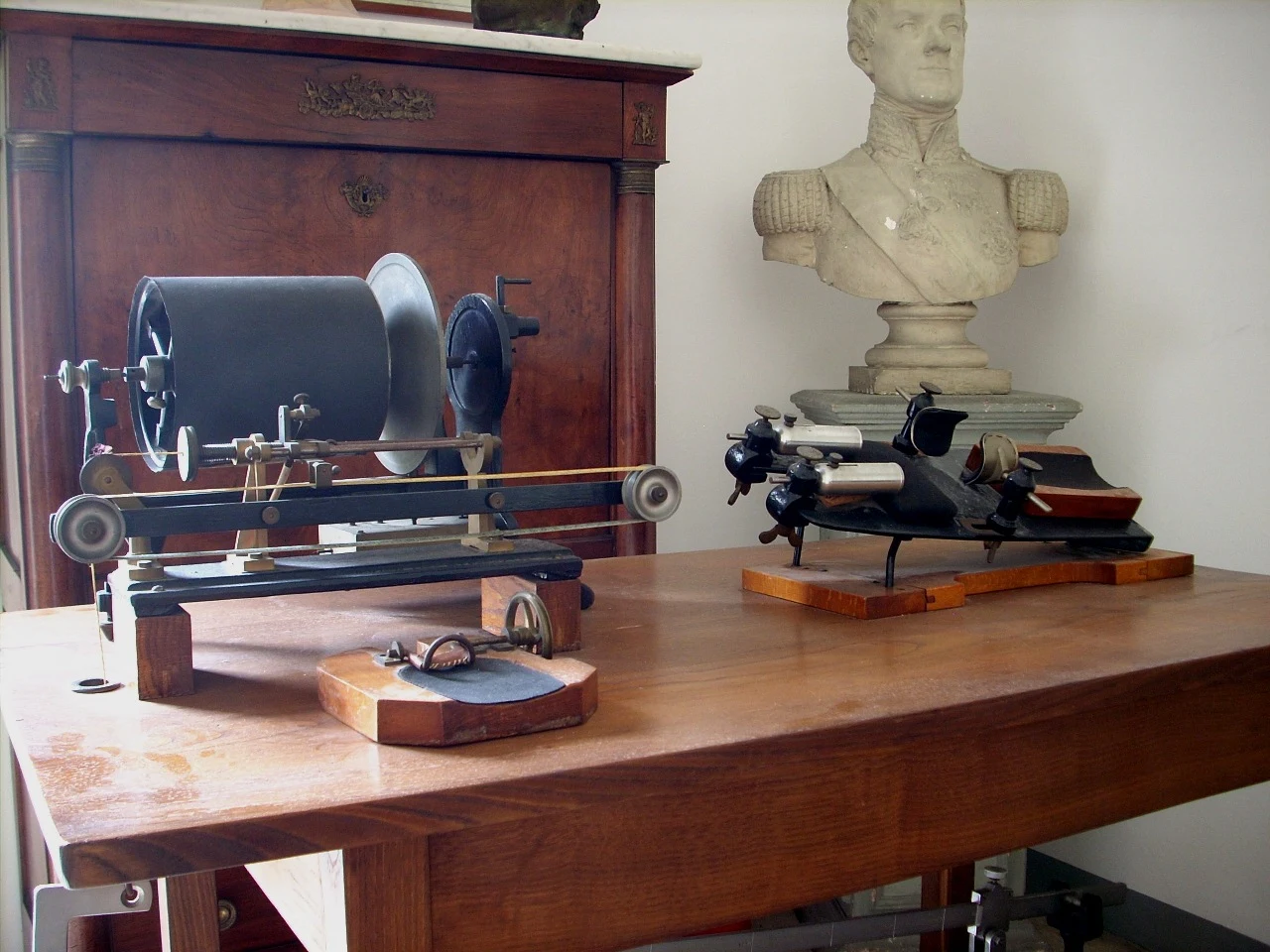
Hand support: located on the reference instrument. Compare its shape and position with the apparatus used in your practical.
Zoom in, then drag to inspect. Keyboard: + / − to zoom, arrows to pan, 0 to reset. Tap the numbered markers to explore parts.
Mosso ergograph — reference view
Image: Luca Borghi · Source / original · CC BY-SA 3.0Resized and converted to WebP; original colours retained.
Mosso ergograph
Finger ergograph · muscle fatigue apparatus
What is its use?
Demonstrates repeated muscular work and the development of fatigue in a teaching experiment.
Tap a number to locate its part. Zoom, drag or use full screen to inspect the reference. Models and graduations can differ; check the actual apparatus used in your laboratory.
How to recognise it.
- Support stabilises the forearm or hand
- Finger movement lifts a load through a linkage
- A writing system records repeated contractions
A handgrip dynamometer measures grip force. An ergograph records repeated work or movement over time.
Point them out.
Choose a part to bring its numbered marker into view.
The science behind the reading.
Repeated contractions against a known load produce displacement; mechanical work relates force to displacement.
Think first. Then reveal.
Explain your answer aloud before opening it.
01What is an ergogram?+
A recording of muscular work or displacement during an ergograph experiment.
02How is mechanical work related to force?+
Work equals force multiplied by displacement in the force direction.
03What is fatigue in this context?+
A reversible decline in the capacity to maintain the required force or work during repeated activity.
04Is fatigue due to only one mechanism?+
No. Central drive, muscle metabolism and excitation–contraction processes may contribute.
Read the references.
Teaching and clinical references are listed here. Image attribution and licence appear below the viewer.