 MEDIVEERSETHE PRACTICAL HUB
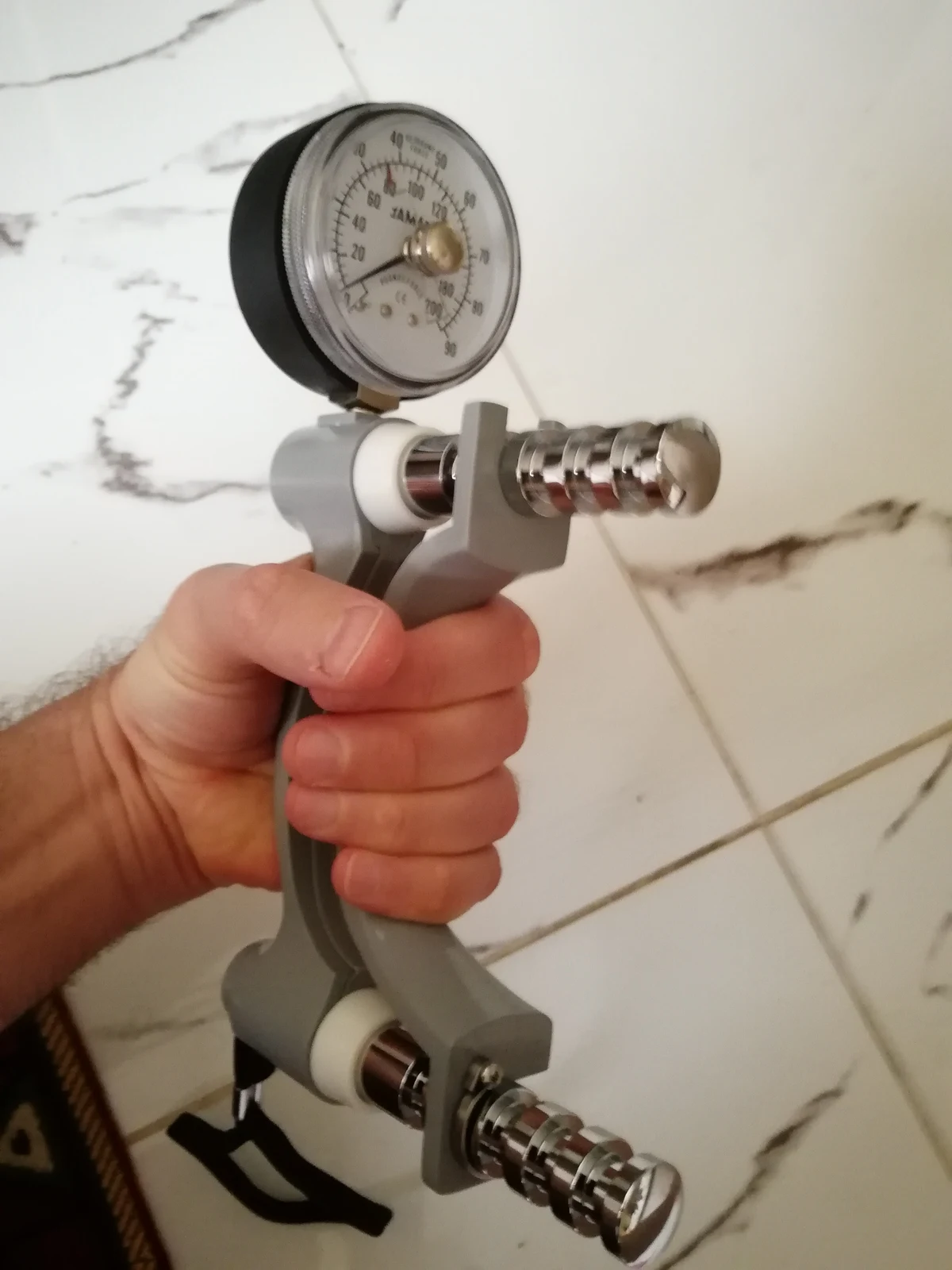
Force dial: located on the reference instrument. Compare its shape and position with the apparatus used in your practical.
Zoom in, then drag to inspect. Keyboard: + / − to zoom, arrows to pan, 0 to reset. Tap the numbered markers to explore parts.
Handgrip dynamometer — reference view
Image: Ashashyou · Source / original · CC0Resized and converted to WebP; original colours retained.
Handgrip dynamometer
Grip strength meter · hand dynamometer
What is its use?
Measures grip force for practical assessment and standardised functional testing.
Tap a number to locate its part. Zoom, drag or use full screen to inspect the reference. Models and graduations can differ; check the actual apparatus used in your laboratory.
How to recognise it.
- Two grip surfaces or handles
- Force-sensing mechanism
- Analogue gauge or digital readout
It measures force rather than the electrical activity recorded by EMG or the repeated displacement recorded by an ergograph.
Point them out.
Choose a part to bring its numbered marker into view.
The science behind the reading.
A mechanical or electronic transducer converts applied force into a calibrated reading.
Think first. Then reveal.
Explain your answer aloud before opening it.
01What does it measure?+
Grip force under the specified posture, handle setting and test procedure.
02Why standardise position?+
Joint angles and body support affect the force that can be produced.
03Are kilograms on a dial always a mass measurement?+
Many devices use kilogram-force conventions; confirm the instrument’s stated units.
04Why compare repeated attempts?+
They help assess consistency, while allowing for effort, learning and fatigue.
Read the references.
Teaching and clinical references are listed here. Image attribution and licence appear below the viewer.