 MEDIVEERSETHE PRACTICAL HUB
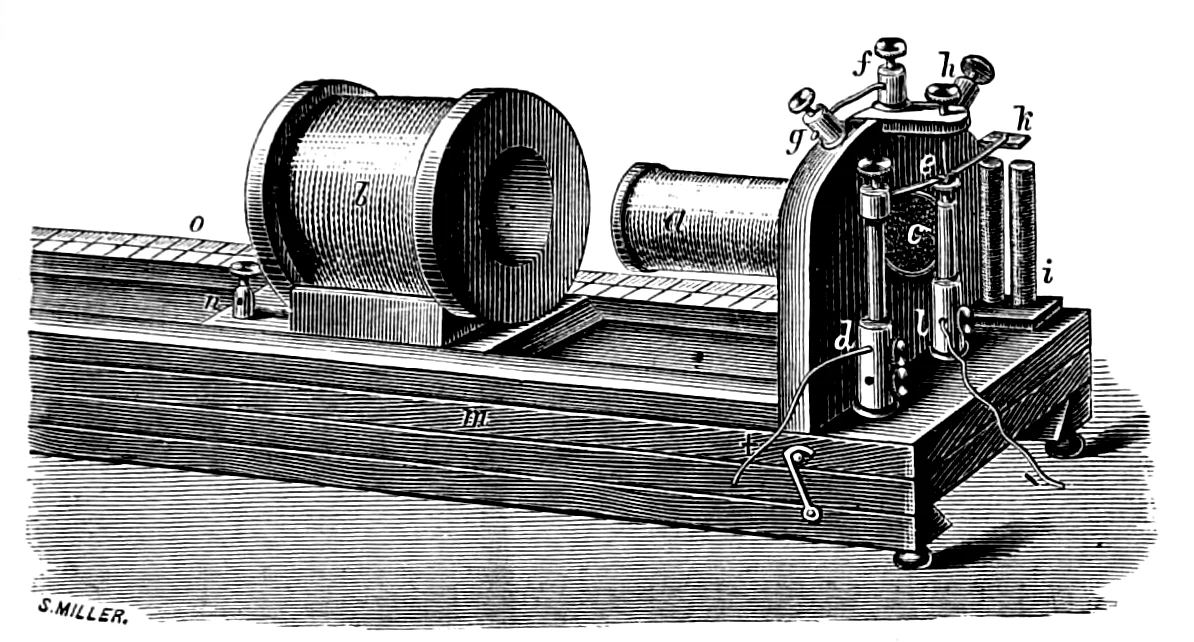
Coil assembly: located on the reference instrument. Compare its shape and position with the apparatus used in your practical.
Zoom in, then drag to inspect. Keyboard: + / − to zoom, arrows to pan, 0 to reset. Tap the numbered markers to explore parts.
Induction coil — reference view
Image: John Gray McKendrick · Source / original · Public domainResized and converted to WebP; original colours retained.
Induction coil
Du Bois-Reymond induction apparatus
What is its use?
Provides induction-generated stimuli in classical experimental physiology apparatus.
Tap a number to locate its part. Zoom, drag or use full screen to inspect the reference. Models and graduations can differ; check the actual apparatus used in your laboratory.
How to recognise it.
- Primary and secondary coil arrangement
- The secondary coil may slide along a rail
- Electrical terminals connect the circuit
An induction coil supplies a stimulus; a kymograph records a response. Historical arrangements differ from modern isolated stimulators.
Point them out.
Choose a part to bring its numbered marker into view.
The science behind the reading.
A changing current in the primary circuit induces an electromotive force in the secondary circuit through electromagnetic induction.
Think first. Then reveal.
Explain your answer aloud before opening it.
01What is its physical principle?+
Electromagnetic induction.
02How can coil separation affect output?+
Greater separation generally reduces magnetic coupling and the induced stimulus in the classical arrangement.
03What distinguishes make and break events?+
They are associated with starting and interrupting the primary current, producing changes in magnetic flux.
04Should this be connected to a person as an improvised device?+
No. This is historical apparatus identification; human testing requires appropriate approved equipment and supervised protocols.
Read the references.
Teaching and clinical references are listed here. Image attribution and licence appear below the viewer.