 MEDIVEERSETHE PRACTICAL HUB
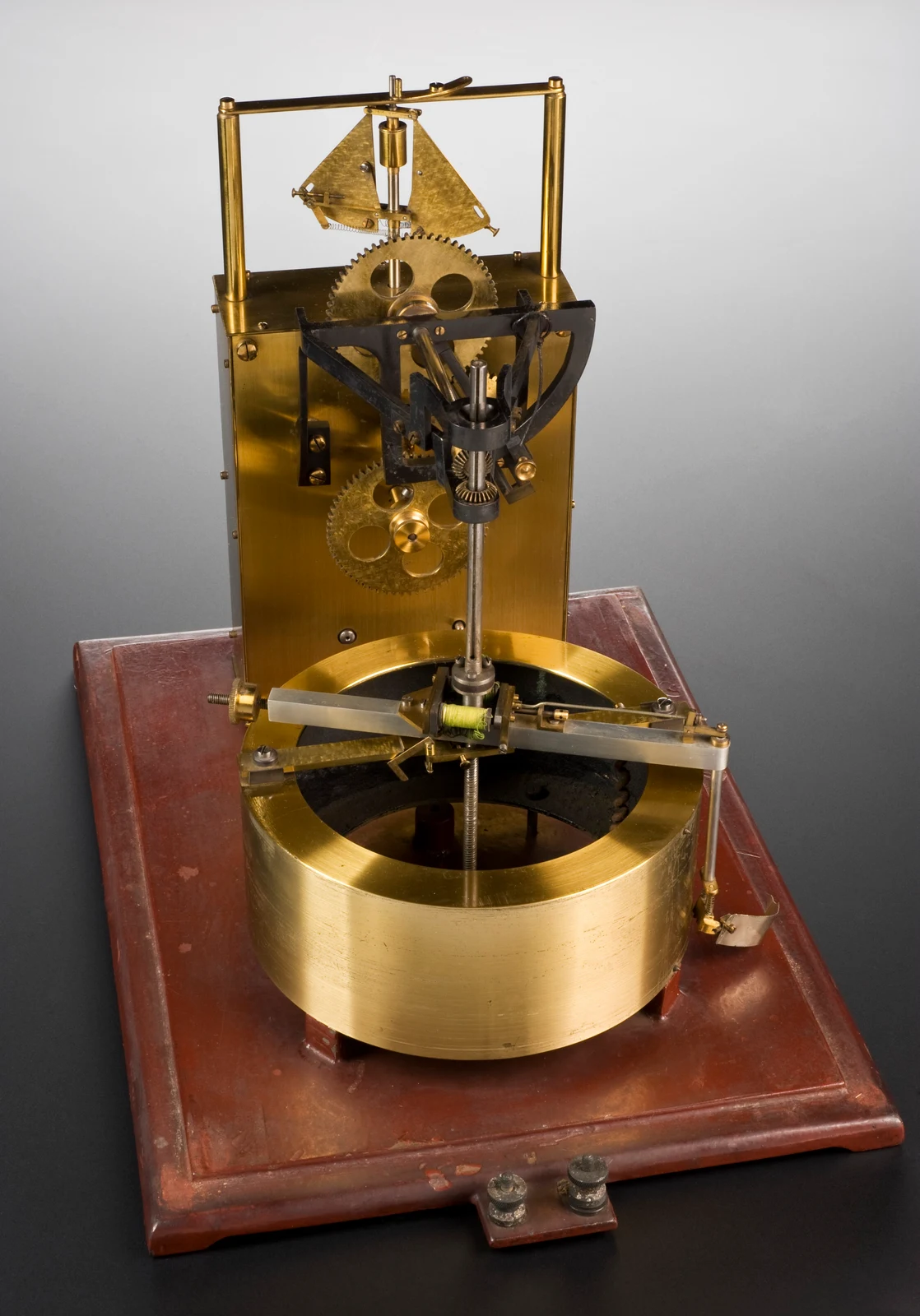
Drive gears: located on the reference instrument. Compare its shape and position with the apparatus used in your practical.
Zoom in, then drag to inspect. Keyboard: + / − to zoom, arrows to pan, 0 to reset. Tap the numbered markers to explore parts.
Historical kymograph drive mechanism — recording drum not fitted
Image: https://wellcomeimages.org/indexplus/obf_images/55/20/03f4448e7966a9eb7dc192cf7b04.jpg Gallery: https://wellcomeimages.org/indexplus/image/L0057894.html Wellcome Collection gallery (2018-03-30): https://wellcomecollection.org/works/ecuy85pp CC-BY-4.0 · Source / original · CC BY 4.0Resized and converted to WebP; original colours retained.
Kymograph
Recording drum · Sherrington–Starling kymograph
What is its use?
Produces a time-based mechanical record in classical physiology demonstrations.
Tap a number to locate its part. Zoom, drag or use full screen to inspect the reference. Models and graduations can differ; check the actual apparatus used in your laboratory.
How to recognise it.
- Rotating cylindrical recording drum
- Drive and speed-control assembly
- A writing lever or stylus records against the drum surface
A kymograph is a recorder, not the source of the physiological stimulus. Modern digital acquisition systems often replace it. The reference photograph shows the drive mechanism without its recording drum.
Point them out.
Choose a part to bring its numbered marker into view.
The science behind the reading.
A moving recording surface converts displacement of a writing system into a trace against time. A time marker is needed for time calibration.
Think first. Then reveal.
Explain your answer aloud before opening it.
01What is a kymogram?+
The trace recorded on the moving surface of a kymograph.
02Why must drum speed be known?+
Horizontal distances can only be interpreted in time units when the recording speed or time marks are calibrated.
03What does a writing lever add?+
It transmits and may amplify the movement being recorded.
04Is the drum itself the biological transducer?+
No. A suitable mechanical linkage or transducer couples the physiological variable to the recorder.
Read the references.
Teaching and clinical references are listed here. Image attribution and licence appear below the viewer.