 MEDIVEERSETHE PRACTICAL HUB
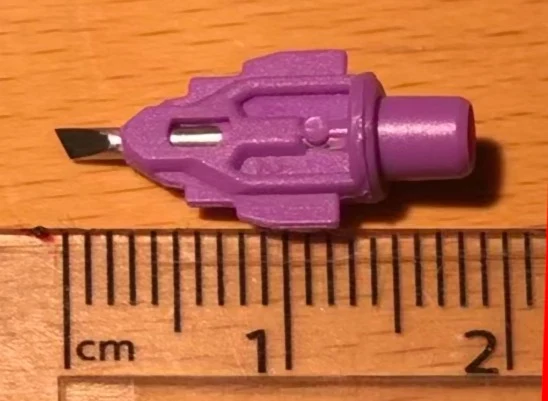
Exposed blade: located on the reference instrument. Compare its shape and position with the apparatus used in your practical.
Zoom in, then drag to inspect. Keyboard: + / − to zoom, arrows to pan, 0 to reset. Tap the numbered markers to explore parts.
Blood lancet — reference view
Image: Benjaminsteele · Source / original · CC BY-SA 4.0Resized and converted to WebP; original colours retained.
Blood lancet
Skin-prick lancet · capillary sampling lancet
What is its use?
Obtains a small capillary blood sample in supervised clinical or laboratory work.
Tap a number to locate its part. Zoom, drag or use full screen to inspect the reference. Models and graduations can differ; check the actual apparatus used in your laboratory.
How to recognise it.
- Small sharp puncture tip or blade
- Short controlled working end
- The reference design has a plastic housing; safety mechanisms vary by model
A hypodermic needle is a hollow needle intended for different procedures; a lancet is designed for a controlled skin puncture.
Point them out.
Choose a part to bring its numbered marker into view.
The science behind the reading.
A controlled skin puncture provides capillary blood for an approved test.
Think first. Then reveal.
Explain your answer aloud before opening it.
01Is a lancet reused?+
A single-use lancet is used once and discarded through the approved sharps pathway.
02What is a safety lancet?+
A device with a protective mechanism, commonly a retracting or shielded point, intended to reduce sharps exposure.
03Does squeezing heavily improve sample quality?+
Excessive squeezing may contaminate the sample with tissue fluid and affect the result.
04Where should blood sampling be learned?+
Through supervised training and the institution’s infection-control and specimen-collection procedures.
Read the references.
Teaching and clinical references are listed here. Image attribution and licence appear below the viewer.