 MEDIVEERSETHE PRACTICAL HUB
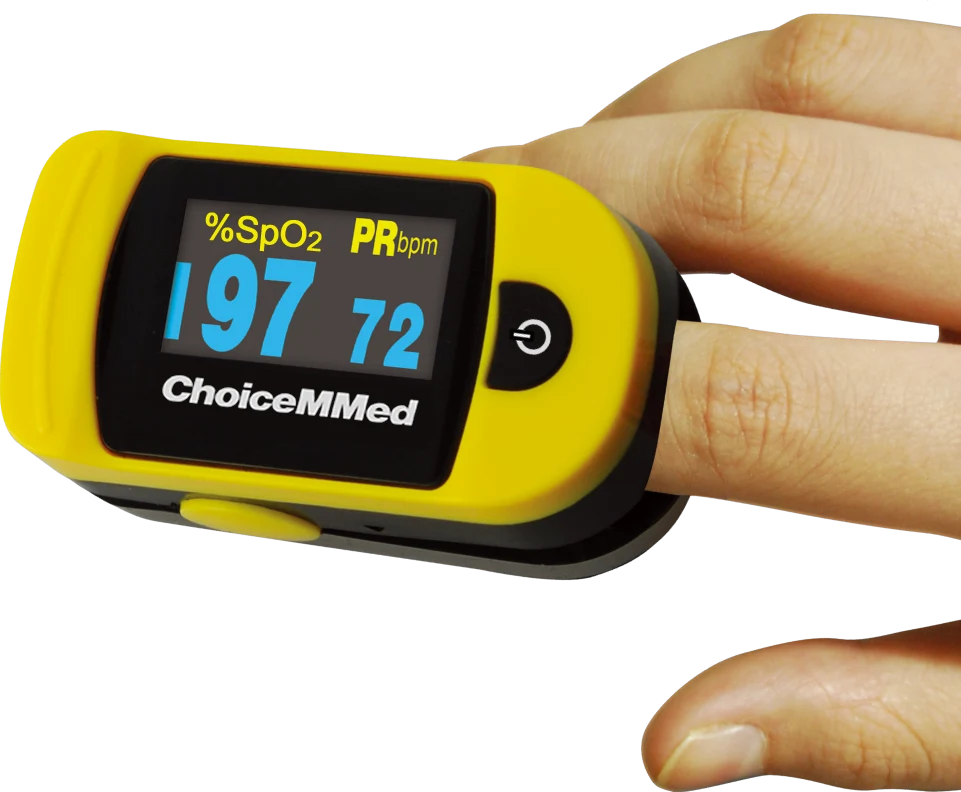
Display: located on the reference instrument. Compare its shape and position with the apparatus used in your practical.
Zoom in, then drag to inspect. Keyboard: + / − to zoom, arrows to pan, 0 to reset. Tap the numbered markers to explore parts.
Pulse oximeter — reference view
Image: Thinkpaul · Source / original · CC BY-SA 3.0Resized and converted to WebP; original colours retained.
Pulse oximeter
SpO₂ monitor · finger pulse oximeter
What is its use?
Noninvasively estimates peripheral arterial oxygen saturation and pulse rate.
Tap a number to locate its part. Zoom, drag or use full screen to inspect the reference. Models and graduations can differ; check the actual apparatus used in your laboratory.
How to recognise it.
- Clip-style finger probe in a common portable design
- Digital saturation and pulse-rate readout
- Light emitter and detector are built into the probe
SpO₂ is not arterial oxygen partial pressure. A pulse oximeter does not directly measure ventilation or carbon dioxide.
Point them out.
Choose a part to bring its numbered marker into view.
The science behind the reading.
Pulsatile light absorption at red and infrared wavelengths is analysed to estimate SpO₂.
Think first. Then reveal.
Explain your answer aloud before opening it.
01What does SpO₂ mean?+
An estimate of peripheral arterial oxygen saturation derived by pulse oximetry.
02Why is the pulsatile component important?+
It helps distinguish arterial pulsatile absorption from relatively static surrounding tissue absorption.
03Name sources of inaccurate readings.+
Movement, poor perfusion and other conditions can affect readings; accuracy can also vary with skin pigmentation and device performance.
04Does a normal reading prove ventilation is adequate?+
No. Pulse oximetry does not directly measure carbon dioxide or ventilation.
Read the references.
Teaching and clinical references are listed here. Image attribution and licence appear below the viewer.