 MEDIVEERSETHE PRACTICAL HUB
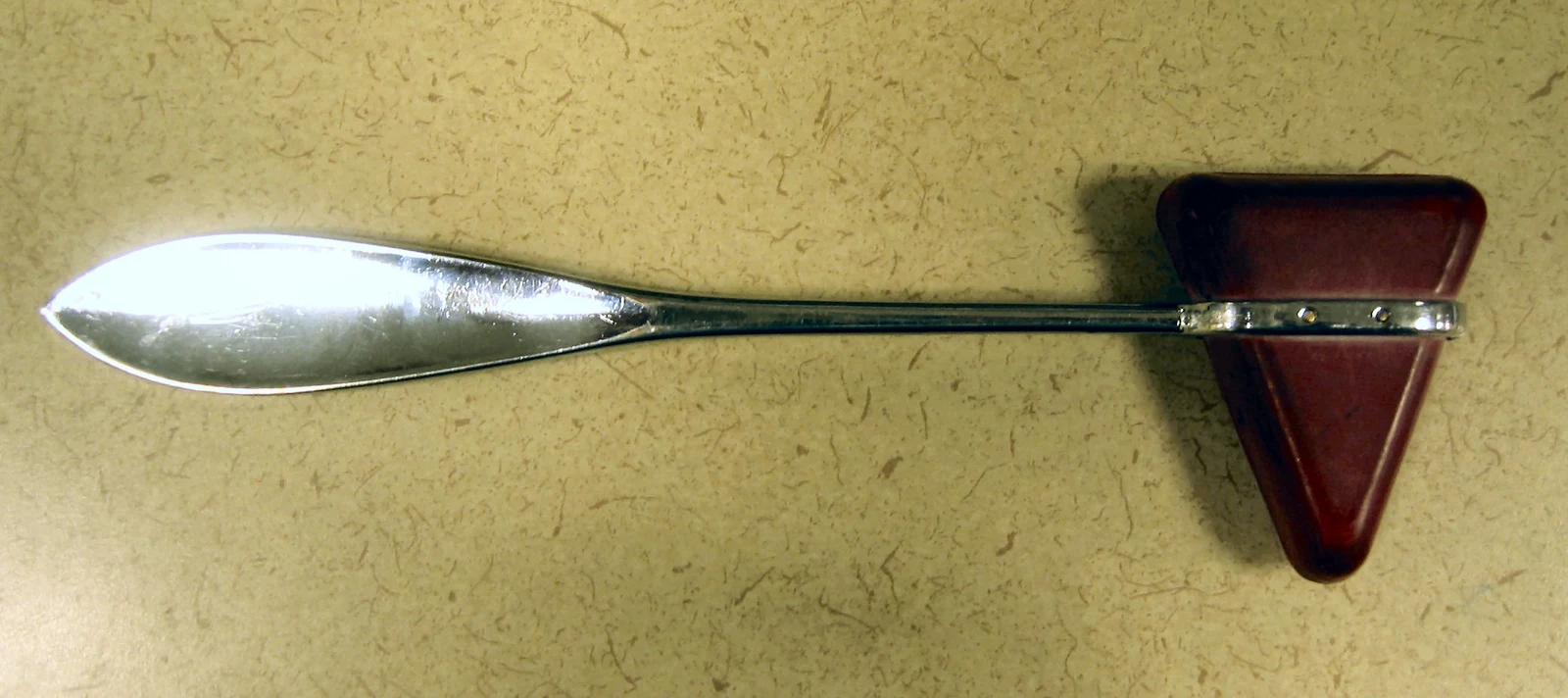
Rubber head: located on the reference instrument. Compare its shape and position with the apparatus used in your practical.
Zoom in, then drag to inspect. Keyboard: + / − to zoom, arrows to pan, 0 to reset. Tap the numbered markers to explore parts.
Reflex hammer — reference view
Image: Samir at English Wikipedia · Source / original · CC BY-SA 3.0Resized and converted to WebP; original colours retained.
Reflex hammer
Tendon hammer · percussion hammer
What is its use?
Elicits deep tendon reflexes as part of a neurological examination.
Tap a number to locate its part. Zoom, drag or use full screen to inspect the reference. Models and graduations can differ; check the actual apparatus used in your laboratory.
How to recognise it.
- Weighted head with a rubber contact surface
- Handle allows a controlled swing
- Different patterns include Taylor and Queen Square designs
The response is a stretch reflex; it is not caused by directly stimulating the tendon organ as the principal afferent.
Point them out.
Choose a part to bring its numbered marker into view.
The science behind the reading.
A tendon tap briefly stretches muscle spindles and activates the stretch-reflex pathway.
Think first. Then reveal.
Explain your answer aloud before opening it.
01What is the principal afferent for a tendon jerk?+
Group Ia afferents from muscle spindles.
02Which spinal segments are mainly tested by the knee jerk?+
L2–L4, particularly L4, through the femoral nerve.
03Which segments are mainly tested by the ankle jerk?+
S1–S2, particularly S1, through the tibial nerve.
04Why compare both sides?+
Symmetry and the broader clinical pattern help interpret the response.
Read the references.
Teaching and clinical references are listed here. Image attribution and licence appear below the viewer.