 MEDIVEERSETHE PRACTICAL HUB
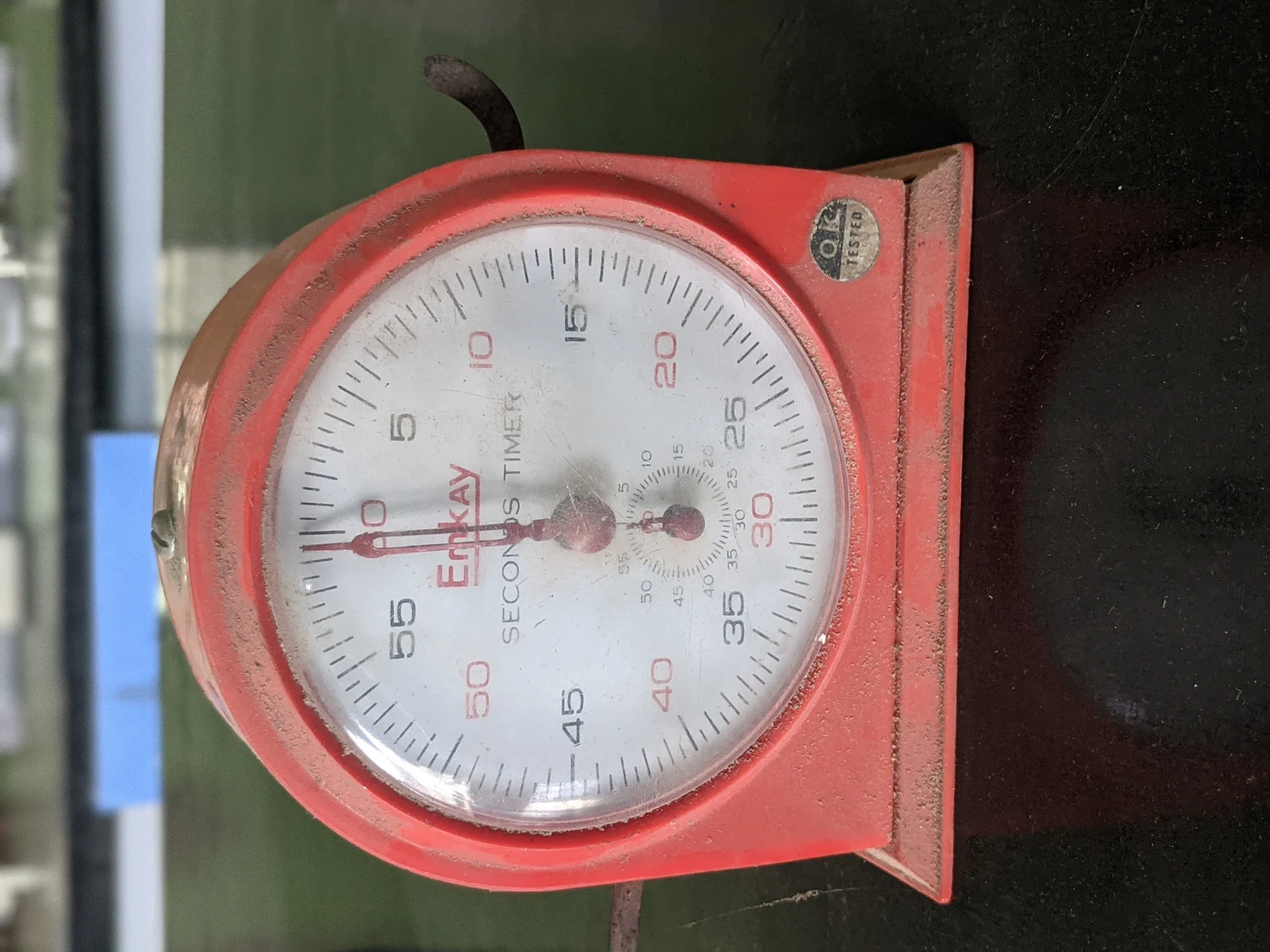
Timing dial: located on the reference instrument. Compare its shape and position with the apparatus used in your practical.
Zoom in, then drag to inspect. Keyboard: + / − to zoom, arrows to pan, 0 to reset. Tap the numbered markers to explore parts.
Stopwatch — reference view
Image: Stephanie cheks · Source / original · CC BY-SA 4.0Resized and converted to WebP; original colours retained.
Stopwatch
Interval timer · chronometer
What is its use?
Measures time intervals in physiology practicals.
Tap a number to locate its part. Zoom, drag or use full screen to inspect the reference. Models and graduations can differ; check the actual apparatus used in your laboratory.
How to recognise it.
- Elapsed-time dial or digital display
- Start and stop control
- Reset or lap control
A stopwatch measures elapsed time, while a time marker places a continuous timing reference on a recording.
Point them out.
Choose a part to bring its numbered marker into view.
The science behind the reading.
An oscillator or mechanical timebase provides a calibrated interval; the operator defines start and end events.
Think first. Then reveal.
Explain your answer aloud before opening it.
01Why is reaction time a source of error?+
The operator starts and stops after perceiving an event, introducing delay and variability.
02What is resolution?+
The smallest displayed or readable time increment.
03Does high display resolution guarantee accuracy?+
No. Calibration, device performance and the method all matter.
04Why repeat an interval measurement?+
Repeated observations help assess random variation and consistency.
Read the references.
Teaching and clinical references are listed here. Image attribution and licence appear below the viewer.